Scientists switch on the world’s first operating nuclear clock
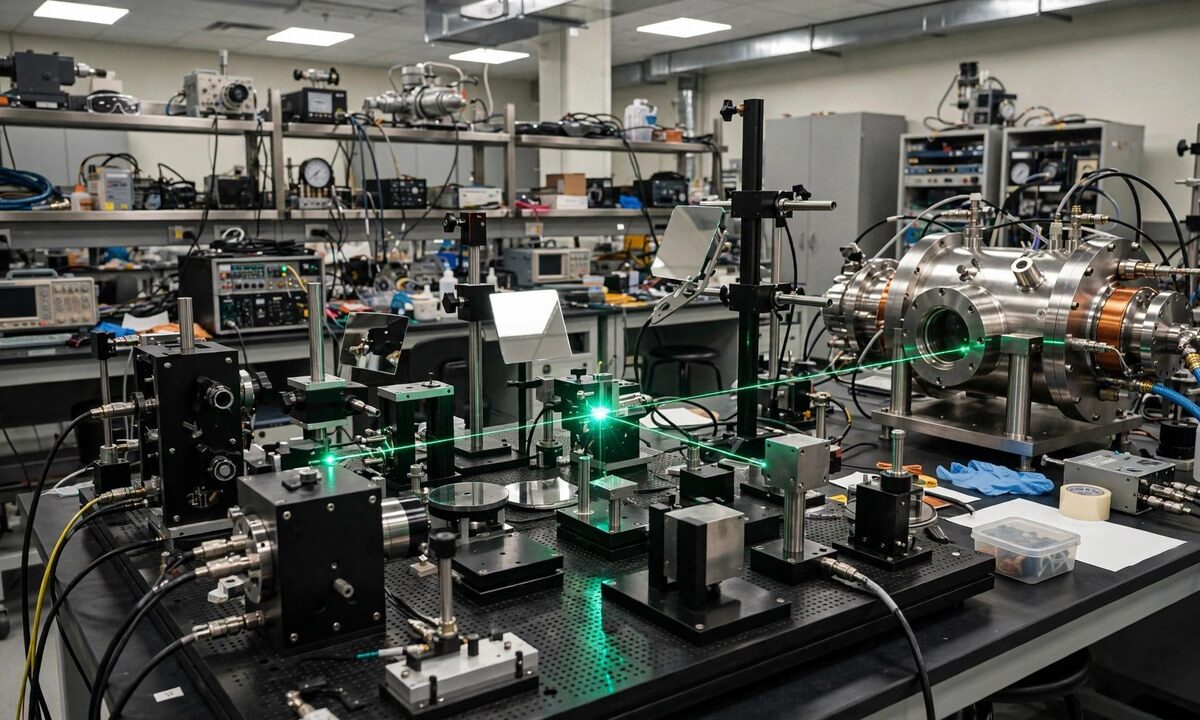
Scientists have demonstrated the first operating nuclear clock, a breakthrough that could redefine how time itself is measured.
Unlike atomic clocks, which track the vibrations of electrons, nuclear clocks use transitions inside the atomic nucleus, making them far less sensitive to outside interference.
The advance centres on thorium-229, whose nucleus has a uniquely low-energy transition that lasers can probe. Researchers say nuclear clocks could be orders of magnitude more precise than today’s best atomic clocks.
Such precision could improve GPS navigation, deepen tests of fundamental physics and help detect dark matter. Building a working device took decades of effort, as scientists had to isolate the delicate nuclear signal.
The result marks the start of a new era in timekeeping, with laboratories around the world now racing to build their own versions.
Atomic clocks already underpin GPS, telecom networks and financial trading systems. A nuclear clock would take that precision further, potentially keeping time accurately for billions of years without losing a second.

Khabar 24h Editorial Desk — our explainers are prepared by the Khabar 24h editorial team using AI-assisted research tools, and every piece is reviewed by a human editor before publishing. We do not claim original reporting: our work is turning complex topics into simple, accurate summaries. Spotted an error? Write to contact@khabar24h.com — our corrections policy aims for same-day review.
More from this author →
Leave a Reply