How Astronomers Find Exoplanets Light-Years From Earth
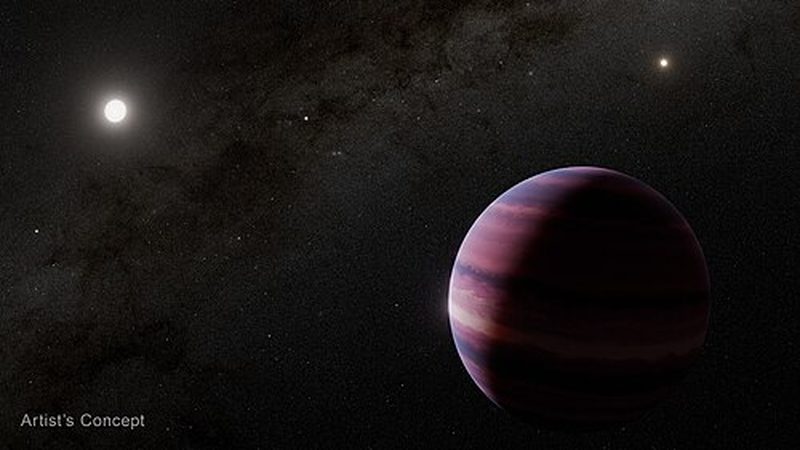
Over 5,000 planets have now been confirmed around other stars, a census that simply did not exist even thirty years ago. Almost none of them have been seen directly: at interstellar distances, a planet is a firefly next to a searchlight, drowned in its star’s glare. Astronomers find exoplanets the way detectives solve crimes, by watching for tiny, telltale disturbances in starlight. Those indirect tricks have revealed lava worlds, gas giants hugging their suns, and rocky planets in the temperate zones where liquid water could exist.
The transit method: catching tiny eclipses
The most prolific technique watches for a planet crossing in front of its star. When it does, the star dims by a minuscule amount, often less than one percent, and then brightens again. Space telescopes like Kepler and TESS have stared at hundreds of thousands of stars, catching these periodic dips. The depth of the dip reveals the planet’s size, and the time between dips reveals its orbital period. Transits also allow a remarkable follow-up: when the planet passes behind the star, or when starlight filters through its atmosphere, spectrographs can sniff out water vapour, carbon dioxide and other gases.
The wobble method: weighing invisible worlds
A planet does not really orbit its star; both orbit their common centre of mass. The star’s resulting wobble is tiny but detectable as a rhythmic shift in its light, stretched and compressed by the Doppler effect as the star moves toward and away from us. This radial velocity method, which bagged the first exoplanet around a sun-like star in 1995, measures a planet’s mass rather than its size. Combined with transit data, astronomers get both mass and radius, and therefore density, which tells them whether a world is rocky, gassy or something in between. The precision required is extraordinary: detecting an Earth-like planet demands measuring stellar motions slower than a gentle walking pace.
Direct imaging and microlensing
Two more exotic methods fill in the gaps. Direct imaging blocks out the star’s light with a coronagraph and photographs the planet itself, a feat achieved for a few dozen young, massive planets glowing with their own formation heat far from their stars. Gravitational microlensing uses Einstein’s own theory: when one star passes in front of another, its gravity acts as a lens, briefly magnifying the background star, and a planet around the lens star adds a characteristic spike to the brightening. Microlensing is sensitive to cold, distant worlds the other methods miss.
What the census has taught us
The results have repeatedly defied expectations formed from our own solar system, and they have rewritten theories of how planets form. Where astronomers once assumed solar systems would look like ours, with small rocky worlds inside and gas giants outside, the galaxy turned out to be far more creative:
- Hot Jupiters, gas giants orbiting closer than Mercury, showed that planets can migrate dramatically after forming.
- Super-Earths, worlds between Earth and Neptune in size, turned out to be the most common type of planet, though our solar system has none.
- Habitable-zone rocky planets like those of the TRAPPIST-1 system suggest temperate worlds may be abundant.
FAQs
Have we found another Earth? We have found Earth-sized planets in habitable zones, but we do not yet know if any have atmospheres, oceans or life. That is the next great quest.
Can we see what these planets look like? Only for a handful of directly imaged giants. For the rest, we infer conditions from size, mass, orbit and atmospheric spectra.
How far away are they? Most known exoplanets lie hundreds to thousands of light-years away; the nearest, Proxima Centauri b, is 4.25 light-years distant, practically next door in cosmic terms.
Each detection method is a workaround for an impossible observation, and together they have transformed planets from rare curiosities into the most common objects in the galaxy. The next generation of telescopes will go further, reading the atmospheres of rocky worlds for the chemical fingerprints of life. Missions already being planned aim to directly image Earth-sized planets and analyse their atmospheres for oxygen, methane and other potential biosignatures. If a genuine second Earth is out there, the tools to find it are finally within reach.
Source: NASA

Khabar 24h Editorial Desk — our explainers are prepared by the Khabar 24h editorial team using AI-assisted research tools, and every piece is reviewed by a human editor before publishing. We do not claim original reporting: our work is turning complex topics into simple, accurate summaries. Spotted an error? Write to contact@khabar24h.com — our corrections policy aims for same-day review.
More from this author →