Pakistan’s Civil-Military Balance: How the Army Shapes Its Politics
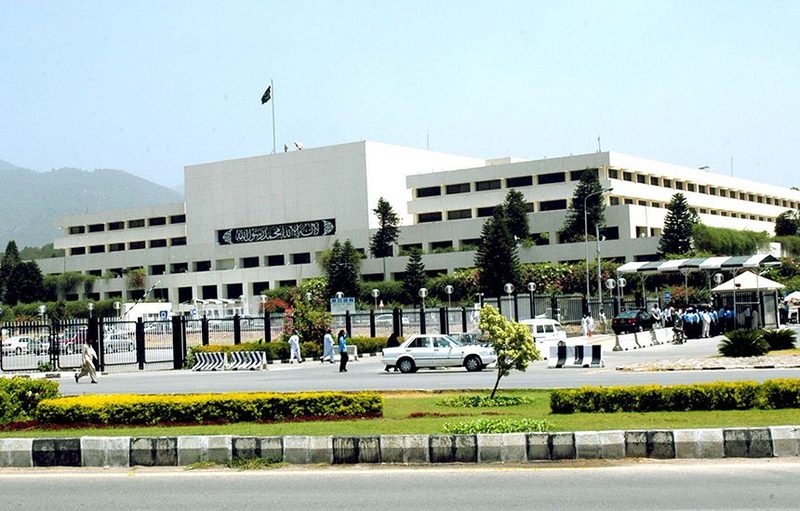
No democracy in the world lives as visibly in the shadow of its army as Pakistan’s. Since independence in 1947, the country has spent roughly half its life under direct military rule, and even during civilian governments the army chief is widely regarded as the most powerful person in the country. This civil-military imbalance — rooted in wars with India, a security-obsessed state identity and weak political institutions — shapes everything from elections to foreign policy.
A history written in coups
Pakistan’s first military ruler, General Ayub Khan, seized power in 1958; General Yahya Khan followed in 1969, presiding over the secession of Bangladesh. General Zia-ul-Haq’s 1977 coup brought a decade of Islamisation, and General Pervez Musharraf’s 1999 takeover lasted until 2008. Each intervention was initially welcomed by segments of the public weary of civilian misrule, and each ended with the army’s reputation dented but its institutional power intact. Civilian governments that followed learned the same lesson: confront the military establishment and you do not survive.
How does the army exercise power without ruling directly?
The modern pattern is often called the hybrid regime: elected civilians govern, but the military sets the boundaries. The army dominates national security and foreign policy — particularly relations with India, Afghanistan and the United States — and the Inter-Services Intelligence (ISI) agency is a feared political actor. Through control of vast business conglomerates, the military is also an economic empire spanning real estate, banking and industry. Analysts speak of the establishment, the shorthand for the army leadership and its civilian allies, as the ultimate arbiter of who may govern.
The Imran Khan saga and its lessons
The rise and fall of Imran Khan illustrates the dynamic. Elected prime minister in 2018 with what opponents called the establishment’s backing, Khan fell out with the army leadership and was removed through a parliamentary no-confidence vote in 2022. His subsequent mass movement directly challenged the military’s political role — a red line in Pakistani politics — and ended with his imprisonment on multiple charges and a crackdown on his party. The episode confirmed that in Pakistan, even a wildly popular leader cannot govern against the army’s wishes.
Why does the imbalance persist?
Several structural factors keep civilians weak and the army strong.
- The India threat: three wars and the Kashmir dispute sustain the narrative that only the army can guarantee national survival.
- Weak parties: dynastic, personality-driven parties with shallow roots struggle to build institutional counterweights.
- Economic empire: military-run businesses give the armed forces financial autonomy from civilian budgets.
- Judicial deference: courts have historically legitimised coups under the doctrine of necessity, though recent judgments have pushed back.
Pakistan’s tragedy is that its most competent institution is also the chief obstacle to democratic consolidation. Until civilian governments can deliver security and prosperity on their own terms, the army’s claim to be the state’s ultimate guardian — and its veto over politics — is unlikely to fade.
The 2024 election and the return of managed democracy
The February 2024 general election, held after Imran Khan’s removal and amid his imprisonment, returned the old order to power under Shehbaz Sharif, with the military’s preferred outcome widely seen as engineered through pre-poll manipulation, media controls and legal cases against Khan’s party. Candidates backed by Khan nevertheless won a striking number of seats as independents, signalling that public anger at the establishment remains potent. The result is a government that is civilian in form but constrained in substance — stable for now, yet resting on a legitimacy deficit that the army’s preferred stability narrative cannot fully paper over.
Can the balance ever change?
Reformers argue that only sustained civilian competence — delivering growth, taming inflation and professionalising the police and bureaucracy — can gradually shrink the army’s political space. The judiciary’s occasional assertiveness and a vibrant, if embattled, media offer other footholds. But the structural incentives point the other way: politicians who need the establishment to win elections rarely dismantle it once in office, and the security establishment has repeatedly shown it can outlast any civilian challenger. Change, if it comes, is likely to be generational rather than electoral.
FAQs
How many times has Pakistan’s army seized power?
Four successful coups: 1958, 1969, 1977 and 1999, with long periods of direct military rule between and after them.
Does the army control Pakistan’s economy?
It controls a vast business empire through foundations and conglomerates, spanning real estate, fertiliser, banking and logistics, giving it unusual financial independence.
Why is Kashmir central to the army’s power?
The unresolved dispute with India justifies high defence spending and the army’s self-image as the nation’s indispensable guardian, underpinning its political influence.
Compiled by the Khabar 24h Editorial Desk from publicly available sources.

Khabar 24h Editorial Desk — our explainers are prepared by the Khabar 24h editorial team using AI-assisted research tools, and every piece is reviewed by a human editor before publishing. We do not claim original reporting: our work is turning complex topics into simple, accurate summaries. Spotted an error? Write to contact@khabar24h.com — our corrections policy aims for same-day review.
More from this author →