Stanford Grows Human Brain Tissue in Mice for Drug Tests
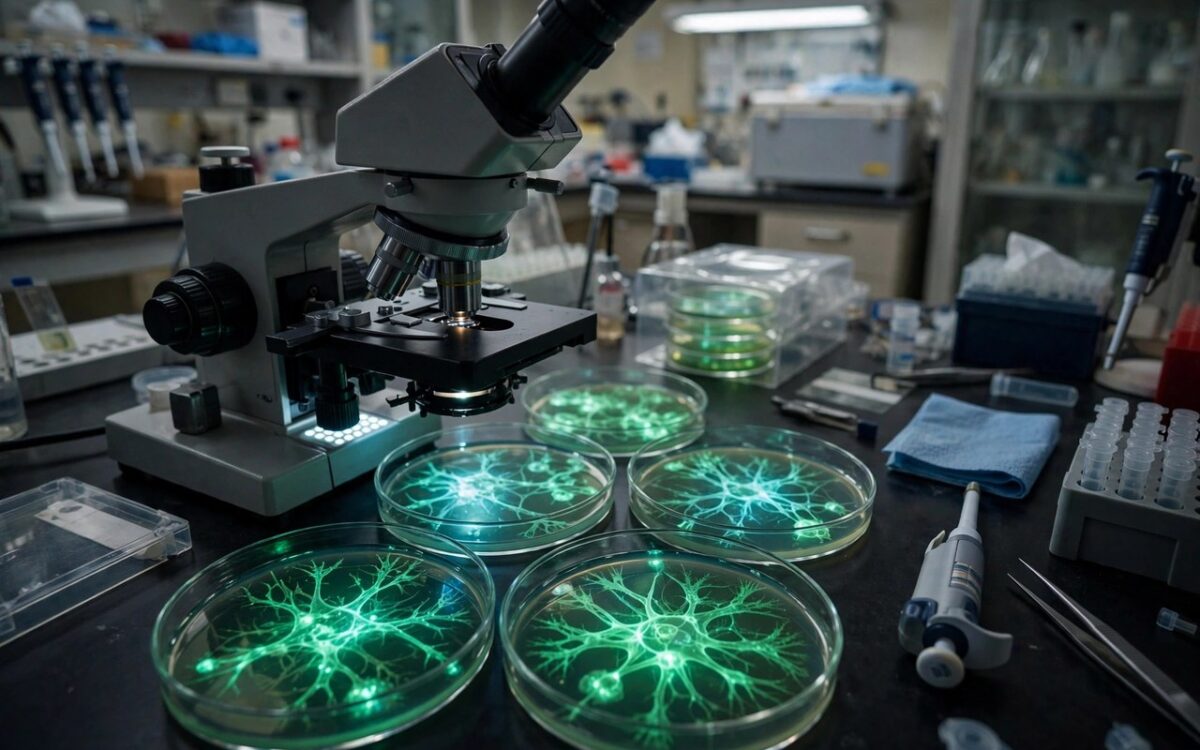
Stanford neuroscientists led by Professor Sergiu Pasca have transplanted lab-grown human brain cells into the brains of mice, creating hybrids with partly human brain tissue. The work was published in Nature around September 16, 2026.
The mice could model conditions like autism, schizophrenia, epilepsy and cerebral palsy for drug testing and behavioral studies. Patient-derived organoids would let researchers watch genetic variants act in real time. Pasca noted that psychiatry has one of the lowest clinical-trial success rates in medicine, and even drugs that work in animal models fail dramatically in the clinic.
The scientists stress these are not mice that think like humans. The work was carried out with independent ethical scrutiny, though the New York Times and STAT noted calls for new ethical guidelines as the science advances.
Separately, the Connecticut startup Bexorg keeps donated human brains metabolically active for about 24 hours using a synthetic blood system called BrainEx, which Biohaven is using for drug testing, according to a Science report.
Related stories
View all →
SpaceX and NASA roll out Crew-13 for October 1 launch
NASA and SpaceX have rolled the Crew-13 mission out to the launch pad and completed a static fire test ahead of a…

NASA targets December for uncrewed Starliner flight
NASA is targeting December 2026 for an uncrewed test flight of Boeing's Starliner spacecraft to the International Space Station, a milestone the…

Astronomers capture gas swirls feeding newborn giant planet
ALMA observations show gas streams interacting with WISPIT 2b, a 4.9-Jupiter-mass planet 430 light-years away, in a rare direct view of planet…

Khabar 24h Editorial Desk — our explainers are prepared by the Khabar 24h editorial team using AI-assisted research tools, and every piece is reviewed by a human editor before publishing. We do not claim original reporting: our work is turning complex topics into simple, accurate summaries. Spotted an error? Write to contact@khabar24h.com — our corrections policy aims for same-day review.
More from this author →
Leave a Reply