Green Hydrogen: Why It Is Called the Fuel of the Future
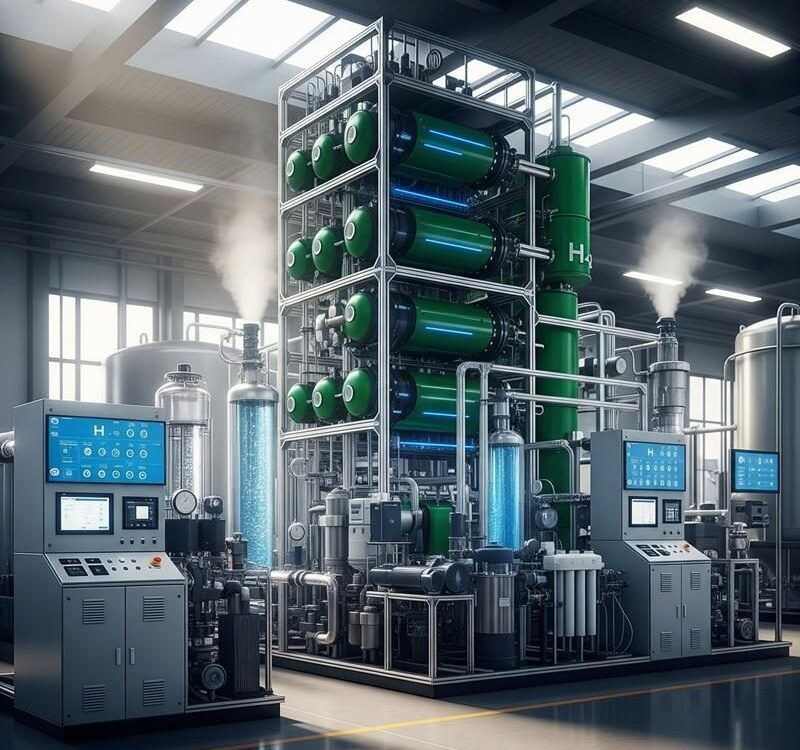
Hydrogen is the universe’s simplest element and, some believe, the future’s most versatile fuel. Burn it and you get only water; run it through a fuel cell and you get electricity with water as the sole exhaust. But almost all hydrogen today is made from fossil fuels, releasing carbon dioxide in the process. Green hydrogen changes the equation: produced by splitting water with renewable electricity, it carries no carbon baggage at all. That is why it is called the fuel of the future, a clean energy carrier for the sectors that electricity alone cannot easily reach.
The colours of hydrogen
Hydrogen is colourless, but the industry speaks in colours to describe how it is made. Grey hydrogen, the vast majority today, comes from steam reforming natural gas, releasing about 10 tonnes of CO2 per tonne of hydrogen. Blue hydrogen does the same but captures most of the carbon, a cleaner but still fossil-dependent route. Green hydrogen is made by electrolysis, passing renewable electricity through water to split it into hydrogen and oxygen, with zero direct emissions. There are also pink (nuclear-powered electrolysis) and turquoise (methane pyrolysis producing solid carbon) variants, but green is the gold standard for deep decarbonisation.
How electrolysis works
An electrolyser is essentially a fuel cell run in reverse. Water flows into a stack of cells where an electric current splits H2O into hydrogen at one electrode and oxygen at the other. The main technologies differ in their membranes and operating conditions: alkaline electrolysers are mature and cheap, proton-exchange membrane (PEM) units respond quickly to variable renewable power, and solid oxide electrolysers, running hot, promise higher efficiency. Costs have been falling as manufacturing scales, and the dream is electrolysers as commoditised as solar panels, churning out green hydrogen wherever cheap renewable power is abundant.
Where green hydrogen actually makes sense
Hydrogen is inefficient for uses that batteries handle well: round-trip efficiency from electricity to hydrogen and back is only 30 to 40 percent, versus over 85 percent for batteries. Its real value lies where electrification struggles:
- Steelmaking, where hydrogen can replace coal as the chemical reductant, not just the heat source.
- Fertilisers and chemicals, which already consume huge amounts of hydrogen made from fossil fuels.
- Long-haul aviation and shipping, via hydrogen-derived synthetic fuels for journeys batteries cannot cover.
- Seasonal energy storage, banking summer solar as hydrogen for winter demand.
The hard problems
Green hydrogen faces formidable obstacles. It is expensive, currently several times the cost of grey hydrogen, and closing the gap needs cheaper electrolysers, abundant cheap renewables and carbon pricing. Hydrogen is a slippery molecule: it leaks easily, embrittles steel pipelines, and must be compressed, liquefied or converted to ammonia for transport, each step costing energy. Building the pipelines, terminals and storage caverns of a hydrogen economy is a decades-long infrastructure project. And there is a lively debate about overhyping: some proposed uses, like hydrogen boilers for home heating, look wasteful compared with heat pumps.
India’s green hydrogen push
India has some of the world’s best solar resources and a massive industrial hydrogen demand in refineries and fertiliser plants, making it a natural green hydrogen contender. The National Green Hydrogen Mission targets millions of tonnes of annual production capacity by 2030, backed by incentives for electrolyser manufacturing and production. Pilot projects are blending green hydrogen into industrial processes and testing fuel-cell transport. If costs fall as hoped, India could become both a major consumer and an exporter, shipping sunshine abroad in the form of green ammonia.
FAQs
Is hydrogen safe? It is flammable and needs careful handling, but it disperses upward rapidly outdoors, and a century of industrial use has built solid safety practice. Fuel-cell vehicles meet stringent crash standards.
Why not just use batteries everywhere? Batteries win for cars and short-term storage, but they cannot practically power a cargo ship across an ocean or run a steel furnace; hydrogen fills those gaps.
When will green hydrogen be cheap? Projections vary, but many analysts see cost parity with grey hydrogen in the best locations by the early 2030s, driven by cheap renewables and scale.
Green hydrogen is not a silver bullet but a specialist tool: the clean molecule for the hard corners of decarbonisation that electrons cannot reach. Whether it becomes a pillar of the energy system or a niche product depends on how fast costs fall, and on the discipline to aim it where it truly matters.
Source: International Energy Agency

Khabar 24h Editorial Desk — our explainers are prepared by the Khabar 24h editorial team using AI-assisted research tools, and every piece is reviewed by a human editor before publishing. We do not claim original reporting: our work is turning complex topics into simple, accurate summaries. Spotted an error? Write to contact@khabar24h.com — our corrections policy aims for same-day review.
More from this author →