Drought-Resistant Crops: The Science of Breeding Plants for a Hotter India
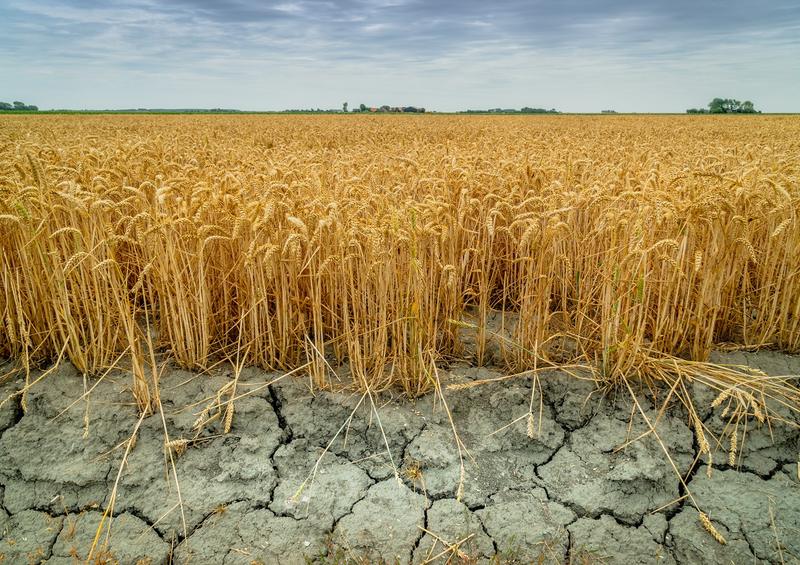
Indian agriculture lives on the monsoon’s mercy, and the monsoon is becoming less merciful: more intense downpours, longer dry gaps, and heatwaves striking during critical flowering stages. For the 120 million farming households whose livelihoods depend on rain-fed crops, drought tolerance is not an academic trait but survival. Plant breeders are responding with a quiet revolution, developing rice, wheat, maize, millets and pulses that yield reliably with less water and more heat. The science spans from traditional selection in farmers’ fields to gene editing of drought-response pathways, and India, with its vast breeding infrastructure and its own hardy crops like millets, is at the centre of it. Here is how scientists build a crop that thrives on thirst.
How plants survive drought
Plants fight drought with a toolkit evolved over millions of years. Escape: short-duration varieties that flower and set seed before the water runs out, the strategy behind 90-day rice varieties for drought-prone regions. Avoidance: deep, prolific roots that chase receding moisture, waxy leaves and closed stomata that cut water loss, and leaves that roll or angle away from the sun to reduce heating. Tolerance: cells that accumulate protective compounds like proline and sugars to survive dehydration, and proteins that shield cellular machinery. Breeders select for these traits using managed-stress trials, growing thousands of lines under controlled drought and keeping the survivors. India’s own Sahbhagi Dhan, a drought-tolerant rice released for rain-fed lowlands, and wheat varieties like HD-2967’s successors, show the approach working in farmers’ fields. The International Rice Research Institute’s drought breeding, much of it tested in India, has produced varieties yielding 1 to 1.2 tonnes per hectare under severe drought where traditional varieties fail completely.
Genes, markers and editing
Modern breeding accelerates the ancient art with genomics. Quantitative trait loci, chromosome regions associated with drought tolerance, let breeders use DNA markers to select seedlings carrying desired traits without waiting for drought to test them, a technique called marker-assisted selection that has halved breeding times. The Sub1 gene for flood tolerance and the DRO1 gene for deep rooting in rice are famous examples of single genes with large effects moved into popular varieties. Genetic engineering adds options: drought-tolerant maize with bacterial cold-shock proteins is grown commercially in America, though regulatory and political hurdles have limited such crops in India. CRISPR gene editing promises precision without foreign DNA, tweaking a crop’s own drought-response genes; edited rice and tomato lines with improved water-use efficiency already exist in laboratories. India’s regulatory framework now treats certain gene-edited plants similarly to conventionally bred ones, potentially unlocking faster deployment. The pipeline from gene to farmer’s field, once measured in decades, is compressing to years.
Millets: India’s drought insurance
While scientists engineer resilience into rice and wheat, India already grows crops born resilient: millets. Pearl millet, finger millet, foxtail millet and sorghum evolved in arid conditions, needing a fraction of rice’s water and thriving in heat that withers wheat. The UN-declared International Year of Millets in 2023 spotlighted their potential, and India has pushed millet procurement, processing and promotion. Breeding is modernising them too: biofortified pearl millet with high iron, hybrids with higher yields, and genomic selection accelerating improvement. Agronomists increasingly advocate a portfolio approach: drought-proof the staples with breeding, and diversify toward inherently hardy crops where water is scarcest. Combined with water management, drip irrigation, watershed restoration, soil health, resilient varieties are one pillar of climate adaptation. The goal is not a miracle crop but a farming system that bends without breaking when the rains falter, as they increasingly will.
- Sahbhagi Dhan rice yields under severe drought where traditional varieties fail.
- The DRO1 gene gives rice deeper roots that chase receding soil moisture.
- Millets need a fraction of rice’s water and tolerate extreme heat.
- Marker-assisted selection has roughly halved the time to breed new varieties.
- India celebrated the UN International Year of Millets in 2023.
FAQs
Are drought-resistant crops genetically modified? Most are conventionally bred or marker-selected; some use genetic engineering or gene editing, which face separate regulation in India.
Do drought-tolerant varieties yield less in good years? Early ones sometimes did, but modern breeding has largely eliminated the yield penalty under favourable conditions.
What can farmers do besides new seeds? Mulching, conservation tillage, farm ponds, drip irrigation and weather advisories multiply the benefit of resilient varieties.
Breeding crops for a hotter, drier India is applied evolution at speed: selecting, crossing and editing toward plants that feed the country whatever the sky does.
Compiled by the Khabar 24h Editorial Desk from publicly available sources.

Khabar 24h Editorial Desk — our explainers are prepared by the Khabar 24h editorial team using AI-assisted research tools, and every piece is reviewed by a human editor before publishing. We do not claim original reporting: our work is turning complex topics into simple, accurate summaries. Spotted an error? Write to contact@khabar24h.com — our corrections policy aims for same-day review.
More from this author →