What Is a Power Bank’s mAh Rating? How to Choose the Right One
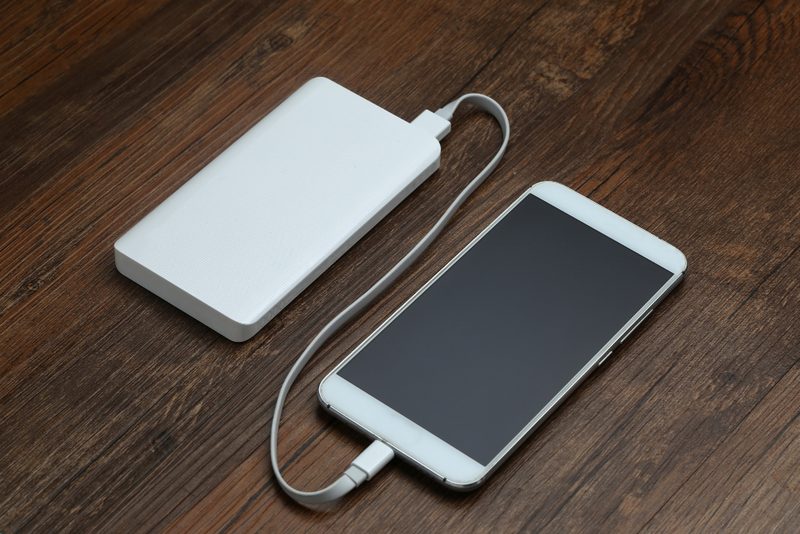
Power bank boxes shout big numbers: 10,000mAh, 20,000mAh, even 30,000mAh. Most buyers assume a 10,000mAh bank charges a 5,000mAh phone twice. It does not, and the shortfall surprises everyone the first time. The milliamp-hour rating is real but widely misunderstood, tangled up with voltage conversions and efficiency losses. This guide explains what mAh actually means, how to calculate the charges you will really get, and how to choose the right power bank.
What milliamp-hours actually measure
A milliamp-hour is a unit of electric charge: a 10,000mAh battery can theoretically deliver 10,000 milliamps for one hour, or 1,000 milliamps for ten hours. It measures charge, not energy; energy also depends on voltage. Here is the catch manufacturers rely on: the mAh rating refers to the internal battery cells, which operate at 3.7 volts, while your phone charges at 5 volts or higher. Converting 3.7V charge to 5V output loses about a quarter of the headline number before a single electron reaches your phone. Add conversion inefficiency in the circuitry, heat losses, and the phone’s own charging overhead, and real-world efficiency lands around 60 to 70 per cent of the rated capacity. The number is honest; the interpretation most buyers make is not.
Calculating real charges
The practical formula: take the power bank’s rated mAh, multiply by 0.65 for a realistic efficiency estimate, then divide by your phone’s battery capacity in mAh. A 10,000mAh bank therefore delivers about 6,500mAh of usable charge, roughly 1.3 full charges for a 5,000mAh phone, not two. A 20,000mAh bank gives about 2.5 to 2.7 charges. Worked examples help: for a weekend trip with a 5,000mAh phone used heavily, one and a half charges per day means a 20,000mAh bank is the comfortable minimum. For daily top-ups at the office, 10,000mAh suffices and stays pocket-friendly. Remember that charging two devices, or charging while using the phone, consumes the budget faster.
Beyond mAh: the specs that matter
Capacity is only the beginning.
- Output wattage: 18W to 22.5W covers most phones’ fast charging; 65W banks can charge laptops too.
- Ports: USB-C is now essential; multiple ports let you charge phone and earbuds together.
- Input speed: how fast the bank itself recharges; slow refills are the hidden annoyance of cheap banks.
- Pass-through charging: charge the bank and your phone simultaneously overnight.
- Display: a percentage readout beats vague LED dots for knowing remaining capacity.
- Airline limits: batteries over 100Wh, roughly 27,000mAh, face flight restrictions; stay under for travel.
- Build and safety: BIS certification in India, overcharge and short-circuit protection are non-negotiable.
A 10,000mAh bank with 22.5W output and USB-C beats a 20,000mAh bank with sluggish 10W output for most real use.
Choosing the right power bank
Match capacity to your pattern. Daily commuters topping up one phone: 10,000mAh, light and pocketable. Travellers and heavy users: 20,000mAh, the sweet spot of capacity and portability. Laptop chargers: 20,000mAh or more with 65W output and USB-C Power Delivery. Multi-device families: high capacity with two or three ports. Then filter by brand reputation and BIS certification; the market is flooded with inflated-capacity fakes whose real cells are a fraction of the label. Genuine banks from established brands cost more per mAh but deliver their rated capacity and do not become fire hazards. Weight matters too: 20,000mAh banks approach half a kilo, noticeable in a pocket all day.
Care, safety and longevity
Lithium batteries demand respect. Do not leave power banks in hot cars; heat degrades cells and, in extreme cases, causes fires. Use quality cables; frayed cables are a genuine hazard. Recharge the bank every few months even when unused, since deep discharge damages cells. Retire swollen banks immediately: puffiness means gas buildup and real fire risk; do not puncture or bin them, take them to e-waste collection. Buy from reputable sellers, because counterfeit banks with undersized cells and no protection circuits are the ones that make headlines. Treated well, a good power bank serves for years and hundreds of cycles.
FAQs
Why does my 10000mAh bank not charge my phone twice? Voltage conversion and efficiency losses leave about 60 to 70 per cent usable, roughly 1.3 charges for a 5000mAh phone. The rating is real; the expectation was wrong.
Can I carry a power bank on flights? Yes, in cabin baggage only, never checked luggage. Stay under 100Wh, about 27000mAh, to avoid airline approval requirements.
Is fast charging from a power bank safe? Yes, if both devices support the protocol. Certified banks negotiate safe voltages just like wall chargers.
Milliamp-hours are honest numbers wrapped in misunderstood physics. Apply the 65 per cent rule, buy certified, size for your real usage, and your power bank will deliver exactly what the maths promised.
Source: Battery University

Khabar 24h Editorial Desk — our explainers are prepared by the Khabar 24h editorial team using AI-assisted research tools, and every piece is reviewed by a human editor before publishing. We do not claim original reporting: our work is turning complex topics into simple, accurate summaries. Spotted an error? Write to contact@khabar24h.com — our corrections policy aims for same-day review.
More from this author →