Drip Irrigation: The Engineering Behind Saving Every Drop of Water
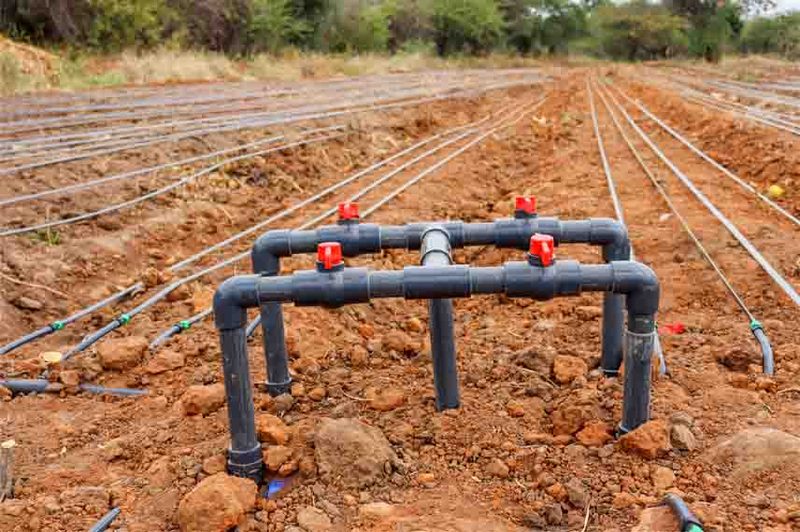
Agriculture drinks about 80 per cent of India’s freshwater, and most of it is wasted. Traditional flood irrigation, still dominant, loses enormous volumes to evaporation, runoff and deep percolation, with field efficiencies often below 40 per cent. In a country where groundwater is depleting dangerously across the northwest and monsoons are growing erratic, such waste is a slow catastrophe. Drip irrigation offers a radically different physics: instead of flooding fields, it delivers water drop by drop directly to each plant’s root zone through a network of pipes, emitters and filters, achieving efficiencies of 90 per cent or more. The engineering is elegant, the water savings enormous, and the yield gains real. Yet adoption in India, though growing, remains a fraction of its potential. Here is how drip works, and what it will take to scale it.
How a drip system works
A drip system is plumbing with precision. Water from a well, canal or tank first passes through filtration, sand, screen or disc filters, because emitters clog easily, then through a pump and pressure regulators into main and sub-main pipes. From there, thin lateral tubes run along crop rows, with emitters, tiny engineered orifices or labyrinth channels, releasing water at rates as low as 1 to 4 litres per hour directly at each plant’s base. The water spreads through the soil by capillary action, wetting a bulb-shaped root zone while the surface between rows stays dry, which suppresses weeds and evaporation. Fertigation, injecting dissolved fertiliser into the drip lines, delivers nutrients with the water at exactly the right dose and timing, cutting fertiliser use by a third or more while boosting uptake. Automation adds soil-moisture sensors and timers, or even phone-controlled valves, turning irrigation from guesswork into control engineering. The physics is simple, wet only where roots are, but the execution demands clean water, correct pressure and maintenance.
The numbers: water, yield and money
The performance data is compelling. Drip typically saves 40 to 70 per cent of water compared with flood irrigation, depending on crop and soil, while increasing yields 20 to 50 per cent through better aeration, precise nutrition and reduced stress. Sugarcane in Maharashtra, the classic case, uses dramatically less water under drip while yielding more, critical in a state where the crop’s thirst has drained aquifers. Studies across cotton, banana, vegetables and orchards show similar gains, plus energy savings from pumping less water. The economics work but slowly: installation costs 50,000 to 1,00,000 rupees per hectare, though government subsidies under the Per Drop More Crop scheme cover 35 to 55 per cent for small farmers, and payback typically comes in 2 to 4 years through water, fertiliser, labour and energy savings plus higher output. The barriers are real: upfront cost, clogging in silty water, damage by rodents and farm equipment, and the need for technical support. But where water is priced or scarce, drip wins decisively, which is why Israel made it universal and why water-stressed Indian states are pushing it hard.
Scaling drip across India
India has about 70 million hectares under irrigation, but drip covers only around 5 to 6 million hectares, concentrated in Maharashtra, Andhra Pradesh, Gujarat, Tamil Nadu and Karnataka. The potential, especially for water-guzzling sugarcane, cotton, banana and vegetables, is several times that. Scaling faces systems challenges: fragmented landholdings complicate network design, though community drip projects and farmer-producer organisations are solving this; power supply must be reliable for pressurised systems, linking drip to solar pumps in a promising combination; and extension services must teach maintenance, because a clogged, abandoned drip system saves nothing. Policymakers are aligning incentives: some states tie electricity subsidies to drip adoption, and the national micro-irrigation fund finances expansion. The deeper prize is aquifer recovery: in Punjab and Haryana, where water tables fall metres yearly, shifting even part of paddy-wheat irrigation to efficient methods could slow the depletion. Drip will not solve India’s water crisis alone, but no solution is credible without it.
- Drip irrigation achieves 90 per cent-plus water efficiency versus under 40 per cent for flood methods.
- Water savings of 40 to 70 per cent with yield gains of 20 to 50 per cent are typical.
- Fertigation through drip lines can cut fertiliser use by a third or more.
- Government subsidies cover 35 to 55 per cent of installation costs for small farmers.
- Only about 5 to 6 million of India’s 70 million irrigated hectares use drip.
FAQs
Does drip work for all crops? Best for row crops, orchards, vegetables, sugarcane and cotton; less suited to flooded paddy, though alternate wetting methods help rice.
What causes emitter clogging? Silt, algae, mineral precipitates and roots; proper filtration, periodic flushing and chlorination prevent most problems.
Can small farmers afford drip? With subsidies, payback in 2 to 4 years is typical; community systems and custom-hiring models are lowering the entry barrier further.
Every drop delivered to a root instead of evaporated from a flooded field is water for the future. Drip irrigation is not just plumbing; it is the engineering of agricultural survival in a thirstier century.
Compiled by the Khabar 24h Editorial Desk from publicly available sources.

Khabar 24h Editorial Desk — our explainers are prepared by the Khabar 24h editorial team using AI-assisted research tools, and every piece is reviewed by a human editor before publishing. We do not claim original reporting: our work is turning complex topics into simple, accurate summaries. Spotted an error? Write to contact@khabar24h.com — our corrections policy aims for same-day review.
More from this author →