Deep-Sea Trenches: What Lives at the Bottom of the Ocean
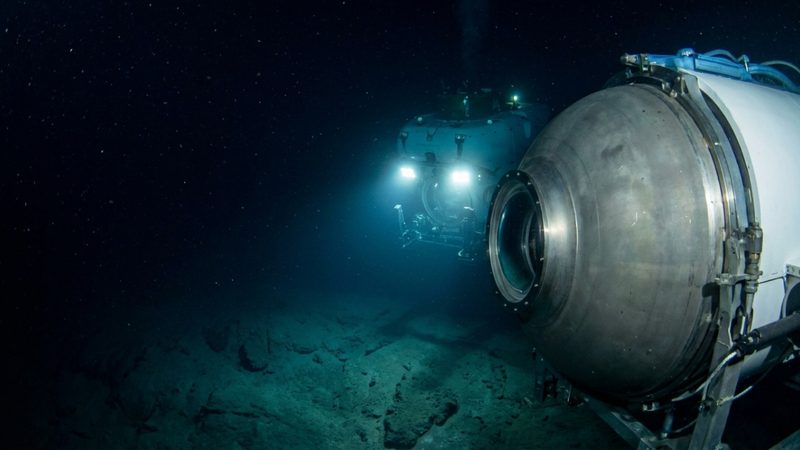
The deepest places on Earth are not mountain valleys but ocean trenches, plunging nearly 11 kilometres beneath the waves, deeper than Mount Everest is tall. Down there, pressure exceeds a thousand atmospheres, temperatures hover near freezing, and sunlight has never penetrated. Yet these abyssal zones are not lifeless. Submersibles and landers have found thriving communities of strange, often ghostly creatures, from amphipods the size of rabbits to fish living at the edge of biological possibility. The trenches are Earth’s final frontier, less explored than the Moon’s surface.
How trenches form
Trenches are the scars of plate tectonics. Where an oceanic plate collides with another plate, the denser slab bends and dives into the mantle in a process called subduction, and the seafloor dimples into a deep V-shaped chasm. The Mariana Trench, the deepest at nearly 11 kilometres in its Challenger Deep, marks where the Pacific Plate plunges beneath the Philippine Plate. These subduction zones are also where the planet’s largest earthquakes and tsunamis are born. The 2004 Indian Ocean and 2011 Japan disasters both ruptured trench faults, linking the deep ocean directly to human catastrophe and motivating India’s own tsunami warning system.
Life under a thousand atmospheres
The pressure at trench bottoms, over 1,000 times surface pressure, would crush most familiar life, yet specialised organisms flourish. Their biochemistry adapts: cell membranes incorporate special fats that stay fluid under pressure, and proteins evolve pressure-resistant structures. The hadal snailfish, the deepest-living fish known, swims below 8 kilometres, translucent and tadpole-like. Giant amphipods, crustacean scavengers the size of small rabbits, swarm carcasses that drift down. Microbial mats coat rocks, and recent expeditions keep discovering new species, suggesting the trenches harbour vast unknown biodiversity waiting to be catalogued.
What feeds the deep
No sunlight means no photosynthesis, so trench ecosystems run on falling food. Marine snow, a constant drizzle of dead plankton, faeces and debris from the sunlit waters above, sustains the base of the food web. Occasional windfalls, whale carcasses, sunken wood, trigger feeding frenzies among scavengers. Trenches may also concentrate this food: their V-shape funnels sinking debris toward the axis, making the deepest zones surprisingly rich in organic matter. Life in the trenches is thus intimately tethered to the surface ocean’s productivity, a kilometre-scale food chain stretching all the way from sunlight to abyss.
How we explore them
Visiting the trenches demands extraordinary engineering. Only a handful of crewed submersibles can reach full ocean depth, with titanium spheres protecting occupants from crushing pressure. More commonly, robotic landers and remotely operated vehicles do the work, descending on cables or autonomously, sampling water, mud and creatures. Each expedition returns surprises: new species, unknown behaviours, and, depressingly, microplastics and industrial pollutants and pollutants in the deepest mud, proof that human contamination has reached everywhere. Fewer people have visited the Challenger Deep than have walked on the Moon.
The hadal zone’s hidden geology
Beyond biology, trenches are geological treasure chests. Their sediments archive millions of years of earthquakes as distinctive turbidite layers, letting scientists reconstruct prehistoric megaquakes. The subducting slab carries water and carbon deep into the mantle, influencing volcanism for millions of years afterward. Studying trench geology is thus studying the deep engine of plate tectonics itself.
Why trenches matter
Trenches are scientifically precious far beyond their wow factor:
- Earthquake science: trench faults generate the largest quakes and tsunamis; studying them saves lives.
- Carbon cycling: trenches bury organic carbon in their sediments, part of the planet’s long-term climate regulation.
- Biotechnology: pressure-adapted enzymes have industrial and medical potential.
- Astrobiology: trench microbes show life’s resilience, informing the search for life on ocean worlds like Europa.
FAQs
Could a human survive at the bottom unprotected? No. The pressure would be instantly fatal; only engineered vessels make the descent possible.
Is there really less exploration than the Moon? In terms of human visits and detailed mapping, yes. The deep ocean remains Earth’s least explored habitat.
Do trenches ever fill in? Sediments do accumulate, but subduction continuously renews the trench; they persist for tens of millions of years.
Deep-sea trenches are where geology, biology and extremes meet: tectonic wounds in the planet’s crust that became sanctuaries for life’s strangest experiments. As exploration accelerates, the bottom of the ocean is yielding its secrets, reminding us that Earth still keeps vast mysteries in its own backyard.
Source: Woods Hole Oceanographic Institution

Khabar 24h Editorial Desk — our explainers are prepared by the Khabar 24h editorial team using AI-assisted research tools, and every piece is reviewed by a human editor before publishing. We do not claim original reporting: our work is turning complex topics into simple, accurate summaries. Spotted an error? Write to contact@khabar24h.com — our corrections policy aims for same-day review.
More from this author →