Canadian telescope maps earliest glow of hydrogen
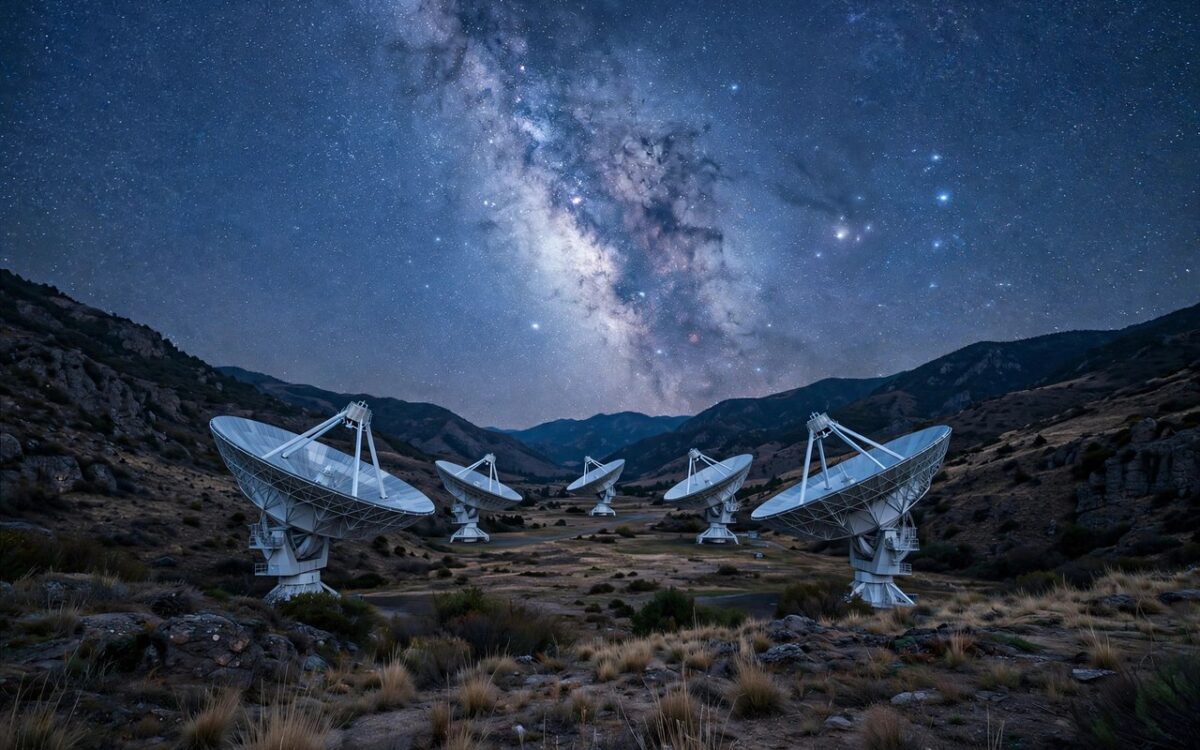
Canada’s CHIME telescope has directly mapped the earliest glow of hydrogen in the universe, opening a new window on dark energy. The results were published in The Astrophysical Journal.
The team detected the faint radio signal using only CHIME’s own data, without help from other telescopes. The feat shows the method works on its own.
Hydrogen’s glow traces how matter was spread across the young universe. By mapping it, scientists can measure how fast the universe expanded over time.
That expansion history holds clues to dark energy, the mysterious force pushing the cosmos apart. The new technique could offer a cheaper way to study it.
The researchers plan larger surveys in the coming years. They said the breakthrough turns CHIME into a powerful cosmology machine.
CHIME sits in a valley in British Columbia, Canada, where radio interference is low. Its four large antennas scan the whole sky overhead every day.
Related stories
View all →
CSIR launches five new science magazines
CSIR launched five new science magazines in English, Hindi and regional languages on its 85th foundation day.
Cabinet clears Rs 2,000 crore Mission Mausam plan
The Union Cabinet approved Mission Mausam, a Rs 2,000 crore plan to make India weather-ready and climate-smart.
Webb Study Shows Planet Formation Is a Race Against Time
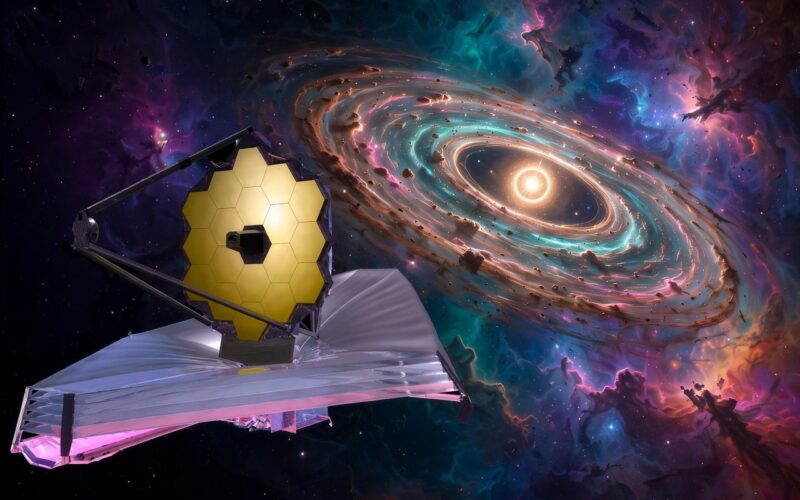
New research using NASA's James Webb Space Telescope shows that forming giant planets is a race against time. The study examined 72…

Khabar 24h Editorial Desk — our explainers are prepared by the Khabar 24h editorial team using AI-assisted research tools, and every piece is reviewed by a human editor before publishing. We do not claim original reporting: our work is turning complex topics into simple, accurate summaries. Spotted an error? Write to contact@khabar24h.com — our corrections policy aims for same-day review.
More from this author →
Leave a Reply