The Indo-Pacific Explained: The Geopolitical Concept Reshaping Asia
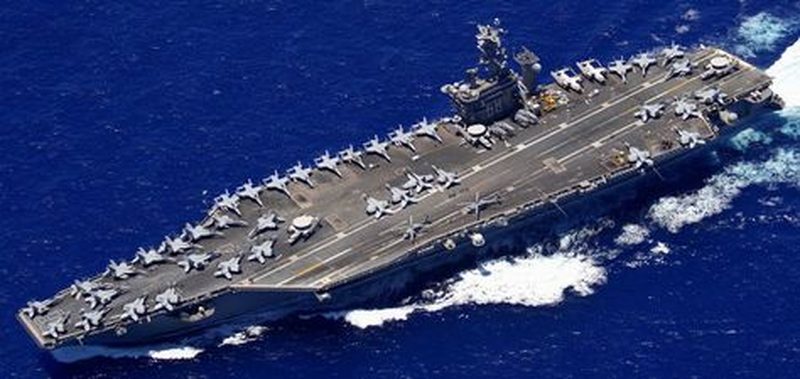
The Indo-Pacific — the vast maritime space stretching from East Africa to the Pacific islands — has become the central concept of 21st-century geopolitics. Once strategists spoke of the Asia-Pacific; today, capitals from Washington to New Delhi frame their foreign policy around the Indo-Pacific, a term that yokes the Indian and Pacific Oceans into a single strategic theatre. The shift is not just semantic: it reflects China’s rise, India’s emergence and the contest over the rules governing the world’s busiest sea lanes.
Where did the term come from?
The concept has Japanese roots: Prime Minister Shinzo Abe spoke of the confluence of the two seas in 2007, and his 2016 Free and Open Indo-Pacific vision gave it strategic content. Australia, India and then the United States adopted the vocabulary — the Trump administration renamed Pacific Command as Indo-Pacific Command in 2018 — and the EU, France, Germany and ASEAN issued their own Indo-Pacific outlooks. The term’s genius is political: it includes India as a central player, excludes no one explicitly, and frames China as one power among many in a shared commons rather than Asia’s natural hegemon.
Why does the geography matter?
The Indo-Pacific contains the world’s most consequential waterways. The Strait of Malacca, the South China Sea and the Indian Ocean carry the bulk of global trade, including most of East Asia’s energy imports. Whoever shapes the rules here — freedom of navigation, port access, undersea cables — shapes the global economy. China’s island-building in the South China Sea, its Belt and Road ports from Sri Lanka to Djibouti, and its growing navy have convinced rival capitals that the maritime order cannot be taken for granted. The Indo-Pacific framing turns scattered anxieties into a coherent theatre.
How do different powers use the concept?
Each capital bends the Indo-Pacific to its own strategy. For the United States, it justifies alliances, naval presence and partnerships like the Quad and AUKUS. For India, it validates a larger maritime role and partnerships beyond its continental fixations. For Japan and Australia, it anchors American engagement in the region. ASEAN issued its own Outlook to insist on centrality — the region’s architecture must remain ASEAN-led. China rejects the term, preferring Asia-Pacific, and reads the whole construct as containment. The contest over the name is the contest over the region’s future in miniature.
What are the key flashpoints?
The concept organises several overlapping rivalries.
- South China Sea: China’s sweeping claims and militarised reefs versus rival claimants and freedom-of-navigation operations.
- Taiwan Strait: the most dangerous potential conflict, where American deterrence meets Chinese reunification resolve.
- Indian Ocean: India’s backyard, where Chinese submarines and ports feed New Delhi’s encirclement fears.
- Pacific islands: microstates courted with aid and attention as strategic real estate.
- Technology: semiconductors, 5G and undersea cables as the infrastructure of power.
The Indo-Pacific will define this century’s geopolitics the way Europe defined the last one’s. Whether it becomes a zone of managed competition or of conflict depends on whether its rival visions — a free and open commons, or a China-centred order — can coexist. The concept’s power is that it forces every power to answer the same question: what kind of region do you want?
India’s Indo-Pacific role
For India, the Indo-Pacific concept resolved a strategic tension: a continental power with a 7,500-km coastline and island territories astride the Malacca Strait. New Delhi’s Act East policy, naval exercises from Malabar to La Perouse, and port investments like Chabahar in Iran reflect a maritime turn decades in the making. India brings to the Indo-Pacific something no other member can: a democratic counterweight to China that is not a US ally, giving the concept credibility across the Global South. The 2023 G20 presidency’s Indo-Pacific language cemented New Delhi’s ownership of the idea.
FAQs
What is the difference between Asia-Pacific and Indo-Pacific?
Asia-Pacific centres East Asia and the Pacific; Indo-Pacific adds the Indian Ocean and India, framing a larger maritime theatre and implicitly countering China-centric views of Asia.
Who invented the Indo-Pacific concept?
Japan’s Shinzo Abe popularised it, with his 2007 confluence-of-seas speech and 2016 Free and Open Indo-Pacific vision; the US, India and Australia then adopted it.
Does China accept the term?
No. Beijing prefers Asia-Pacific and views the Indo-Pacific construct as an American-led containment strategy directed against China.
Source: The Diplomat

Khabar 24h Editorial Desk — our explainers are prepared by the Khabar 24h editorial team using AI-assisted research tools, and every piece is reviewed by a human editor before publishing. We do not claim original reporting: our work is turning complex topics into simple, accurate summaries. Spotted an error? Write to contact@khabar24h.com — our corrections policy aims for same-day review.
More from this author →