Women’s Sports in India: Growth, Pay Gap and the Fight for Equality
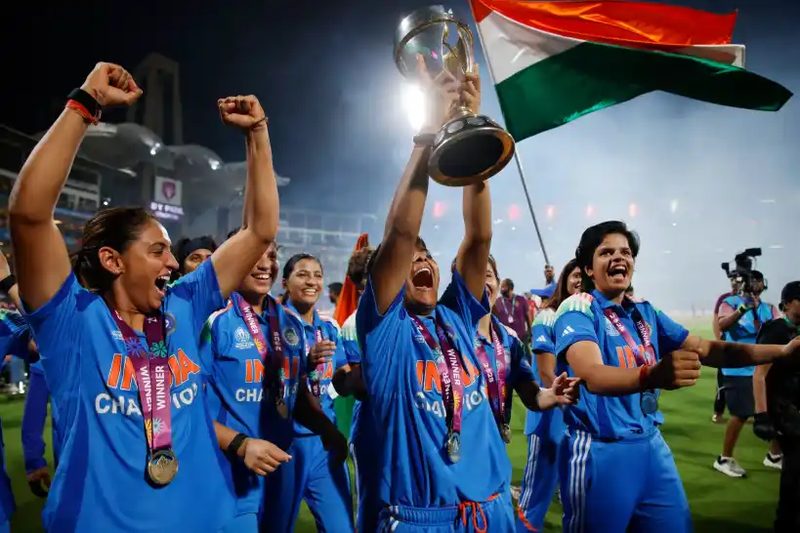
Indian women’s sport is living its most successful era and its most contradictory one. Female athletes win Olympic medals, pack stadiums for cricket, and headline advertising campaigns, yet they still earn less, receive less coverage and fight for facilities their male counterparts take for granted. This is the honest account of women’s sports in India: the growth, the pay gap and the fight for equality.
How far has women’s sport in India come?
The transformation within a generation is staggering. At the 2000 Sydney Olympics, Karnam Malleswari’s weightlifting bronze stood nearly alone; by Tokyo 2020, women won three of India’s seven medals, and Paris 2024 continued the trend. PV Sindhu became India’s most decorated Olympian, Manu Bhaker won two shooting bronzes in a single Games, and the women’s cricket team filled stadiums. The Women’s Premier League, launched in 2023, made Indian women cricketers among the best-paid in world sport overnight. Participation has surged: girls’ enrolment in sports programmes, from Khelo India to private academies, grows yearly. Media coverage, while still unequal, has improved dramatically, with women’s achievements now leading bulletins rather than footnotes.
Where does the pay gap persist?
Progress at the top masks persistent inequality. In cricket, the BCCI’s equal match fees for internationals were landmark, but domestic women cricketers still earn far less than men, and the WPL, while lucrative, cannot match the IPL’s scale. In most other sports, prize money, sponsorship and league salaries favour men heavily: male kabaddi players earn crores at auction while women wait for a professional league; male footballers’ salaries dwarf the women’s game. Endorsement markets value male athletes more, a commercial reality that reflects audience sizes but also perpetuates them. The pay gap is narrowest where women’s sport has proven commercial value, cricket and badminton, and widest where it has not yet been given the platform to prove it.
What barriers do women athletes face?
Money is only part of the story. Safety concerns restrict when and where girls can train, particularly in smaller towns. Families still steer daughters toward academics over sport more often than sons. Coaching and administrative structures remain male-dominated, with too few women in decision-making roles. Facilities lag: women’s teams often get secondary grounds, inconvenient timings and inferior equipment. Menstruation, body image and the lack of women-specific sports science support are under-addressed. And media coverage, the engine of commercial growth, still devotes a small fraction of airtime to women’s sport, creating a vicious circle: less visibility means less sponsorship means less investment means less visibility.
How are leagues changing the picture?
Professional leagues are the great accelerant. The WPL’s first auction made headlines worldwide, with Indian players earning sums that transformed their families’ lives and proved the commercial case for women’s sport. The league’s television ratings surprised sceptics, demonstrating latent demand. Other sports are watching: women’s kabaddi and football leagues are discussed with new seriousness, and the WPL’s success is the template cited in every boardroom. Leagues do what decades of advocacy could not: they make women’s sport a business, and businesses invest. The challenge is extending the model beyond cricket to the sports where women athletes remain amateurs.
What is being done about equality?
Policy is moving. Equal match fees in cricket set a precedent other boards face pressure to follow. The Khelo India scheme reserves support for women athletes, and TOPS funding is gender-blind in principle. Maternity protections, once absent, are being written into contracts and federation policies. Media organisations face growing scrutiny of their coverage ratios. Grassroots programmes targeting girls, from football’s FIFA-backed initiatives to state-level schemes, attack the pipeline problem. And athletes themselves have become advocates: India’s sportswomen increasingly speak about pay, facilities and respect, using their platforms to demand structural change rather than just personal success.
What remains to be won?
The frontier is systemic: professional leagues in more sports, equal prize money across events, women in coaching and administration, safe training environments in every district, and media coverage that treats women’s sport as sport, not a special category. The deeper fight is cultural: the assumption that athletic ambition is natural in boys and exceptional in girls. Every medal, every packed stadium, every record auction weakens that assumption. The trajectory is clear, but the pace is the question. Equality in Indian sport will arrive when a girl’s sporting dream meets the same infrastructure, investment and belief as a boy’s.
FAQs
Do women cricketers earn the same match fees as men in India? Yes, the BCCI introduced equal match fees for men and women internationals, though overall earnings still differ due to the IPL-WPL scale gap.
Which Indian league pays women athletes the most? The Women’s Premier League in cricket, whose auctions made Indian women cricketers among the best-paid in the world.
How many Olympic medals have Indian women won? Indian women have won a growing share of the country’s medals, including three of seven at Tokyo 2020.
Indian women’s sport has never been stronger or more visible, and never more aware of how far remains. The medals prove the talent; the fight now is for the system to match it.
Source: Ministry of Youth Affairs and Sports reports

Khabar 24h Editorial Desk — our explainers are prepared by the Khabar 24h editorial team using AI-assisted research tools, and every piece is reviewed by a human editor before publishing. We do not claim original reporting: our work is turning complex topics into simple, accurate summaries. Spotted an error? Write to contact@khabar24h.com — our corrections policy aims for same-day review.
More from this author →