One Nation, One Election: what the Kovind panel proposed and how close India is to making it happen
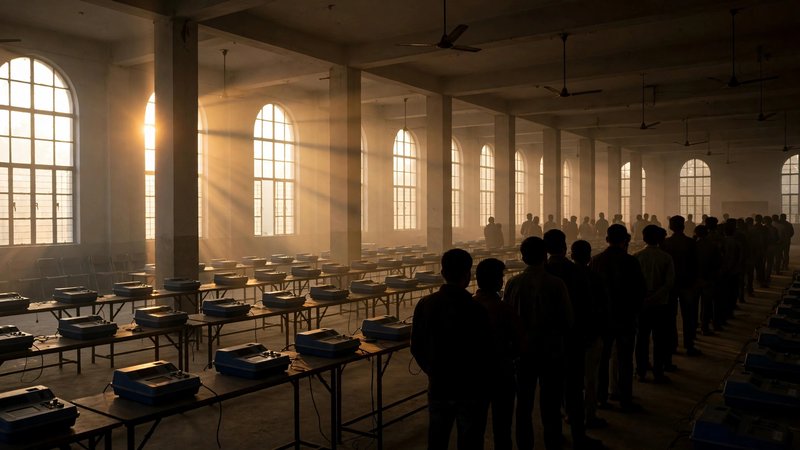
Every year, some part of India is voting. Between the Lok Sabha election and the staggered cycle of state assembly polls, local body elections and by-elections, the country is in near-permanent campaign mode. The proposal known as “One Nation, One Election” would compress all of that into a single, synchronised election held once every five years — voters electing their Member of Parliament and their state legislator on the same day. After a high-powered committee under former President Ram Nath Kovind submitted its blueprint, the idea moved from political slogan to active legislation, and in 2026 it stands closer to reality than it ever has.
What the proposal would change
For the first two decades after independence, India did exactly what the proposal seeks to revive: the Lok Sabha and all state assemblies went to the polls together in 1951-52, 1957, 1962 and 1967. The cycle broke down in the late 1960s and early 1970s, when several assemblies were dissolved early, some Lok Sabha elections were advanced, and states began voting on their own schedules. Today, synchronising them again means amending the Constitution to fix the terms of the House of the People and the state legislative assemblies so that all of them run their five-year terms in parallel. Supporters argue this would cut the enormous cost of repeated elections and free administrators from repeated Model Code of Conduct restrictions that freeze policy decisions. Critics counter that it could nationalise state elections and strain the federal structure by imposing a single timetable on states.
The Kovind committee’s blueprint
Constituted in September 2023, the eight-member committee headed by Ram Nath Kovind consulted political parties, experts and citizens for 191 days before submitting its report to President Droupadi Murmu in March 2024. The report — a 18,626-page document — unanimously backed simultaneous elections and laid out a phased plan:
- Two-step synchronisation: in the first phase, elections to the Lok Sabha and all state legislative assemblies would be held together; in the second phase, elections to municipalities and panchayats would be aligned with them, to be held within 100 days.
- One appointed day: the President would notify an “appointed date” after a general election, after which all assemblies elected subsequently would have their terms aligned so that the next round can be held simultaneously.
- Hung houses and early dissolutions: if a no-confidence motion or a hung assembly forces fresh elections midway, the new house would serve only the remainder of the five-year term, preserving synchronicity.
- A single electoral roll and EPIC: the Election Commission of India, in consultation with the state election commissions, would prepare one common voter list and one set of voter identity cards for all tiers of government.
- A new Article 324A would enable simultaneous elections for municipalities and panchayats alongside general elections.
The committee considered alternatives, including the German model of a constructive vote of no-confidence, but concluded such models were incompatible with Indian parliamentary democracy.
Two bills and the road through Parliament
The committee proposed two separate bills. The first, the Constitution (129th Amendment) Bill, 2024, covers synchronising the Lok Sabha and state assemblies; because it touches provisions that do not require state ratification, it can be passed by a special majority of Parliament alone. The second bill — covering the electoral roll and local body elections, which are state subjects — would need ratification by at least half of the states.
The Union Cabinet accepted the committee’s recommendations, and the first bill was introduced in the Lok Sabha on 17 December 2024 and referred two days later to a 41-member Joint Parliamentary Committee chaired by BJP MP P. P. Chaudhary. The committee has held around 16 sittings — in the Parliament House Annexe and in states including Goa, Maharashtra, Punjab and Karnataka — and consulted six former Chief Justices of India on the constitutional questions. On 11 July 2026, the committee stated that the proposed framework conforms to the Constitution and does not violate the federal structure. The stated target for the first synchronised round of polls is 2029, which would require extending or curtailing the terms of some assemblies as a one-time transitional measure.
Where it stands in 2026
On paper, the proposal has never advanced further: a committee report is accepted, legislation is introduced, and a parliamentary committee has endorsed its constitutionality. The remaining hurdles are political and procedural. The amendment still needs a special majority in each House, and the second bill’s requirement of ratification by half the states adds another long runway. For now, the official position remains that an implementation group will build nationwide consensus. Whether that materialises before the 2029 window will decide if One Nation, One Election becomes a constitutional fact or remains the country’s most debated electoral idea.
Compiled by the Khabar 24h Editorial Desk from publicly available sources.

Khabar 24h Editorial Desk — our explainers are prepared by the Khabar 24h editorial team using AI-assisted research tools, and every piece is reviewed by a human editor before publishing. We do not claim original reporting: our work is turning complex topics into simple, accurate summaries. Spotted an error? Write to contact@khabar24h.com — our corrections policy aims for same-day review.
More from this author →
Leave a Reply