Model Code of Conduct Explained: What Parties Can and Cannot Do During Elections
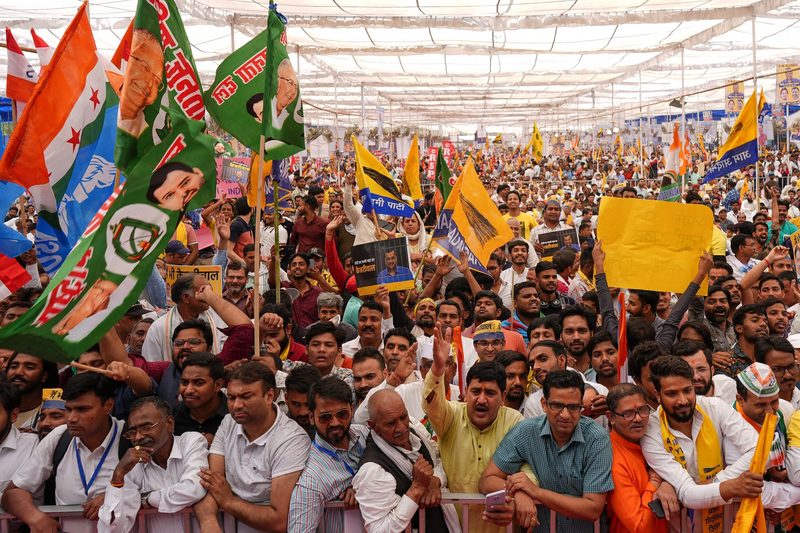
The moment the Election Commission announces an election schedule, a remarkable set of restraints descends on Indian public life. Ministers cannot announce new schemes, governments cannot transfer officials at will, and parties must campaign within strict bounds of language and conduct. This is the Model Code of Conduct, a consensual code of behaviour that has governed every Indian election for decades and is often credited with keeping the playing field level.
What the Code is and where it comes from
The Model Code of Conduct is not a law passed by Parliament but a set of guidelines evolved by the Election Commission in consultation with political parties, first formalised in the 1960s and progressively strengthened. It applies from the announcement of the poll schedule until the results are declared, covering the ruling party or parties, all contesting parties and candidates, and the government machinery. Because parties have collectively agreed to it, the Commission enforces it with moral and administrative authority rather than direct penal power.
What governments cannot do
The Code’s sharpest teeth bite the party in power. Ministers and governments may not announce new projects, schemes or financial grants, lay foundation stones, or make ad hoc appointments once the Code is in force. Official machinery, vehicles and personnel cannot be used for campaigning, and government advertisements at public cost are barred. The logic is straightforward: incumbents should not be able to convert state resources into campaign advantages. The Commission can and does order the transfer of officials seen as partisan and halt government advertising.
What parties and candidates cannot do
For campaigners, the Code prohibits appeals to caste, communal or religious feelings, the use of places of worship for campaigning, bribery and intimidation of voters, and personal attacks that go beyond criticism of public records. Processions and rallies require prior permission, loudspeakers are restricted by timing, and polling-day campaigning near booths is banned. Expenditure by each candidate is capped and must be accounted for daily, with the Commission deploying observers and video surveillance to track spending.
How the Code is enforced
Enforcement runs through the Commission’s field machinery: district election officers, returning officers, expenditure observers and flying squads that seize unaccounted cash and liquor. Complaints from parties and citizens are investigated, and violations can draw censures, campaign bans on star campaigners, or FIRs under relevant laws. The Commission’s power to countermand a poll in cases of large-scale violation is the ultimate sanction. While critics note that enforcement can appear selective, the Code’s public visibility means violations carry political costs beyond formal punishment.
Criticisms and the reform debate
The Code has its detractors. Governments complain that it freezes legitimate administration and development work for weeks. Some argue its speech restrictions sit uneasily with free expression, while others want it given statutory backing so violations attract direct legal penalties. There are also calls to extend its spirit to the period before announcement, when governments sometimes rush through populist decisions. Defenders respond that a short administrative pause is a small price for elections in which incumbents cannot simply buy the outcome with the exchequer.
The Code, the media and paid news
The Code also reaches the information environment. Exit polls cannot be published until the final phase of voting ends, and political advertisements on television, radio, cinema and digital platforms require pre-certification by Commission-appointed committees. Paid news, advertising disguised as journalism, is treated as an electoral offence, and its cost is added to the candidate’s expenditure account. These rules aim to keep the campaign’s most heated days free of manipulation.
FAQs
Is the Model Code of Conduct legally binding? Not as a statute, but violations often breach laws like the Representation of the People Act or the Indian Penal Code, and the Commission enforces it through its constitutional authority over elections.
Does the Code apply to social media campaigning? Yes. The Commission’s guidelines cover digital campaigning, require pre-certification of political advertisements, and mandate a silence period online as well.
Can the government still function during the Code? Yes. Routine administration continues; only new policy announcements, schemes and discretionary transfers are barred.
Voluntary in law but formidable in practice, the Model Code of Conduct is one of Indian democracy’s distinctive inventions: a ceasefire agreement among rivals, policed by a referee they all accept.
Source: Election Commission of India

Khabar 24h Editorial Desk — our explainers are prepared by the Khabar 24h editorial team using AI-assisted research tools, and every piece is reviewed by a human editor before publishing. We do not claim original reporting: our work is turning complex topics into simple, accurate summaries. Spotted an error? Write to contact@khabar24h.com — our corrections policy aims for same-day review.
More from this author →