Char Dham Yatra Explained: Faith, Roads, and the Himalayan Balancing Act
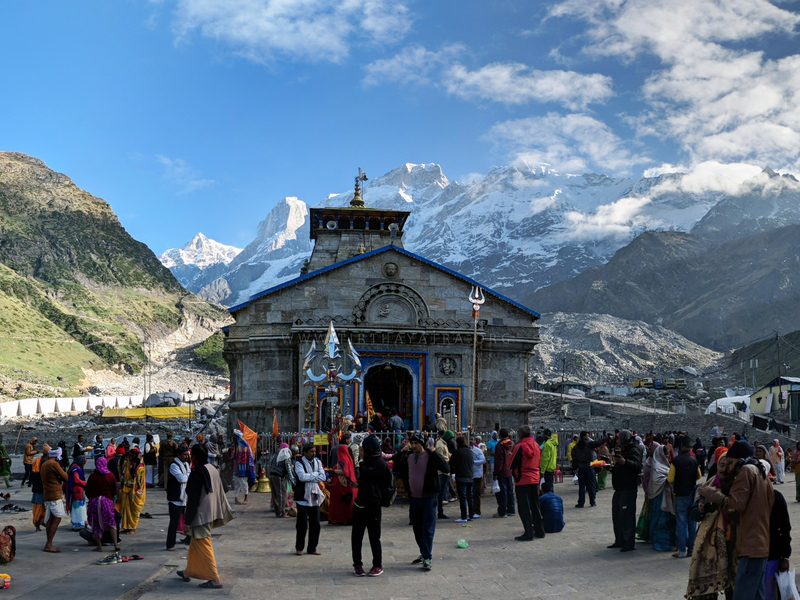
Every summer, between May and October, one of Hinduism’s great pilgrimages unfolds in the high Himalayas of Uttarakhand. The Char Dham Yatra, the journey to the four abodes, Yamunotri, Gangotri, Kedarnath, and Badrinath, draws lakhs of pilgrims up winding mountain roads to shrines perched between 3,000 and 3,600 metres. In recent years, annual footfalls have crossed 50 lakh, straining roads, towns, and a fragile ecology. The yatra is at once an expression of deep faith, a massive logistical exercise, and a case study in the collision between devotion and development. This is the Himalayan balancing act.
The four dhams and their significance
The circuit has ancient roots in the work of Adi Shankaracharya, traditionally credited with establishing the Char Dham pilgrimage, though the Himalayan Char Dham as travelled today took its modern form over the last century as roads reached the high valleys. Yamunotri, source of the Yamuna, is the westernmost and the first stop by convention; Gangotri, source of the Bhagirathi and hence of the Ganga; Kedarnath, the great Shiva shrine and one of the twelve Jyotirlingas, reached by a steep trek; and Badrinath, the Vishnu shrine in the Alaknanda valley, the grandest and most accessible of the four. The temples open in late April or May, on dates fixed by priests, and close around Diwali as winter snows arrive. Pilgrims traditionally complete the circuit in sequence, west to east, though modern travellers often pick and choose. Each shrine has its own character: Yamunotri’s hot springs, Gangotri’s serene deodar forests, Kedarnath’s stark grandeur beneath snow peaks, Badrinath’s colourful facade between two mountains.
Faith at altitude
For pilgrims, the yatra’s hardships are part of its meaning. The thin air, the cold, the long queues, and the treks, particularly the 16-kilometre climb to Kedarnath, are understood as tapasya, spiritual austerity that purifies. Many yatris are elderly, fulfilling a lifelong vow; families travel together across generations; and the chanting of hymns on mountain roads creates a moving, collective atmosphere. The 2013 Kedarnath disaster, when flash floods and landslides killed thousands, seared itself into the pilgrimage’s memory: the temple survived while the town around it was devastated, an event many devotees read as both tragedy and miracle. Since then, faith has not diminished, footfalls have grown, but the disaster shadows every discussion of the yatra’s management, a reminder of what the mountains can do.
Roads, ropeways, and the infrastructure push
The central government’s Char Dham all-weather road project has rebuilt the highways to the four shrines to wider, more reliable standards, cutting travel times and, proponents argue, improving safety and access. The project has been controversial: environmentalists and geologists warned that hill-cutting, muck dumping, and blasting in a fragile, landslide-prone zone could destabilise slopes, and litigation reached the Supreme Court, which allowed the project with environmental safeguards and oversight committees. Parallel plans for ropeways, including to Kedarnath and Hemkund Sahib, promise to ease the trek burden, especially for the elderly. The infrastructure debate captures the yatra’s central tension: better access serves pilgrims and the local economy, but every new road and retaining wall is also an intervention in one of the world’s most geologically active mountain ranges. The 2023 subsidence crisis at Joshimath, a key yatra gateway town, intensified these anxieties.
When lakhs arrive at once
The sheer numbers are the immediate management challenge. Peak-season days see tens of thousands of pilgrims converging on small mountain towns with limited water, sanitation, parking, and medical facilities. Uttarakhand now runs a mandatory online registration system to regulate and track flows, caps daily numbers at sensitive shrines like Kedarnath, and deploys disaster-response teams, medical posts, and weather advisories along the routes. Helicopter services to Kedarnath, limited and weather-dependent, are booked out within minutes. Waste management is a chronic problem: plastic, food waste, and sewage strain towns built for a fraction of the summer population. The state has experimented with green cess charges, waste segregation, and eco-sensitive zone rules, but enforcement in the chaos of peak season remains patchy. Every year is, in effect, a stress test of mountain governance.
The balancing act ahead
The Char Dham Yatra will not get smaller; faith, better roads, and publicity ensure growth. The question is whether growth can be managed within the Himalayas’ carrying capacity. Scientists call for carrying-capacity studies for each shrine town, real limits on daily footfalls, and infrastructure that works with the mountains rather than against them. Pilgrims and priests call for facilities worthy of the dhams’ sanctity. The state tries to serve both, with mixed results. What is clear is that the old model, unlimited access on fragile roads to fragile valleys, is finished. The yatra’s future depends on a new compact: between devotion and ecology, between access and safety, between the pilgrim’s right to come and the mountain’s right to endure.
FAQs
When does the Char Dham Yatra take place? Roughly May to October, between the temples’ opening dates in spring and their winter closure around Diwali; exact dates are announced annually.
Is registration required? Yes, Uttarakhand mandates online registration for the yatra, which helps authorities manage crowds and track pilgrims for safety.
How difficult is the Kedarnath trek? It is a steep 16-kilometre climb at high altitude; pilgrims with health conditions should consult doctors, and helicopter services offer an alternative.
Faith built the Char Dham Yatra; the Himalayas set its limits. How India honours both, the devotion that draws crores and the mountains that host them, is the defining question of the pilgrimage’s next chapter.
Compiled by the Khabar 24h Editorial Desk from publicly available sources.

Khabar 24h Editorial Desk — our explainers are prepared by the Khabar 24h editorial team using AI-assisted research tools, and every piece is reviewed by a human editor before publishing. We do not claim original reporting: our work is turning complex topics into simple, accurate summaries. Spotted an error? Write to contact@khabar24h.com — our corrections policy aims for same-day review.
More from this author →