Dedicated Freight Corridors Explained: How the Eastern and Western DFCs Change Indian Logistics
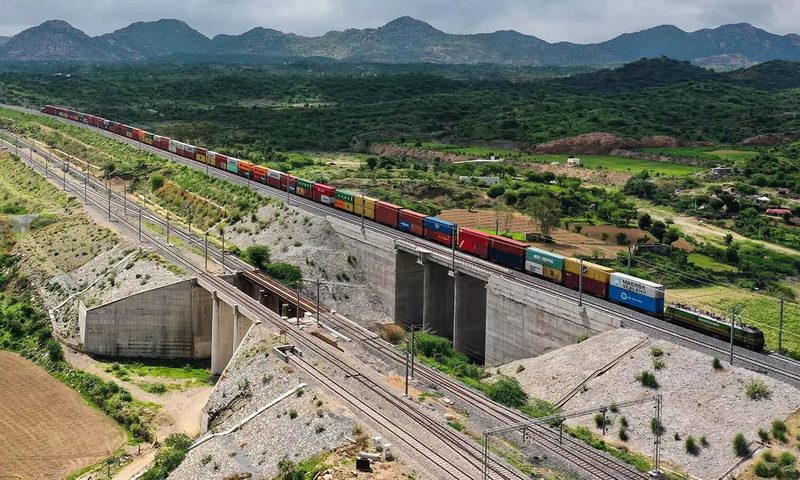
For decades, freight trains in India shared tracks with passenger trains, and passenger trains almost always got priority. The result was slow, unpredictable goods movement: average freight speeds hovered around 25 kilometres per hour, and logistics costs ran to roughly 13 to 14 per cent of GDP, far above global benchmarks. The Dedicated Freight Corridor programme was conceived to break this logjam by building entirely new railway lines reserved for goods trains. The two flagship corridors, the Eastern DFC from Ludhiana to Dankuni and the Western DFC from Dadri to Jawaharlal Nehru Port, together span about 2,800 kilometres across the country’s busiest freight belt. With both corridors substantially commissioned by the mid-2020s, the impact on Indian logistics is finally measurable.
Why freight needed its own tracks
On a mixed-traffic railway, a slow coal train and a fast express cannot efficiently share the same two tracks. Passenger trains, with their timetables and political visibility, consistently pushed freight into sidings, where goods rakes waited for hours. This made rail freight unreliable for time-sensitive cargo, pushing it onto roads, which are more expensive per tonne-kilometre and far more polluting. The DFCs reverse the logic: freight gets its own high-capacity, high-speed alignment, freeing the old lines for more passenger trains. It is the single biggest structural reform in Indian rail freight since independence, and its logic is borrowed from the world’s best freight railways.
What the two corridors carry
The Eastern DFC, running from Punjab through Haryana, Uttar Pradesh and Bihar to West Bengal, is the coal and steel corridor, feeding thermal power plants and industry in the east and north. The Western DFC, from Uttar Pradesh through Haryana, Rajasthan and Gujarat to the Jawaharlal Nehru Port near Mumbai, is the container corridor, carrying export-import cargo between the northern hinterland and the western ports. Both corridors are built to heavier standards than conventional lines: they can handle 25-tonne axle loads, longer trains of up to 1.5 kilometres, and, on the Western DFC, double-stack container trains under specially raised overhead electrification. These specifications put the DFCs among the most capable freight lines in the world.
Speed, capacity and the logistics math
Freight trains on the DFCs routinely run at 70 to 100 kilometres per hour, roughly triple the old network average, and transit times between Delhi and Mumbai have fallen dramatically. The corridors free up enormous capacity on the parallel passenger routes, the old Grand Chord and Delhi-Mumbai lines, allowing more passenger services. For industry, the payoff is in inventory costs: predictable, fast rail freight lets companies hold less stock and plan supply chains tightly. Logistics studies estimate that shifting freight from road to the DFCs cuts both cost and carbon emissions per tonne-kilometre substantially. The corridors also enable new business models, including scheduled container services and automobile carriers that need guaranteed transit times.
How the corridors are run
The DFCs are operated by the Dedicated Freight Corridor Corporation of India, a special-purpose vehicle under the Ministry of Railways, using modern train control systems, automated signalling and long-welded rails on concrete sleepers. Stations on the corridors are freight-only, with mechanised loading and unloading facilities. Private container operators and logistics companies can run their own trains on the corridors by paying track access charges, opening the door to competition in rail freight for the first time. The corridors are fully electrified, which cuts diesel dependence and aligns with the railways’ net-zero ambitions.
What’s next: more corridors
With the eastern and western corridors proving the concept, attention has turned to future corridors: proposed routes include an East Coast corridor, an East-West corridor and a North-South corridor that would extend the dedicated-freight grid across the country. Land acquisition and funding are the binding constraints, and each new corridor will take years to build. But the template now exists, from financing structures to construction techniques to operating practices. The deeper significance of the DFCs is that they reposition railways in India’s freight market: from a slow, unreliable default to a fast, scheduled, competitive carrier.
FAQs
How long are the Dedicated Freight Corridors? The Eastern DFC spans about 1,337 km from Ludhiana to Dankuni and the Western DFC about 1,506 km from Dadri to JN Port, totalling roughly 2,843 km.
Do passenger trains run on the DFCs? No. The corridors are reserved for freight, which is precisely what lets goods trains run fast and on schedule.
What is double-stack container operation? It means stacking one container on top of another on a single wagon, doubling capacity per train; the Western DFC’s tall electrification masts make this possible.
The DFCs are infrastructure that most Indians will never see but whose effects they will feel: in cheaper goods, cleaner air and a freight system that finally runs on time. That is the quiet revolution the corridors were built for.
Compiled by the Khabar 24h Editorial Desk from publicly available sources.

Khabar 24h Editorial Desk — our explainers are prepared by the Khabar 24h editorial team using AI-assisted research tools, and every piece is reviewed by a human editor before publishing. We do not claim original reporting: our work is turning complex topics into simple, accurate summaries. Spotted an error? Write to contact@khabar24h.com — our corrections policy aims for same-day review.
More from this author →