France’s Semi-Presidential System: How It Differs From India’s Parliamentary Model
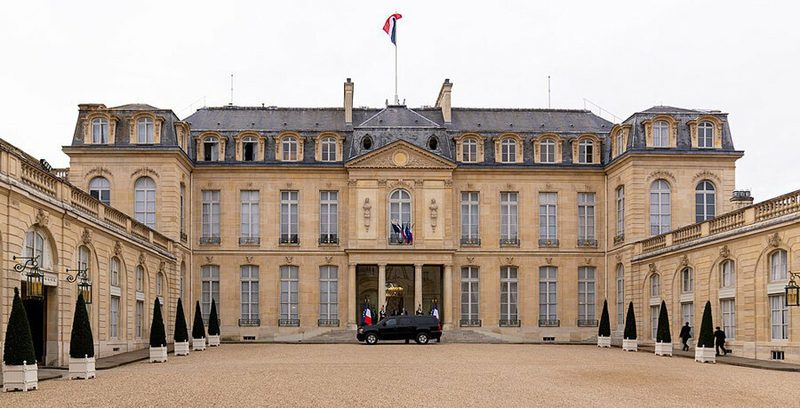
France’s Fifth Republic created a hybrid unknown to classical constitutional theory: semi-presidentialism, a system with both a directly elected President wielding real power and a Prime Minister accountable to parliament. Designed by Charles de Gaulle in 1958 to end the chronic instability of parliamentary France, it has produced strong, stable government for over six decades. Comparing it with India’s parliamentary model illuminates what each system gains and sacrifices.
How semi-presidentialism works
The French President, elected directly for five-year terms, appoints the Prime Minister, presides over the cabinet, commands the armed forces, directs foreign policy, can dissolve the National Assembly, and wields emergency powers. The Prime Minister, who must command the Assembly’s confidence, runs domestic policy and the government’s daily business. When the President’s party holds the Assembly majority, the President dominates; when it does not, cohabitation results, with a President and Prime Minister from opposing camps splitting power, as happened three times between 1986 and 2002.
Why de Gaulle designed it
The Fourth Republic’s pure parliamentarism had produced 24 governments in 12 years, collapsing over Algeria and colonial crises. De Gaulle’s answer was to graft a powerful presidency onto parliamentary government: the President would embody national continuity and handle the great matters of state, while parliament managed legislation. The 1962 introduction of direct presidential election completed the design, giving the President a popular mandate rivalling parliament’s. Stability was the goal, and by that measure the Fifth Republic has been a triumph. The new constitution was itself approved by referendum, giving the hybrid system a popular legitimacy its parliamentary predecessors had lacked.
How it differs from India’s parliamentary model
- Head of state: France’s President is directly elected and politically powerful; India’s President is indirectly elected and constitutionally bound to ministerial advice.
- Executive: France splits executive power between President and Prime Minister; India concentrates it in the Prime Minister and Cabinet.
- Accountability: France’s government answers to the Assembly, but the President answers only to voters; India’s entire executive answers to the Lok Sabha.
- Dissolution: the French President can dissolve the Assembly at will; India’s President dissolves the Lok Sabha on ministerial advice.
- Cohabitation: France’s system anticipates divided executive control; India’s system has no equivalent mechanism.
Strengths and weaknesses
Semi-presidentialism’s strength is decisive leadership combined with democratic legitimacy: the President can act swiftly in crises while parliament checks the government. The 2000 reform aligning presidential and parliamentary terms at five years was designed to make cohabitation rarer, and it has not recurred since. Its weakness is ambiguity: the division of powers between President and Prime Minister is partly conventional, and cohabitation, though it worked, strains the system. Critics also note the hyper-presidential drift, with the presidency overshadowing parliament and parties, and the diminished role of the Prime Minister when majorities align.
What India can learn from the comparison
The comparison clarifies India’s choice. Parliamentary government fuses legitimacy and accountability in a single chain: voters elect parliament, parliament sustains the executive. France separates them: the President’s legitimacy comes directly from voters, the government’s survival from parliament. India’s system avoids the dual-legitimacy conflicts that semi-presidentialism risks, but France’s system avoids the executive instability that pure parliamentarism can produce. Each is a different answer to democracy’s eternal question: how to combine effective leadership with answerable power.
Cohabitation in practice
Cohabitation, though dreaded in theory, worked surprisingly well in practice. President Mitterrand, a Socialist, governed alongside conservative Prime Minister Chirac from 1986 to 1988, each respecting the other’s domain: the President handling foreign policy and defence, the Prime Minister domestic affairs. The arrangement demonstrated the system’s flexibility, though both camps spent the period positioning for the next presidential election.
FAQs
What is cohabitation? The situation where the French President and the parliamentary majority belong to opposing camps, forcing power-sharing between them.
Can the French President dismiss the Prime Minister? In practice the President can force a Prime Minister’s resignation when their own majority backs them; during cohabitation they cannot.
Is semi-presidentialism common? Yes. Variants govern many countries, from Portugal and Poland to several African and Asian states, though France remains the archetype.
France’s hybrid proves that constitutional categories are tools, not destinies: presidential and parliamentary elements can be combined, if the combination is designed with a clear-eyed view of each one’s dangers.
Few constitutional inventions have proved as durable, or as widely imitated, as the Fifth Republic.
Compiled by the Khabar 24h Editorial Desk from publicly available sources.

Khabar 24h Editorial Desk — our explainers are prepared by the Khabar 24h editorial team using AI-assisted research tools, and every piece is reviewed by a human editor before publishing. We do not claim original reporting: our work is turning complex topics into simple, accurate summaries. Spotted an error? Write to contact@khabar24h.com — our corrections policy aims for same-day review.
More from this author →