NEP 2020’s 5+3+3+4 Structure: What Changes in Your Child’s School
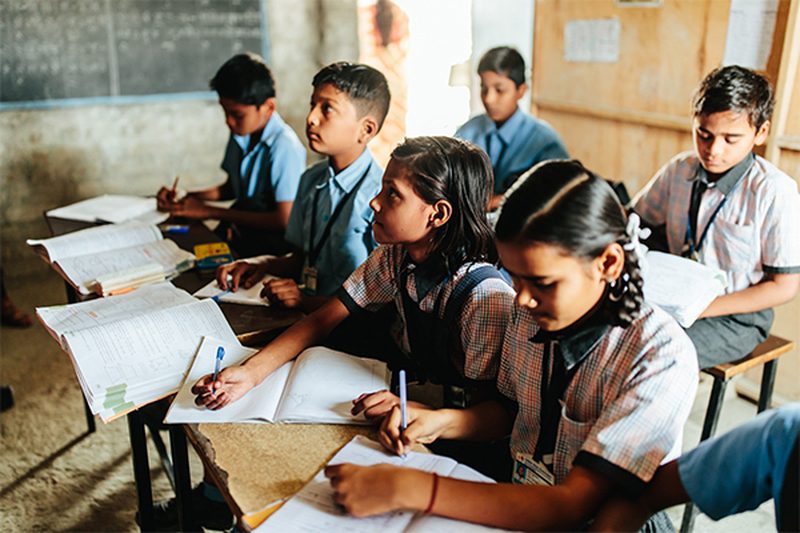
India’s school system ran on the 10+2 structure for over five decades. The National Education Policy 2020 replaced it with the 5+3+3+4 structure, the most fundamental redesign of school education since independence — reorganising not just grades but how children learn, what they study and how they are assessed. Six years on, the rollout is visible in NCERT’s new textbooks, the National Curriculum Framework and changing board-exam patterns. For parents, the key question is practical: what changes in your child’s school, and when? This guide explains the new design stage by stage.
Why the structure changed
The old 10+2 system formally began schooling at age six, ignoring the critical early years when 85 per cent of brain development occurs. Research consistently shows that foundational learning in ages 3-8 determines later outcomes, yet pre-school education was unregulated and disconnected from formal schooling. The 5+3+3+4 design fixes this by bringing early childhood care and education into the formal system and by aligning stages with children’s cognitive development rather than administrative convenience. It is a shift from content coverage to developmental appropriateness.
The four stages, explained
The Foundational Stage (ages 3-8, five years) covers three years of pre-school plus Classes 1-2, focused on play-based, activity-based learning with no formal exams — the goal is foundational literacy and numeracy. The Preparatory Stage (ages 8-11, Classes 3-5) introduces light textbooks and classroom learning, with subject teachers for languages, maths, art and physical education, and an emphasis on discovering ideas rather than rote learning. The Middle Stage (ages 11-14, Classes 6-8) brings subject teachers for sciences, mathematics, social sciences and humanities, plus coding, vocational exposure and bagless days. The Secondary Stage (ages 14-18, Classes 9-12) removes hard streams — students can mix physics with music or economics with carpentry — with multidisciplinary study, flexible subject choices and modular board exams.
What changes in teaching and assessment
- Board exams become easier in the sense of testing concepts over rote: modular exams, two attempts, and objective plus descriptive formats.
- Report cards evolve into 360-degree holistic cards including self, peer and teacher assessment of cognitive, creative and socio-emotional growth.
- The National Testing Agency’s common aptitude test and PARAKH as a national assessment regulator standardise quality benchmarking.
- Mother-tongue or regional-language instruction is recommended till at least Class 5, with bilingual approaches thereafter.
- Vocational education starts from Class 6 with internships, targeting 50 per cent student exposure by 2025-end goals.
What parents will actually notice
In the early years, expect less homework and fewer tests, more activity-based learning, and play-focused pre-schools coming under quality regulation. New NCERT textbooks under the National Curriculum Framework are rolling out class by class, with simpler language, Indian examples and competency-based exercises. Bag weight rules, no-detention conversations and art-integrated learning change daily school life. For older children, the biggest visible change is board-exam reform: less syllabus-cramming pressure in theory, though implementation varies by board. Parents should also expect schools to offer more subject combinations in Classes 11-12 as the stream system loosens.
Implementation: the honest status
Rollout is uneven — education is on the concurrent list, so states move at different speeds. CBSE has aligned closely with NEP, several states have adopted the new curriculum frameworks, and teacher-training programmes are being redesigned. Challenges remain: training lakhs of teachers in play-based pedagogy, producing quality content in 22 languages, upgrading school infrastructure for vocational labs, and aligning state boards’ examinations. The policy’s 2030-2040 horizon is realistic; parents should expect gradual change rather than an overnight transformation, and judge their child’s school on direction of travel rather than instant compliance.
FAQs
Does 5+3+3+4 change when my child starts school?
The policy envisages school starting with pre-school at age 3 and Class 1 at age 6. States are aligning admission ages gradually.
Are streams really gone in Class 11?
The policy removes rigid science-commerce-arts streams, allowing flexible combinations. Schools are implementing this progressively as timetables and teacher availability permit.
Will board exams become easier?
They are being redesigned to test understanding over memorisation, with modular structure and multiple attempts. Easier to score through rote; demanding of real comprehension.
The 5+3+3+4 structure is a bet that starting earlier, teaching developmentally and testing understanding will produce more capable graduates than the old race to cover syllabus. For parents, the practical move is to choose schools genuinely embracing activity-based learning and flexible subject choice — and to give the reform the decade it needs.
Source: Ministry of Education, Government of India

Khabar 24h Editorial Desk — our explainers are prepared by the Khabar 24h editorial team using AI-assisted research tools, and every piece is reviewed by a human editor before publishing. We do not claim original reporting: our work is turning complex topics into simple, accurate summaries. Spotted an error? Write to contact@khabar24h.com — our corrections policy aims for same-day review.
More from this author →