First Past the Post Explained: Why India’s Voting System Rewards the Largest Parties
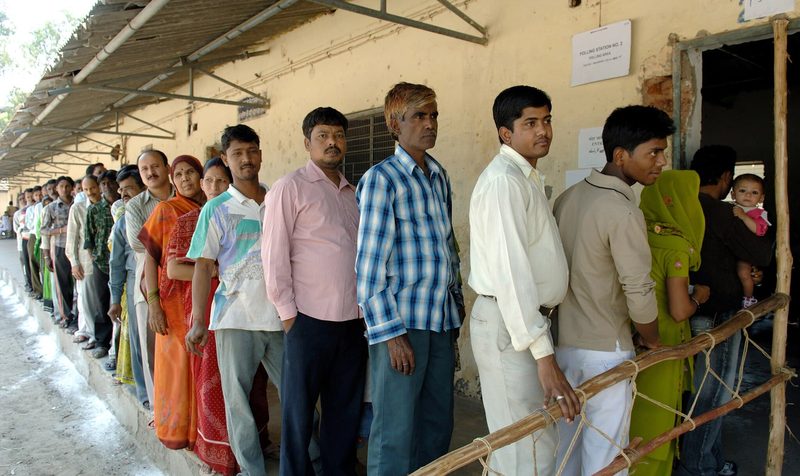
India elects the Lok Sabha, the state assemblies and local bodies through one of the world’s simplest voting systems: first past the post. Whoever gets the most votes in a constituency wins the seat, no matter how small their share of the total vote. This deceptively simple rule has profound consequences for party competition, government formation and representation, and it explains several puzzles of Indian politics.
How first past the post works
The country is divided into single-member constituencies, 543 for the Lok Sabha, and each elects one representative. Voters mark a single choice, and the candidate with the highest number of votes, a plurality rather than a majority, takes the seat. There are no run-offs and no second preferences. A candidate can win with 30 per cent of the vote if the remaining 70 per cent is split among rivals. The simplicity is the point: counting is fast, results are decisive, and every constituency produces a clear winner on the night.
Why it rewards the largest parties
First past the post magnifies the seat share of parties with concentrated support and punishes those whose votes are spread thinly. A party that wins 40 per cent of the vote evenly across the country might win very few seats, while a party with 35 per cent concentrated in winnable constituencies can win a landslide. This is why national vote shares and seat shares diverge so sharply in Indian elections. The system rewards parties that can assemble local pluralities constituency by constituency, which is why broad coalitions and pre-poll alliances are so valuable: they prevent the splitting of like-minded votes.
The manufactured majority effect
One of the system’s signature outcomes is the manufactured majority: a party with well under half the popular vote can secure well over half the seats. India’s 2014 and 2019 general elections both produced decisive Lok Sabha majorities for the BJP on vote shares in the high thirties. Defenders argue this is a feature, not a bug: the system converts a fragmented verdict into a workable government, avoiding the chronic instability that proportional systems can produce. Critics counter that it distorts the popular will and leaves large minorities of voters without representation.
Wasted votes and tactical voting
Under first past the post, votes for losing candidates elect nobody, and surplus votes for runaway winners change nothing. This creates the phenomenon of wasted votes and encourages tactical voting: supporters of a weak candidate may switch to their second choice to block a disliked frontrunner. It also shapes party strategy, with parties fielding dummy candidates, forging alliances and concentrating resources on marginal seats where small vote shifts decide outcomes. The entire grammar of Indian election campaigning, from caste arithmetic to alliance negotiations, is written in the logic of plurality wins.
Why India keeps the system
Alternatives exist. Proportional representation would allocate seats in line with vote shares but would require either huge multi-member constituencies or party lists, weakening the direct link between an MP and a locality. India briefly debated these options in the Constituent Assembly and chose first past the post for its simplicity, its clear winners and its constituency link, which lets voters hold a specific representative accountable. Reform commissions have occasionally suggested a mixed-member system, but the idea has never gathered political momentum. For a vast, largely rural electorate in the 1950s, a system that could be explained in a sentence and counted overnight was the pragmatic choice, and it has endured.
FAQs
Can a candidate win with less than 50 per cent of votes? Yes, routinely. Only a plurality, more votes than any other candidate, is needed. Winners with 30 to 40 per cent are common in multi-cornered contests.
Does first past the post favour regional parties? It favours any party whose support is geographically concentrated, which is why regional parties with deep roots in one state can win big seat hauls there.
Has India ever considered proportional representation? The idea surfaces periodically among reformers, but no government has seriously pursued it, given the disruption it would cause to the constituency link.
First past the post is the hidden architecture of Indian politics: a one-line rule that manufactures majorities, rewards concentration and makes every election a constituency-by-constituency battle of pluralities.
Every reform proposal must reckon with the system’s proven ability to deliver decisive government from divided verdicts.
Compiled by the Khabar 24h Editorial Desk from publicly available sources.

Khabar 24h Editorial Desk — our explainers are prepared by the Khabar 24h editorial team using AI-assisted research tools, and every piece is reviewed by a human editor before publishing. We do not claim original reporting: our work is turning complex topics into simple, accurate summaries. Spotted an error? Write to contact@khabar24h.com — our corrections policy aims for same-day review.
More from this author →