Hornbill Festival: How Nagaland Turned Tribal Heritage Into India’s Biggest Cultural Festival
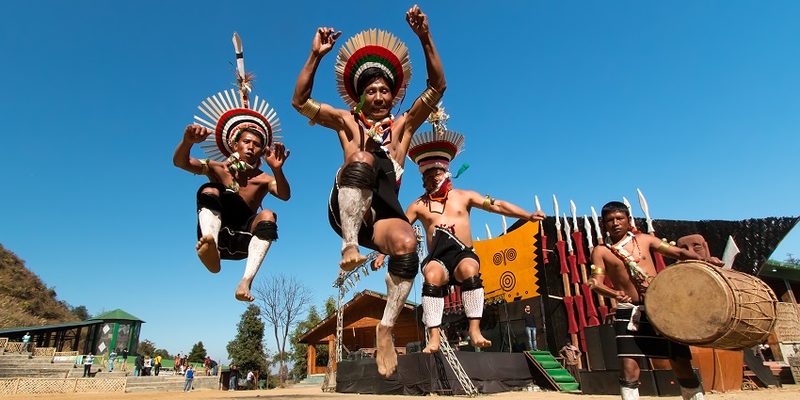
Every December, the Naga Heritage Village at Kisama, a short drive from Kohima, fills with the sound of log drums, folk songs in sixteen major tribal languages, and the famous hornbill-inspired headgear of Naga warriors. The Hornbill Festival, held from December 1 to 10, has grown from a modest state tourism initiative launched in 2000 into what is routinely called India’s biggest cultural festival, drawing domestic and foreign tourists in the lakhs. It is also one of the most successful examples anywhere of a state deliberately turning living heritage into a contemporary spectacle. This is how Nagaland did it.
How the festival began
The festival was conceived by the Nagaland government at the turn of the millennium with twin objectives: to promote tourism in a state long associated in the national imagination with insurgency and remoteness, and to encourage inter-tribe interaction among Nagaland’s sixteen major tribes and numerous sub-tribes. It is named after the hornbill, a bird revered in Naga folklore, whose feathers adorn traditional headgear. The timing, early December, was chosen to coincide with Nagaland’s statehood day on December 1st and the pleasant winter weather. In its early years it was a small affair; the growth came as the state invested in the Kisama heritage village as a permanent venue, as infrastructure improved, and as social media carried images of Naga culture to audiences who had never encountered it. The festival’s success also tracked the broader normalisation of the Northeast as a tourist destination in the 2010s and 2020s.
What happens at Kisama
The centrepiece is the morung exhibitions: each tribe maintains a traditional hut, a morung, the Naga youth dormitory institution, at the heritage village, and visitors move between them experiencing distinct architectures, cuisines, crafts, and performances. The daily cultural programme features war dances, folk songs, and traditional games, while the festival grounds host a rock music scene that has made Hornbill a pilgrimage for indie music fans, with the Hornbill International Rock Contest drawing bands from across Asia. Food is a major draw: Naga cuisine, with its smoked meats, bamboo shoot preparations, and famously fiery chillies, including the Naga king chilli, gets its widest annual showcase. Adventure events, craft bazaars, night markets in Kohima, and traditional sports like greased-pole climbing and chilli-eating contests round out ten packed days. The festival is deliberately maximalist: heritage and modernity staged side by side.
Tribes, identity, and the politics of display
The festival’s deeper significance lies in what it does for Naga identity. Nagaland’s tribes have distinct languages, customs, and histories, and the festival’s inter-tribe format encourages a shared Naga public culture without flattening tribal distinctiveness; each morung insists on its own specificity. For younger Nagas, many of whom live outside the state, the festival is a homecoming and a crash course in heritage. Scholars note the interesting inversion: a festival created by the state for tourists has become a genuine site of cultural transmission, where elders teach youth and tribes perform for each other as much as for visitors. There are debates, of course, about commodification, whether packaging ritual dances for camera-wielding tourists dilutes their meaning, but most participants seem to regard the trade as worthwhile: the alternative, for many traditions, was not purity but oblivion.
The economics of ten days
The festival’s economic footprint has grown with its fame. Hotels in Kohima and Dimapur sell out weeks in advance, homestays have proliferated in villages around the capital, and the craft bazaar gives artisans from across the state their best sales window of the year. The state government reports tourist footfalls in the lakhs and uses the festival as the anchor of Nagaland’s tourism brand, with campaigns extending the season into the surrounding weeks. Local entrepreneurs, from food stall operators to taxi drivers to guesthouse owners, count on December as their peak earning period. The demonstration effect matters beyond Nagaland: other Northeastern states have studied the Hornbill model, and festivals across the region, from Arunachal to Manipur, have borrowed its playbook of heritage village, music stage, and food showcase. A state once seen as a tourism impossibility now sets the template.
What the Hornbill model proves
The Hornbill Festival’s success carries a lesson for cultural policy everywhere: heritage does not have to choose between authenticity and audience. By giving tribes ownership of their own presentation, investing in permanent infrastructure rather than one-off events, and layering contemporary attractions like rock music over traditional cores, Nagaland built a festival that serves tourists, artisans, musicians, and the tribes themselves. It has not solved the Northeast’s deeper challenges, but it has changed the story the region tells about itself, from conflict to culture. Ten days in December, sixteen tribes, one heritage village: the formula works, and the rest of India has started to copy it.
FAQs
When is the Hornbill Festival held? December 1 to 10 every year at the Naga Heritage Village in Kisama, near Kohima, coinciding with Nagaland’s statehood day.
Why is it called Hornbill? After the hornbill bird, revered in Naga folklore and traditionally featured in Naga ceremonial headgear.
How do I attend? Visitors fly to Dimapur or take the train, stay in Kohima, and need an Inner Line Permit, easily obtained online, to enter Nagaland.
From a tourism gamble to a cultural institution, the Hornbill Festival shows what happens when a state takes its own heritage seriously. Nagaland’s tribes perform, compete, feast, and rock out for ten days, and the world has started coming to watch.
Compiled by the Khabar 24h Editorial Desk from publicly available sources.

Khabar 24h Editorial Desk — our explainers are prepared by the Khabar 24h editorial team using AI-assisted research tools, and every piece is reviewed by a human editor before publishing. We do not claim original reporting: our work is turning complex topics into simple, accurate summaries. Spotted an error? Write to contact@khabar24h.com — our corrections policy aims for same-day review.
More from this author →