Vande Bharat Trains Explained: Routes, Speed, and What’s Inside India’s Flagship Train
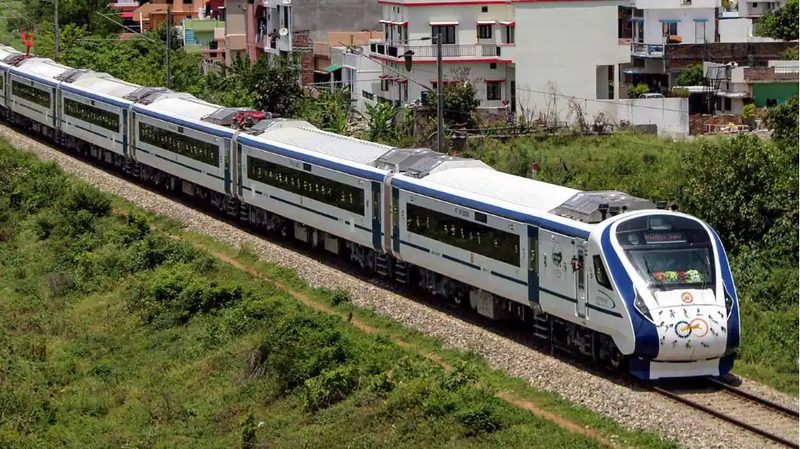
The blue-and-white train with the aerodynamic nose has become the most recognisable symbol of Indian Railways’ modernisation. The Vande Bharat Express, India’s first semi-high-speed trainset, was flagged off in 2019 on the New Delhi-Varanasi route, and within a few years the network multiplied: by 2026, more than 60 Vande Bharat services criss-cross the country, connecting state capitals, pilgrim centres and industrial hubs. Unlike conventional trains hauled by a locomotive, the Vande Bharat is a self-propelled trainset with distributed power, which means it accelerates and brakes faster, shaving hours off intercity journeys. This explainer breaks down where the trains run, how fast they really go, and what the onboard experience looks like.
What makes Vande Bharat different
The Vande Bharat is built on a trainset architecture rather than the locomotive-and-coaches model. Each coach carries its own traction motors, so power is distributed along the length of the train instead of being concentrated in one engine. The result is quicker acceleration, shorter braking distances and better energy efficiency through regenerative braking, which feeds energy back into the system when the train slows down. The trainsets are manufactured at the Integral Coach Factory in Chennai under the Make in India programme, with later generations progressively raising indigenous content. Fully sealed gangways, automatic plug doors, vacuum toilets and a modern train control system complete the technical package. The design philosophy is simple: a train that feels like a metro in its ride quality but runs at intercity distances.
Where the trains run: the route network
The first two services linked New Delhi with Varanasi and with Shri Mata Vaishno Devi Katra. From there the network expanded aggressively, and Vande Bharat trains now operate on routes such as Mumbai-Ahmedabad, Delhi-Bhopal, Chennai-Mysuru, Secunderabad-Visakhapatnam, Howrah-New Jalpaiguri, Guwahati-New Jalpaiguri and many more. The services typically run as chair-car day trains over distances of 300 to 800 kilometres, departing in the morning and returning by evening or night, which makes them ideal for business travellers, tourists and pilgrims. Several routes were chosen to connect cities that previously had slow or inconvenient rail links, and ridership data has repeatedly shown strong occupancy on premium corridors. The railways periodically reshuffles and extends services based on demand, so the map keeps evolving.
How fast is it, really?
The Vande Bharat is designed for 160 kilometres per hour, and on the Delhi-Agra stretch it has been tested at that speed. In regular commercial service, however, average speeds are lower, typically between 75 and 95 kilometres per hour, because of track curves, speed restrictions near stations and level crossings, and the mixed traffic the train shares the line with. This is the honest caveat behind the “semi-high-speed” label: the train can go fast, but the track often cannot. Dedicated high-speed corridors and track upgrades are the long-term answer, and speed trials continue on upgraded sections. Even so, journey times are noticeably shorter than the trains they replaced on most routes, sometimes by one to three hours.
What’s inside: classes, seats and food
Vande Bharat trains offer two classes: AC Chair Car, with comfortable reclining seats in a 3+2 layout, and Executive Chair Car, with wider seats in a 2+2 layout, more legroom and enhanced catering. Onboard features include rotating seats in the executive class on some rakes, large windows, onboard Wi-Fi, infotainment screens, charging points at every seat, automatic doors, CCTV cameras and a GPS-based passenger information system that announces upcoming stations. Catering is included in the fare on most services, with morning trains serving breakfast and longer runs serving meals. Fares are higher than Shatabdi and Rajdhani trains on comparable routes, which has drawn criticism, but the railways argues the pricing reflects the upgraded experience.
The sleeper version and what’s next
The chair-car Vande Bharat serves daytime routes, but a sleeper variant designed for overnight journeys has been developed and tested, with berths replacing seats. The sleeper version targets long-distance premium corridors and is expected to eventually replace Rajdhani services on key routes. The railways has also announced plans for Vande Bharat Metro (now branded Namo Bharat Rapid Rail) for short-distance intercity routes, and for progressively manufacturing more trainsets to reach hundreds of services. Longer-term, true high-speed rail on the Mumbai-Ahmedabad corridor remains a separate project. The Vande Bharat programme’s significance lies less in any single record and more in proving that Indian factories can design, build and scale a modern trainset.
FAQs
How many Vande Bharat trains are running? More than 60 services were operational by 2026, and the number keeps growing as new trainsets roll out of the factories.
What is the top speed of the Vande Bharat Express? The design speed is 160 kmph, achieved on test runs, though commercial averages are lower due to track and traffic constraints.
Is food included in the Vande Bharat fare? On most services, yes. Catering charges are bundled into the ticket price, with meals served according to the time of travel.
Vande Bharat has turned the idea of a modern Indian train from a poster into a daily commute for lakhs of passengers. Its real test will be the next decade: whether track upgrades, the sleeper version and steady manufacturing can convert an impressive train into a genuinely transformed railway.
Compiled by the Khabar 24h Editorial Desk from publicly available sources.

Khabar 24h Editorial Desk — our explainers are prepared by the Khabar 24h editorial team using AI-assisted research tools, and every piece is reviewed by a human editor before publishing. We do not claim original reporting: our work is turning complex topics into simple, accurate summaries. Spotted an error? Write to contact@khabar24h.com — our corrections policy aims for same-day review.
More from this author →