The Mumbai-Ahmedabad Bullet Train in 2026: Where the 508-Kilometre Corridor Stands, Station by Station
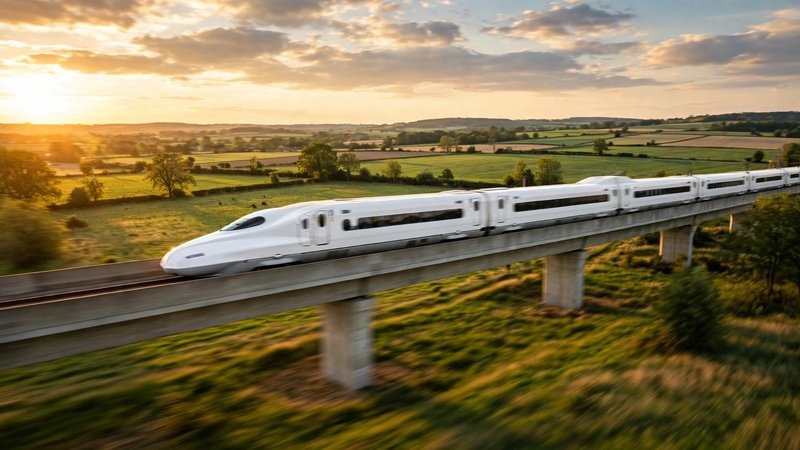
Nine years after the foundation stone was laid at Sabarmati in September 2017, India’s first bullet train corridor remains a construction site — but one that is visibly taking shape. The 508-km Mumbai-Ahmedabad high-speed rail line, built with Japanese Shinkansen technology at a cost of around Rs 1.1 lakh crore, is targeted for its first trial runs in 2026. As of August 2026, no section has entered testing or commercial service — yet.
The corridor at a glance
The line will have 12 stations: Mumbai (an underground terminal at Bandra Kurla Complex), Thane, Virar, Boisar, Vapi, Bilimora, Surat, Bharuch, Vadodara, Anand, Ahmedabad and Sabarmati — all except Mumbai elevated. Over 460 km of the track runs on elevated viaducts, and a 21-km tunnel — including a 7-km stretch under the sea near Thane Creek — is under construction. Japan’s E5 Series Shinkansen trains, running at up to 320 km/h, will cut the Mumbai-Ahmedabad journey from six to eight hours today to around two hours for rapid services and under three hours for all-stop trains. The National High Speed Rail Corporation is implementing the project, with 81 per cent of the funding coming as a Japanese soft loan at 0.1 per cent interest over 50 years.
The twelve stations, from Mumbai to Ahmedabad:
- Mumbai (Bandra Kurla Complex, underground)
- Thane, Virar and Boisar in Maharashtra
- Vapi, Bilimora, Surat, Bharuch, Vadodara, Anand, Ahmedabad and Sabarmati in Gujarat
The Surat station is set to be one of the largest on the corridor, with a built-up area of over 48,000 square metres; its interiors will echo the city’s famous diamond industry in faceted designs. Eight of the twelve stations are in Gujarat — Vapi, Bilimora, Surat, Bharuch, Vadodara, Anand, Ahmedabad and Sabarmati — with three more in Maharashtra and the underground Mumbai terminal.
Construction status in 2026
Gujarat’s 348-km section is far ahead of the rest. All civil contracts for the route in Gujarat and Dadra and Nagar Haveli have been awarded to Indian contractors; pier work is complete over roughly 378 km and some 272 to 300 km of elevated viaduct is up. Fourteen of the 24 river bridges are ready, including major spans over the Narmada, Kim, Par and Purna. Track laying has begun using 200-metre-long welded rail panels, overhead electrification is underway on more than 130 km, and noise barriers line 150 km of the corridor. In Maharashtra, the underground BKC station was about three-quarters excavated by mid-2026. The project has generated around 1.2 lakh direct and indirect jobs.
Engineering milestones have showcased the “Make in India” push: a 100-metre steel bridge was launched over National Highway 48 near Nadiad in April 2025, and Gujarat’s only tunnel on the corridor — a 350-metre stretch — has been completed.
The challenges along the way
The corridor’s troubles are well documented. Land acquisition in Maharashtra stalled for years amid farmer protests and compensation disputes, putting the Mumbai end far behind Gujarat. The Covid-19 pandemic froze work, and nine years of cost inflation have pushed the bill well beyond the original estimates, with major systems costs — rolling stock, signalling, electrification — still to be booked. The Railway Ministry has said it will discuss the rising expenses with the Japanese government, which funds the bulk of the project.
The timeline from here
The first trial run is targeted for 2026 on the 50-km Surat-Bilimora stretch in south Gujarat, with that section officially targeted to open on August 15, 2027. Passenger services on the Gujarat section are expected from 2027, while the full 508-km corridor to Mumbai is targeted around 2028 to 2029. Land-acquisition delays in Maharashtra and the Covid-19 pandemic pushed the original 2023 deadline back by years; the Maharashtra leg, which lagged badly, is now catching up. Beyond speed, the corridor is designed as a technology-transfer template — six more high-speed corridors, led by Delhi-Varanasi, are in survey or detailed-project-report stages.
Source: CNBC TV18

Khabar 24h Editorial Desk — our explainers are prepared by the Khabar 24h editorial team using AI-assisted research tools, and every piece is reviewed by a human editor before publishing. We do not claim original reporting: our work is turning complex topics into simple, accurate summaries. Spotted an error? Write to contact@khabar24h.com — our corrections policy aims for same-day review.
More from this author →
Leave a Reply