PM-KISAN Explained: The Story Behind India’s Rs 6,000 Farm Transfer
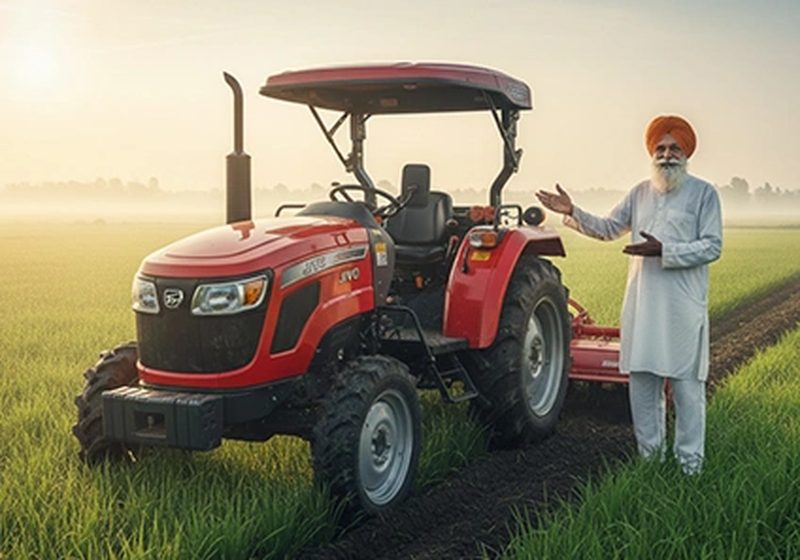
Every four months, Rs. 2,000 lands in the bank accounts of crores of farmer families across India: the instalment rhythm of PM-KISAN, the Pradhan Mantri Kisan Samman Nidhi, which promises Rs. 6,000 a year in income support to landholding farmer households. Launched in early 2019, it was India’s first universal-ish farm income transfer, and it has since disbursed lakhs of crores across nearly 20 instalments. Conceived partly as a response to agrarian distress and partly as electoral strategy, it has become a permanent fixture of farm policy. This is the story behind the Rs. 6,000 transfer.
How PM-KISAN came to be
The scheme’s origins lie in the agrarian distress of the late 2010s: back-to-back price crashes, droughts, and a wave of farmer protests that made rural anger the central political issue ahead of the 2019 general election. Telangana’s Rythu Bandhu, which paid per-acre investment support directly to farmers from 2018, provided the template, demonstrating that direct transfers were administratively feasible and politically potent. The Union Budget of February 2019, an interim budget, announced PM-KISAN with retrospective effect from December 2018: Rs. 6,000 per year in three instalments to all landholding farmer families. The timing, weeks before the election schedule, drew criticism as a poll-eve giveaway; the government framed it as structural income support. The scheme survived the election and has been paid ever since, through changes of finance ministers and economic cycles, a sign that direct farm transfers have bipartisan staying power.
How it works
Eligibility centres on landholding farmer families, identified through state land records, with Aadhaar seeding and bank account linkage; institutional landholders, serving and retired government employees above thresholds, professionals, and income-tax payers are excluded. States verify beneficiaries, and the centre pushes instalments directly via DBT. E-KYC requirements, tightened over the years, along with land-record seeding, have been used to weed out ineligible and duplicate beneficiaries, periodically shrinking the rolls. The Rs. 6,000 is unconditional: no requirement to spend it on inputs, unlike Rythu Bandhu’s investment-support framing. Beneficiary counts have hovered around 9-11 crore families, making it among the world’s largest direct transfer programmes. The fiscal cost runs to tens of thousands of crores annually, a significant but, in the context of the Union budget, manageable commitment.
What Rs. 6,000 means on the ground
For agricultural economists, the key question is whether Rs. 500 a month changes anything. Studies suggest the answer is: modestly, but really. For small and marginal farmers, the transfer covers a meaningful share of input costs for a season, reduces dependence on moneylenders for sowing expenses, and provides a consumption cushion in bad months. Research has found positive effects on agricultural investment, livestock purchase, and reduced borrowing, along with the less tangible but important effect of a predictable income floor. Critics note the amount has not kept pace with inflation since 2019, that tenant farmers and landless labourers, among the most vulnerable, are excluded by the landholding criterion, and that the transfer is too small to address structural agrarian crisis. Both things are true: PM-KISAN is the most reliable money many farm families receive, and it is not enough to transform their economics.
The politics of direct transfers
PM-KISAN changed the grammar of farm politics. Before it, farm support meant price policy, MSP, procurement, loan waivers, instruments that were powerful but indirect, delayed, and skewed toward certain crops and regions. Direct transfers are immediate, visible, and universal within the eligibility set; the beneficiary knows exactly what the state gave. This visibility is politically potent, and states have layered their own top-ups, Maharashtra, Madhya Pradesh, and others adding to the central amount, creating a competitive dynamic. The scheme also shifted the terms of agrarian debate: demands now routinely include raising the PM-KISAN amount, alongside MSP guarantees and loan waivers. Economists debate whether the fiscal space would be better used in agricultural R&D, irrigation, or market infrastructure, but the political economy is settled: no government will withdraw the Rs. 6,000, and future increases are a matter of when, not if.
Income support as farm policy
PM-KISAN’s deeper significance is conceptual: it established income support, decoupled from production, as a legitimate pillar of Indian farm policy. This aligns India with global practice, from the EU’s direct payments to America’s farm cheques, and it offers a way to support farmers without distorting cropping choices the way price support does. The design challenges ahead are familiar: keeping the beneficiary database clean without excluding the genuine, extending coverage to tenant farmers and sharecroppers who till but do not own, indexing the amount to inflation, and integrating the transfer with the broader architecture of MSP, procurement, and crop insurance. The Rs. 6,000 was a beginning, not an answer; but as beginnings go, putting cash directly into the hands of 10 crore farm families was a consequential one.
FAQs
Who is eligible for PM-KISAN? Landholding farmer families, with exclusions for institutional holders, government employees, professionals, and income-tax payers.
How much is paid and how often? Rs. 6,000 per year in three instalments of Rs. 2,000, transferred directly to bank accounts.
Do tenant farmers get it? Generally no, since eligibility is tied to land records; extending coverage to tenants is a long-standing demand.
PM-KISAN turned the Indian state into a direct payer of farm incomes at continental scale. Six thousand rupees will not end agrarian distress, but as the foundation of an income-support architecture, it changed what farm policy can be.
Compiled by the Khabar 24h Editorial Desk from publicly available sources.

Khabar 24h Editorial Desk — our explainers are prepared by the Khabar 24h editorial team using AI-assisted research tools, and every piece is reviewed by a human editor before publishing. We do not claim original reporting: our work is turning complex topics into simple, accurate summaries. Spotted an error? Write to contact@khabar24h.com — our corrections policy aims for same-day review.
More from this author →