ICSE vs CBSE: Which Board Matches Your Child’s Learning Style
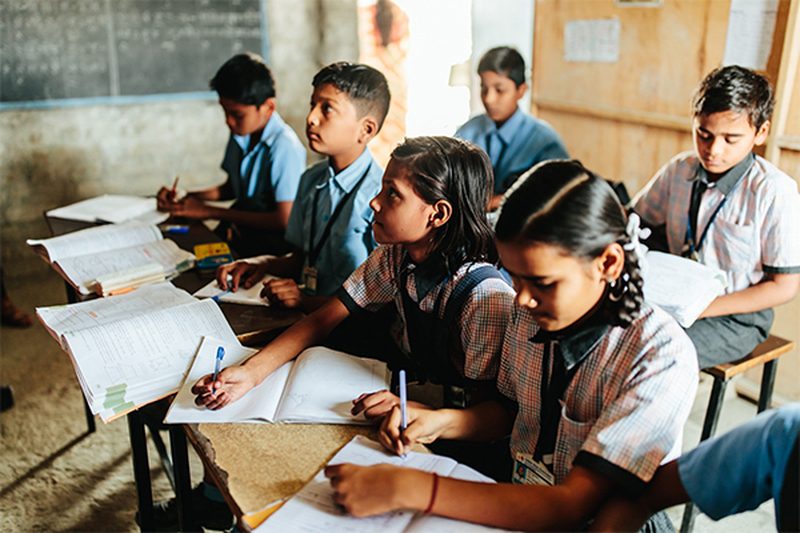
For Indian parents, few decisions feel as consequential — and as confusing — as choosing between ICSE and CBSE for their child. Both are national boards, both are recognised by every university in the country, and both produce toppers every year. Yet they teach differently, test differently, and suit different kinds of learners. This comparison goes beyond the usual cliches to help you match the board to your child’s learning style rather than to neighbourhood opinion.
How the syllabi actually differ
The popular shorthand — ICSE is tougher, CBSE is easier — misses the real distinction, which is breadth versus focus. The ICSE (CISCE) syllabus is broader and more detailed, especially in English language and literature, where it demands genuine proficiency rather than textbook answers. Its Science and Mathematics syllabi cover more topics in greater depth at the middle-school level. CBSE (NCERT-based) is more streamlined and application-oriented: fewer topics, but tested through competency-based questions. The practical consequence is workload — ICSE students typically handle more subjects and longer syllabi through Classes 9 and 10, which builds stamina but leaves less room for outside interests.
Assessment styles: what each board rewards
ICSE assessment leans towards detailed, descriptive answers and rewards thoroughness, strong language and comprehensive coverage. Its internal assessment component — projects, practicals and coursework — carries real weight and teaches research skills early. CBSE has moved decisively towards objective and competency-based evaluation: MCQs, case-based and assertion-reason questions now form a large share of papers. CBSE rewards conceptual clarity and the ability to apply ideas; ICSE rewards depth of knowledge and expression. A child who writes beautifully and loves detail will shine in ICSE; a child who thinks in concepts and prefers crisp answers will find CBSE more natural.
Which board suits which learner
- The language-strong, detail-loving child: ICSE’s demanding English curriculum builds communication skills that pay off for life, and its depth suits humanities-inclined students.
- The competitive-exam aspirant: CBSE aligns directly with JEE and NEET, which are set on the NCERT syllabus — a genuine logistical advantage in Classes 11 and 12.
- The all-rounder with outside interests: CBSE’s lighter syllabus leaves more time for sports, arts or Olympiads.
- The frequent mover: CBSE schools are far more numerous across India, making transfers between cities smoother.
- The future study-abroad applicant: ICSE’s English rigour and detailed transcripts are well regarded by foreign universities, though both boards are accepted.
The Class 11-12 reality check
Here is the factor parents most often overlook: many ICSE schools switch to the ISC board for Classes 11 and 12, and at that stage the competitive-exam alignment question becomes urgent. For Science students targeting JEE or NEET, the NCERT-based CBSE syllabus in Classes 11-12 removes the friction of studying two parallel syllabi. For Commerce and Humanities students, the difference matters less — both boards’ senior-secondary curricula are strong, and the choice can rest on the specific school’s faculty rather than the board’s brand.
How to make the final decision
Turn the comparison into a decision with three concrete steps. First, assess your child honestly: does she devour books and write at length, or does he grasp concepts quickly and dislike lengthy writing? Match the temperament to the board’s assessment style. Second, shortlist two or three specific schools — not boards in the abstract — and evaluate their faculty, results and culture, because a strong school on either board outperforms a weak one. Third, think two stages ahead: if a Science stream with JEE or NEET is likely after Class 10, CBSE’s NCERT alignment in Classes 11-12 is a practical tiebreaker. Write down the trade-offs rather than debating them endlessly; most families find the right answer becomes obvious once strengths, school options and the Class 11 plan are on paper together.
What matters more than the board
Education researchers consistently find that school quality — teacher competence, peer group, infrastructure — predicts outcomes far more than board affiliation. A good CBSE school beats a mediocre ICSE school and vice versa. Visit the shortlisted schools, observe classrooms, talk to parents of current students, and judge the individual institution. The board is the syllabus; the school is the education.
FAQs
Is ICSE really tougher than CBSE? It is broader and more detailed rather than conceptually tougher. The workload is heavier, particularly in English and middle-school Science.
Can students switch boards mid-way? Yes, most commonly after Class 10. ICSE-to-CBSE switches are smooth; the reverse requires catching up on the wider syllabus.
Which board is better for JEE/NEET? CBSE, because both entrance exams follow the NCERT syllabus that CBSE uses.
Choose the board that fits the child you have, not the topper you imagine. Match the syllabus to their strengths, prioritise the school’s quality over the board’s reputation, and revisit the decision before Class 11 with competitive exams in view.
Compiled by the Khabar 24h Editorial Desk from publicly available sources.

Khabar 24h Editorial Desk — our explainers are prepared by the Khabar 24h editorial team using AI-assisted research tools, and every piece is reviewed by a human editor before publishing. We do not claim original reporting: our work is turning complex topics into simple, accurate summaries. Spotted an error? Write to contact@khabar24h.com — our corrections policy aims for same-day review.
More from this author →