Inside Amul’s Model: How Dairy Cooperatives Built Rural India’s Economy
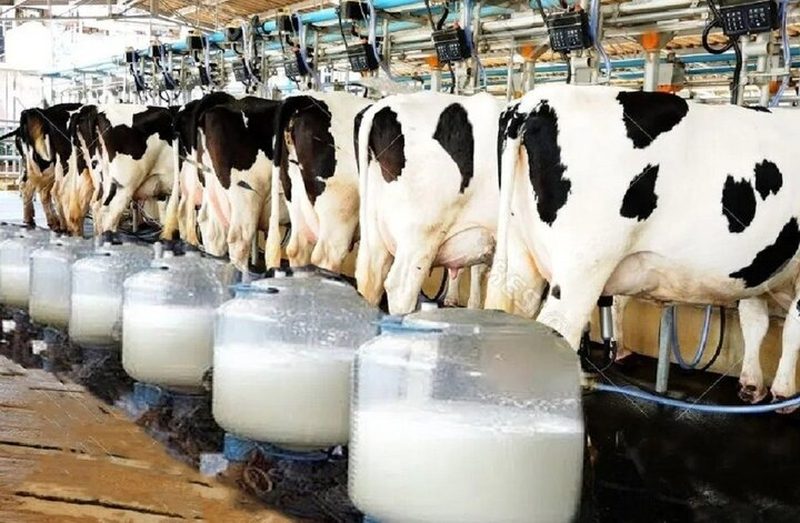
Amul, the taste of India, is the visible face of one of the world’s most successful rural institutions: a dairy cooperative network owned by over 36 lakh farmer-members in Gujarat alone, replicated across India, procuring milk from crores of smallholders and selling everything from butter to ice cream to chocolate. The model, born in 1946 in Anand as a rebellion against exploitative middlemen, became the template for Operation Flood, the world’s largest dairy development programme, which made India the largest milk producer on earth. This is how dairy cooperatives built rural India’s economy.
The Anand rebellion
The story begins with exploitation: in the 1940s, milk producers in Kaira district sold to a private monopoly that dictated prices. Led by farmer leaders and, crucially, Sardar Vallabhbhai Patel’s advice to organise, they formed the Kaira District Cooperative Milk Producers’ Union in 1946, collecting milk themselves and selling directly. The young engineer Verghese Kurien, arriving in 1949, built the technical and institutional edifice: the union’s processing plant, the village society structure, and later the Gujarat Cooperative Milk Marketing Federation, GCMMF, which markets the Amul brand. The breakthrough that made the model scalable was technological: Kurien’s team developed the process to make skimmed milk powder and condensed milk from buffalo milk, abundant in India but previously considered unsuitable, freeing the cooperative from dependence on cow milk. The Anand pattern, village societies federated into district unions federated into a state marketing body, was born.
Operation Flood: scaling the model
In 1970, the National Dairy Development Board, chaired by Kurien, launched Operation Flood, funded ingeniously by the sale of donated European milk powder and butter oil, using the proceeds to build India’s dairy infrastructure. Over 26 years and three phases, it replicated the Anand pattern across the country: village cooperatives, district unions, state federations, processing plants, cattle feed factories, and veterinary networks. The results were historic: India’s milk production rose from about 20 million tonnes in 1970 to well over 200 million tonnes today, making India the world’s largest producer; per capita availability multiplied; and milk became the single largest agricultural commodity by value, bigger than rice or wheat. Operation Flood is widely regarded as the most successful rural development programme in independent India’s history, and its architect, Kurien, as the Milkman of India.
How the cooperative economics work
The model’s genius is in its value distribution. Farmers deliver milk twice daily to the village society, where it is tested for fat and SNF, solids-not-fat, and paid for on quality, with payments now largely digital and prompt. The district union processes and the federation markets, and because the farmers own all three tiers, the surplus returns to them: GCMMF famously pays around 80 paise of every rupee of consumer price back to producers, among the highest farmer shares in any food value chain globally. The cooperative also provides embedded services: veterinary care, artificial insemination, cattle feed at cost, and extension advice, raising member productivity. For landless and marginal households, especially women, who do much of dairying’s labour, the twice-daily milk income is often the family’s most reliable cash flow, for school fees, for emergencies, for dignity. Dairy cooperatives are, in effect, rural India’s most democratic financial institutions.
Competition and the challenges
The cooperative model now faces formidable competition. Private dairies, from regional players to national brands, compete aggressively for milk and markets, often paying more in flush seasons and cherry-picking profitable urban markets while cooperatives serve all members year-round. Changing consumer habits, from loose milk to packaged, from traditional sweets to new categories, demand constant innovation; Amul’s response, an ever-expanding product portfolio and sharp marketing, has kept it ahead. Governance challenges persist: cooperative politics, state interference in some states’ dairy federations, and the difficulty of professional management in elected structures. Climate stress affects fodder and water; cattle diseases like lumpy skin disease test veterinary networks. And the model has not replicated evenly: states with strong cooperative traditions, Gujarat, Karnataka, Maharashtra, Rajasthan, thrive, while others lag, a reminder that institutions need political and social soil.
The model beyond milk
The government has explicitly sought to replicate the dairy template: new national-level cooperatives for exports, organic produce, and seeds, and a Ministry of Cooperation created in 2021 to professionalise the sector. Whether the Amul magic transfers to other commodities is an open question; dairy’s advantages, daily cash flow, local processing, strong demand, are specific. But the core insight travels: aggregation plus ownership plus professional marketing can make smallholders competitive. For rural India, the cooperative dairy remains what it has been for 75 years: proof that the poor, organised, can build institutions that outcompete corporations, and that the village producer can own the brand on the city shelf.
FAQs
What is the Anand pattern? The three-tier cooperative structure: village dairy societies federated into district unions, federated into a state marketing federation like GCMMF.
Who owns Amul? Over 36 lakh farmer-members in Gujarat through their village societies and district unions; GCMMF markets the brand.
What was Operation Flood? The 1970-1996 national programme that replicated the Anand model across India, making the country the world’s largest milk producer.
From a rebellion against a milk monopoly to a brand owned by millions of farmers, Amul’s story is the strongest evidence that India’s smallholders, given institutions of their own, can build world-class enterprises. The taste of India is, fittingly, the taste of cooperation.
Compiled by the Khabar 24h Editorial Desk from publicly available sources.

Khabar 24h Editorial Desk — our explainers are prepared by the Khabar 24h editorial team using AI-assisted research tools, and every piece is reviewed by a human editor before publishing. We do not claim original reporting: our work is turning complex topics into simple, accurate summaries. Spotted an error? Write to contact@khabar24h.com — our corrections policy aims for same-day review.
More from this author →