India’s Many Scripts: How Devanagari, Tamil, and Perso-Arabic Coexist
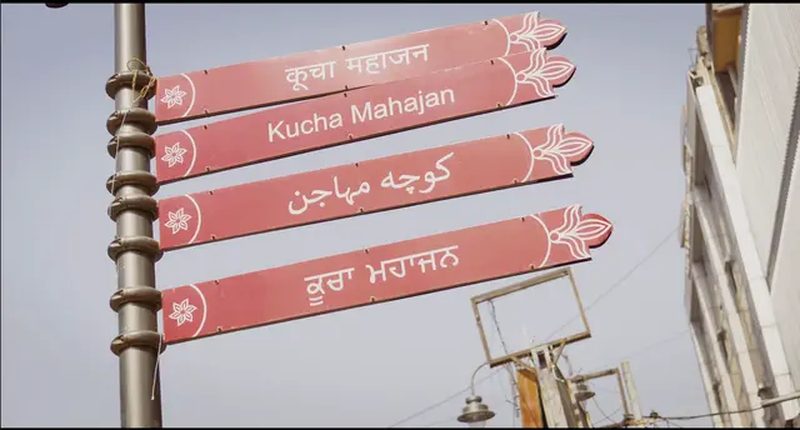
India is one of the few places on earth where a single train journey can carry you past station boards written in half a dozen different scripts. Devanagari dominates the north and west, Tamil’s rounded letters cover the deep south, Bengali-Assamese script serves the east, and the Perso-Arabic script writes Urdu and Kashmiri. India officially recognises more than a dozen major scripts, each with its own history, aesthetics, and fiercely loyal users. This article explores how these scripts evolved, how they coexist in daily life, and what the digital age is doing to them.
One family, many branches
Most Indian scripts descend from a common ancestor: Brahmi, the script of Emperor Ashoka’s edicts in the third century BCE. Over two millennia, Brahmi diversified as it travelled, splitting into northern and southern families. The northern branch gave rise to Devanagari, used today for Hindi, Marathi, Sanskrit, and Nepali; to the Bengali-Assamese script; to Gujarati; to Gurmukhi, created for Punjabi; and to Odia, whose curved letters are said to reflect writing on palm leaves, where straight lines would tear the leaf. The southern branch produced Tamil, Telugu, Kannada, and Malayalam scripts, each refined over centuries. The Perso-Arabic script arrived with different roots, adapted over centuries to write Urdu, Kashmiri, and Sindhi, flowing right to left while its Brahmi-derived neighbours flow left to right. The visual diversity is not decorative; it encodes two thousand years of separate literary evolution.
How scripts map onto languages and politics
Script and language do not always align neatly, and the mismatches are politically charged. Hindi and Urdu are famously close as spoken languages but are written in Devanagari and Perso-Arabic respectively, a script divide that hardened during the colonial period and Partition into a marker of religious and national identity. Punjabi is written in Gurmukhi in India and in a Perso-Arabic script across the border in Pakistan. Konkani is written in Devanagari, Roman, Kannada, Malayalam, and Perso-Arabic scripts depending on region and community. Sanskrit, though most associated with Devanagari today, has historically been written in many scripts, and southern scholars still read Sanskrit texts in Grantha-derived scripts. These facts complicate any simple story: in India, script is not just a writing system but a statement about who you are and where you belong.
Coexistence in everyday life
For most Indians, script diversity is simply the texture of daily life. Currency notes carry denominations in fifteen scripts. Railway stations display names in the local script, Hindi, and English. A shop sign in Hyderabad might mix Telugu, Urdu, and English on a single board. Children in many states grow up biliterate or triliterate, switching scripts as casually as they switch languages. The Constitution’s Eighth Schedule lists languages rather than scripts, and the state generally stays out of script disputes, with notable exceptions. This everyday multilingualism is one of India’s least celebrated achievements: hundreds of millions of people navigate multiple writing systems without thinking twice, a feat of mass literacy that few other societies attempt.
Scripts in the digital age
Digitisation has been both a threat and a lifeline. In the early internet era, Indian scripts were poorly supported, and a generation grew up typing Indian languages in Roman letters, a habit that persists in texting and social media. But Unicode standardisation, better fonts, and predictive keyboards have transformed the landscape: every major Indian script now has full digital support, and millions type daily in Devanagari, Tamil, Bengali, and other scripts on smartphones. Government digitisation, from DigiLocker certificates to UPI interfaces, increasingly operates in multiple scripts. At the same time, the dominance of English and Roman-script typing in professional and online life creates a slow pressure, and smaller scripts with fewer digital resources risk being left behind. Script preservationists argue that digital support is now as important as print was a century ago.
What holds the system together
What is remarkable is that this complexity works at all. It works because script choice in India is decentralised: states, communities, and individuals choose, and the system tolerates the resulting patchwork. It works because of institutional scaffolding, from the currency note to the railway signboard, that treats multilingual display as normal. And it works because Indians themselves treat script-switching as unremarkable. The challenges ahead are about equity rather than survival: ensuring that smaller scripts get the fonts, keyboards, and educational materials they need, and that digitisation includes rather than flattens. India’s scripts are a living museum of writing, still in daily use; keeping them all alive is one of the quieter tasks of the republic.
FAQs
How many scripts does India use? There are more than a dozen major scripts in current use, including Devanagari, Bengali-Assamese, Tamil, Telugu, Kannada, Malayalam, Gujarati, Gurmukhi, Odia, and Perso-Arabic, plus several smaller ones.
Do Hindi and Urdu use the same script? No. As spoken languages they are very close, but Hindi is written in Devanagari and Urdu in a Perso-Arabic script.
Are Indian scripts related to each other? Most descend from the ancient Brahmi script; the Perso-Arabic script used for Urdu and Kashmiri has separate origins.
From Ashoka’s edicts to smartphone keyboards, India’s scripts have survived by adapting. Their coexistence is not a problem to be solved but a system that works, renewed daily by hundreds of millions of readers and writers.
Compiled by the Khabar 24h Editorial Desk from publicly available sources.

Khabar 24h Editorial Desk — our explainers are prepared by the Khabar 24h editorial team using AI-assisted research tools, and every piece is reviewed by a human editor before publishing. We do not claim original reporting: our work is turning complex topics into simple, accurate summaries. Spotted an error? Write to contact@khabar24h.com — our corrections policy aims for same-day review.
More from this author →