Panchayati Raj Explained: How India’s Three-Tier Village Government Works
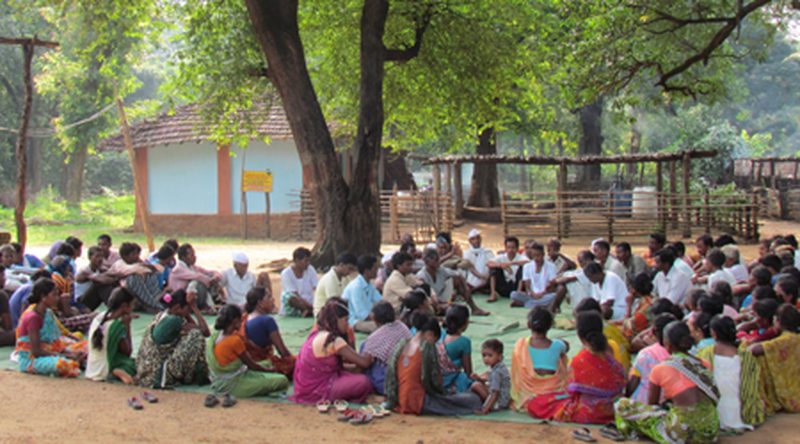
For most of India’s rural population, the government is not a distant building in a state capital but the panchayat, the elected village council that decides on roads, water, streetlights and local disputes. Panchayati Raj, literally rule by village councils, is India’s system of rural local self-government, constitutionally entrenched by the 73rd Amendment in 1992. It created a uniform three-tier structure of elected bodies across rural India.
The 73rd Amendment and what it changed
Before 1992, panchayats existed in many states but unevenly: some states held regular elections, others let the bodies languish for years. The 73rd Amendment made rural local government a constitutional requirement. It mandated direct elections every five years, reservations for Scheduled Castes, Scheduled Tribes and women, the creation of State Election Commissions and State Finance Commissions, and a list of 29 subjects, the Eleventh Schedule, on which panchayats could be empowered to act. States were required to bring their laws into conformity within a year.
The three tiers explained
The system has three levels. At the base is the gram panchayat, covering one village or a cluster of villages, with a directly elected sarpanch as its head. Above it sits the panchayat samiti, also called the block or kshetra panchayat, coordinating development across a block of villages. At the top is the zila parishad, the district-level body that consolidates block plans and supervises implementation. Members at all levels are directly elected, while chairpersons at the intermediate and district levels are elected indirectly by the members. This ladder connects the village to the district administration.
The gram sabha: direct democracy at the village level
Below the gram panchayat sits the gram sabha, the assembly of all registered voters in the panchayat area. The gram sabha is meant to be the forum of direct democracy: it approves village development plans, audits the panchayat’s accounts, and selects beneficiaries for welfare schemes. States typically require two to four gram sabha meetings a year, though attendance remains the system’s weakest link. In practice, gram sabha meetings are often poorly attended, but where they function well, they are powerful instruments of accountability, giving ordinary villagers a direct say in how public money is spent in their locality.
Elections and reservations
Panchayat elections are conducted by each state’s State Election Commission, not the Election Commission of India, and they follow the same first-past-the-post logic. The reservation architecture is distinctive: seats are reserved for Scheduled Castes and Scheduled Tribes in proportion to their population, and at least one-third of all seats, and of chairperson positions, are reserved for women. Many states have raised the women’s quota to 50 per cent. These reservations have brought millions of first-time representatives, particularly women, into public life, even though proxy leadership by male relatives remains a documented problem.
Functions, funds and the reality of power
The Eleventh Schedule lists 29 subjects, from agriculture and minor irrigation to primary education, health and rural housing, that states may devolve to panchayats. Panchayats are also the frontline agency for flagship schemes such as the rural employment guarantee, preparing labour budgets, issuing job cards and recording attendance. Funding comes from three streams: the panchayats’ own revenue, mainly local taxes and fees; transfers from the state government on State Finance Commission recommendations; and central grants, notably from the Central Finance Commission. The persistent complaint is that devolution of functions has outpaced devolution of funds and functionaries: panchayats are often asked to implement schemes without the money or staff to do so, leaving real power with the state bureaucracy.
FAQs
How often are panchayat elections held? Every five years, as mandated by the Constitution. If a panchayat is dissolved early, fresh elections must be held within six months.
Do urban areas have a similar system? Yes. The 74th Amendment created a parallel system of urban local bodies, municipal corporations, municipalities and nagar panchayats, for towns and cities.
Can panchayats levy taxes? Yes, within limits set by state law. They can tax houses, levy fees on markets and fairs, and charge for services like water supply.
Three decades after the 73rd Amendment, Panchayati Raj remains an unfinished project: constitutionally guaranteed and electorally vibrant, yet still fighting for the funds and authority that would make self-government real.
The future of Panchayati Raj depends on whether states finally match constitutional promise with financial power.
Compiled by the Khabar 24h Editorial Desk from publicly available sources.

Khabar 24h Editorial Desk — our explainers are prepared by the Khabar 24h editorial team using AI-assisted research tools, and every piece is reviewed by a human editor before publishing. We do not claim original reporting: our work is turning complex topics into simple, accurate summaries. Spotted an error? Write to contact@khabar24h.com — our corrections policy aims for same-day review.
More from this author →