How State Assemblies Work in India: Chief Ministers, Governors and the Vidhan Sabha
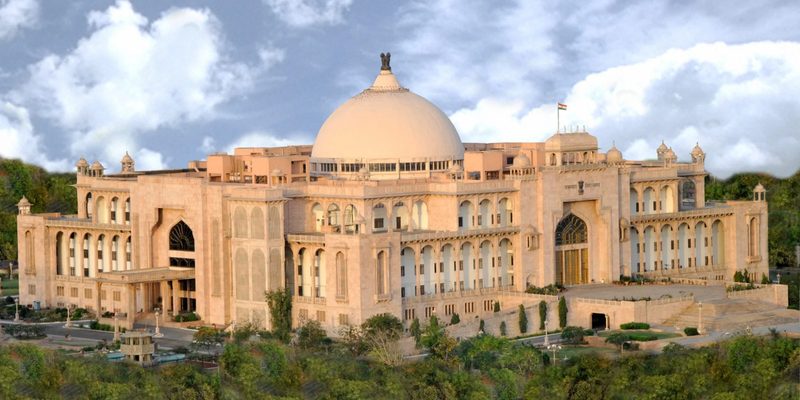
While national politics grabs the headlines, the governments that touch citizens’ daily lives, schools, hospitals, police stations, water supply, are run by the states. At the heart of each state government sits the legislative assembly, the Vidhan Sabha, where elected representatives make laws, control the purse and hold the executive to account. Here is how state assemblies work and how Chief Ministers and Governors fit into the picture.
The Vidhan Sabha and the Vidhan Parishad
Every state has a legislative assembly, the Vidhan Sabha, whose members are directly elected by the people. A few states also have a legislative council, the Vidhan Parishad, an upper House whose members are elected indirectly by local bodies, graduates, teachers and MLAs, with some nominated by the Governor. The assembly is the more powerful chamber: money bills can originate only there, and the government is collectively responsible to it. Assembly strength varies with population, from 60 members in smaller states to 403 in Uttar Pradesh, and members serve five-year terms unless the House is dissolved earlier.
How MLAs are elected
Members of the legislative assembly are elected through the same first-past-the-post system used for the Lok Sabha: the state is divided into assembly constituencies, and the candidate with the most votes in each wins. Elections are conducted by the Election Commission, usually on a five-year cycle, though assemblies can be dissolved early. Seats are reserved for Scheduled Castes and Scheduled Tribes in proportion to their population, and these reserved constituencies rotate between elections. The party or coalition winning a majority of seats is invited to form the government.
The Chief Minister and the Council of Ministers
The Chief Minister is the real executive head of the state, appointed by the Governor but in practice the leader of the majority party or coalition in the assembly. The Chief Minister selects the Council of Ministers, allocates portfolios such as home, finance and education, and presides over the Cabinet, where key policy decisions are taken. Like the Union government, the state government operates on the principle of collective responsibility: ministers sink or swim together, and the Council holds office only while it retains the assembly’s confidence.
The Governor’s role
The Governor is the constitutional head of the state, appointed by the President, which in practice means by the central government, for a five-year term. The Governor formally appoints the Chief Minister, summons and prorogues the legislature, and gives assent to bills. Most of these powers are exercised on the advice of the Council of Ministers, but the Governor retains discretion in situations like inviting a leader to form a government after a hung verdict, or recommending President’s Rule. This discretionary space is the source of recurring friction between Governors and elected Chief Ministers, especially when they belong to rival parties.
How state laws are made
State assemblies legislate on subjects in the State List, such as police, public health, agriculture and land, and share the Concurrent List with Parliament. The legislative process mirrors Parliament’s: introduction, committee scrutiny in some states, clause-by-clause consideration and passage. After passage, bills go to the Governor for assent. The Governor may assent, withhold assent, return the bill for reconsideration, or reserve it for the President’s consideration, a power that has generated significant controversy when used to stall opposition-ruled states’ legislation.
Money bills and the budget
Each year the state government presents its budget to the assembly, detailing expected revenues and planned expenditure. No money can be spent without the assembly’s approval, and grants are voted demand by demand. If the assembly rejects the budget or a money bill, it amounts to a loss of confidence and the government must resign. The assembly’s financial oversight extends through committees, particularly the Public Accounts Committee, which examines how public money was actually spent.
FAQs
Can a state assembly be dissolved before five years? Yes. The Chief Minister can recommend dissolution to call early elections, and the assembly can also be dissolved when no government can be formed.
What happens if no party wins a majority? The Governor invites the leader most likely to command a majority, often the head of the largest pre-poll alliance, and the government must prove its numbers in a floor test.
Do all states have legislative councils? No. Only a handful of states have them, and Parliament can create or abolish a council on a state’s own request by a special majority.
State assemblies are the workhorses of Indian democracy: less glamorous than Parliament, but the level where representation most directly shapes citizens’ lives.
Compiled by the Khabar 24h Editorial Desk from publicly available sources.

Khabar 24h Editorial Desk — our explainers are prepared by the Khabar 24h editorial team using AI-assisted research tools, and every piece is reviewed by a human editor before publishing. We do not claim original reporting: our work is turning complex topics into simple, accurate summaries. Spotted an error? Write to contact@khabar24h.com — our corrections policy aims for same-day review.
More from this author →