Free Legal Aid in India: How NALSA and District Legal Services Work
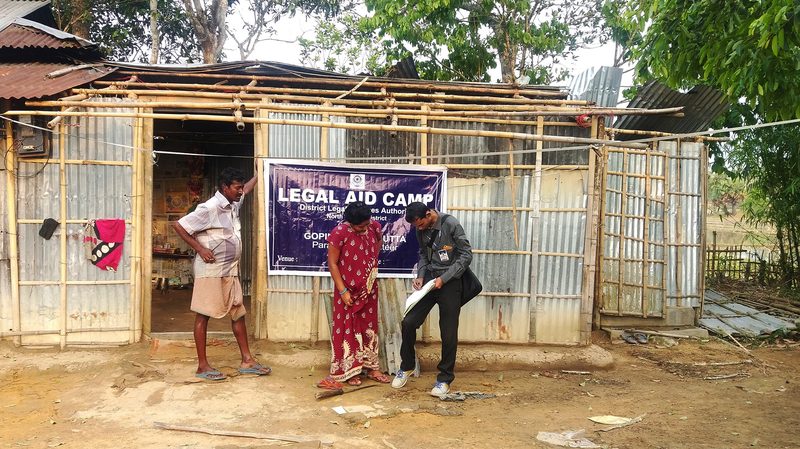
The Constitution promises free legal aid to ensure that no citizen is denied justice by reason of economic disability. The machinery built to deliver on that promise is a four-tier network headed by the National Legal Services Authority, NALSA, running through state, district, and taluk bodies, staffed by panel lawyers, paralegal volunteers, and front offices in courts. It is one of the world’s largest legal aid systems, serving lakhs of beneficiaries a year. It is also chronically underfunded and uneven in quality. This is how free legal aid in India works, and where it falls short.
The architecture: NALSA to the taluk
The Legal Services Authorities Act of 1987 created the institutional pyramid. At the apex sits NALSA, chaired by a sitting Supreme Court judge and headed in day-to-day functioning by its executive chairman, which frames policies, funds schemes, and organises national programmes like Lok Adalats. Below it, each State Legal Services Authority, headed by the Chief Justice of the High Court, implements programmes in the state; District Legal Services Authorities, chaired by the District Judge, run front offices, panel lawyers, and legal aid clinics; and Taluk Legal Services Committees take the system to the sub-district level. The network includes legal aid clinics in villages, law colleges, and jails, front offices in court complexes where applicants can walk in, and a growing tele-law system connecting villagers to lawyers by video. On paper, the architecture reaches every district in the country.
Who is entitled, and to what
Eligibility under the Act is broad: women and children, members of Scheduled Castes and Scheduled Tribes, victims of trafficking and disasters, industrial workmen, persons with disabilities, persons in custody, and those with annual income below prescribed thresholds, currently Rs. 3 lakh for Supreme Court legal services and lower thresholds varying by state, are entitled to free legal services. The services include a panel lawyer to represent the beneficiary, payment of court fees and process costs, and assistance through the entire case. NALSA’s schemes target specific vulnerabilities: legal aid to prisoners, with jail clinics and undertrial review; to victims of trafficking and commercial sexual exploitation; to senior citizens; to disaster victims; and to workers in the unorganised sector. The intent is not merely representation in court but legal empowerment, helping people know their rights before they need a lawyer.
How it works in practice
A person seeking aid applies at the front office of the District Legal Services Authority, or through a legal aid clinic or the tele-law helpline; means and merits are assessed, and a panel lawyer is assigned. Panel lawyers are private practitioners empanelled by the authority, paid modest honoraria per case. Paralegal volunteers, trained community members including students and social workers, extend the system’s reach into villages and prisons, identifying cases and spreading legal literacy. The system processes lakhs of cases annually, and its Lok Adalats settle lakhs more. Tele-law, launched to bridge the rural-urban lawyer gap, has handled lakhs of consultations. At its best, the machinery delivers what the Constitution promises: a competent lawyer for a domestic worker fighting a wage claim, a tribal undertrial getting bail, a disaster victim navigating compensation.
Where it falls short
The gap between promise and performance is well documented. Funding is thin: legal services authorities operate on budgets that are a fraction of what the system’s mandate requires, and panel lawyers’ honoraria are low enough to discourage the most capable practitioners. Quality is uneven: many beneficiaries report lawyers who meet them once, miss hearings, or push for quick compromises. Awareness remains low: large numbers of eligible people, especially the poorest, have never heard of the DLSA front office. Monitoring is weak, with limited systems to track whether assigned lawyers actually perform. The undertrial crisis is the sharpest indictment: if legal aid worked as intended, prisons would not be three-quarters full of unconvicted people. Studies and judicial observations repeatedly find that legal aid lawyers are often absent at the crucial early stages, remand hearings and bail applications, when their presence matters most. The system exists everywhere and functions well only in patches.
What would make it work
Reformers prescribe a familiar list: significantly higher funding and realistic honoraria to attract competent lawyers; dedicated, full-time legal aid counsel in courts rather than reliance on part-time panels; mandatory early representation at remand and bail stages; professional training and performance monitoring for panel lawyers; and mass awareness campaigns so the entitled actually claim the entitlement. Some states have experimented with promising models, and NALSA’s own vision documents acknowledge the quality challenge. The deeper point is philosophical: free legal aid is treated in budgets as charity, when the Constitution frames it as a condition of justice itself. Until the system is funded and managed as essential infrastructure, like courts themselves, the promise will outrun the performance, and the poorest Indians will continue to face the law’s majesty largely alone.
FAQs
Who qualifies for free legal aid? Women, children, SC/ST members, persons with disabilities, disaster victims, persons in custody, industrial workmen, and those below income thresholds, among others.
How do I apply? At the District Legal Services Authority front office in your district court complex, through a legal aid clinic, or via the tele-law helpline and portal.
Is it really free? Yes, court fees, lawyer fees, and process costs are covered for eligible beneficiaries.
Free legal aid is the mechanism by which India’s constitutional promise of equal justice is supposed to reach those who cannot buy it. The machinery is built and nationwide; making it work as promised is the unfinished business of Indian justice.
Compiled by the Khabar 24h Editorial Desk from publicly available sources.

Khabar 24h Editorial Desk — our explainers are prepared by the Khabar 24h editorial team using AI-assisted research tools, and every piece is reviewed by a human editor before publishing. We do not claim original reporting: our work is turning complex topics into simple, accurate summaries. Spotted an error? Write to contact@khabar24h.com — our corrections policy aims for same-day review.
More from this author →