Direct Benefit Transfer: How Subsidies Land Directly in Bank Accounts
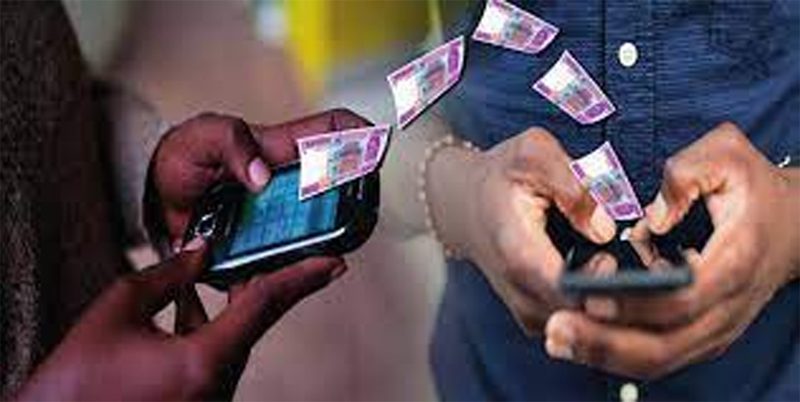
Direct Benefit Transfer, DBT, is the quiet revolution in how the Indian state spends money on its citizens: instead of subsidised goods moving through layers of officials and dealers, cash moves electronically into Aadhaar-seeded bank accounts. Covering hundreds of schemes across dozens of ministries, from LPG subsidies to MGNREGA wages to scholarships, DBT transfers run into lakhs of crores annually. The government credits it with plugging leakages worth lakhs of crores. Critics warn of exclusion errors that deny the poorest their dues. This is how DBT works and what the evidence shows.
How DBT works
The mechanics are straightforward in concept. A beneficiary is enrolled in a scheme with Aadhaar-seeded bank account details; the scheme’s database is deduplicated against Aadhaar to remove ghosts and duplicates; and payments are pushed through the Aadhaar Payment Bridge System or the National Automated Clearing House directly into the account, with SMS notifications to the beneficiary’s linked mobile. The Public Financial Management System, PFMS, tracks the money end to end, giving the government a real-time view of disbursement unprecedented in Indian welfare history. For in-kind schemes like PDS, DBT takes a hybrid form: Aadhaar-authenticated delivery at fair price shops rather than cash. The JAM trinity, Jan Dhan accounts, Aadhaar identity, mobile connectivity, is the infrastructure; DBT is the application that runs on it. What once required the beneficiary to navigate the block office now, in theory, requires only an account and a thumbprint.
The scale and the claimed savings
DBT’s scale is difficult to overstate: it spans central schemes across ministries, LPG’s PAHAL, MGNREGA, NSAP pensions, and hundreds of scholarship and subsidy schemes, plus state-level DBTs, with annual transfers in the lakhs of crores. The government’s headline claim is cumulative savings of several lakh crores from eliminating duplicates, ghosts, and diversion, the PAHAL LPG reform alone is credited with large savings by removing duplicate connections and moving to direct subsidy. Independent assessments are more cautious about attributing every rupee, but confirm the direction: biometric deduplication did remove massive numbers of duplicate and ghost beneficiaries across schemes, and electronic audit trails did compress the space for intermediaries. For the exchequer, DBT also brought budgeting clarity: the state finally knows, beneficiary by beneficiary, where welfare money goes.
PAHAL: the case study
The LPG subsidy reform, PAHAL, is DBT’s showcase. Previously, subsidised cylinders flowed through dealers with diversion to commercial use rampant; under PAHAL, consumers buy at market price and receive the subsidy in their bank accounts, with the GiveItUp campaign nudging the well-off to forgo it. Millions of duplicate and ghost connections were eliminated, and the Ujjwala scheme layered new connections for poor households onto the reformed system. The reform demonstrated DBT’s core virtues: targeting improved, diversion fell, and the subsidy became a visible entitlement in the beneficiary’s account rather than an invisible discount at the dealer. It also demonstrated the prerequisites: bank accounts for all, Aadhaar seeding, and a communication campaign, without which the transition would have stranded beneficiaries.
Exclusion: the other side of the ledger
DBT’s critics focus on exclusion errors, and the evidence gives them ammunition. Aadhaar seeding failures, mismatched names, inactive accounts, and biometric authentication failures have denied rations, wages, and pensions to genuine beneficiaries; researchers have documented cases of starvation deaths linked to authentication failures at ration shops, though governments dispute the causality. MGNREGA’s shift to Aadhaar-based payment systems has seen wages rejected or delayed for workers whose accounts were mis-seeded. The digitally illiterate, the elderly with worn fingerprints, and migrants with accounts in other states face the steepest barriers. The pattern is consistent: DBT’s efficiency gains come from standardisation, and standardisation punishes those who do not fit the standard. Safeguards exist, exception handling, manual overrides, grievance redressal, but their implementation at the last mile is where the system most often fails.
Striking the balance
The mature view of DBT is neither celebration nor condemnation. As a fiscal technology, it is transformative: faster, more transparent, less leaky than the system it replaced, and a platform for crisis response, as pandemic cash transfers showed. As a welfare technology, its justice depends on last-mile design: robust exception handling, genuine grievance redressal, and the humility to keep non-digital fallbacks. The policy direction, expanding DBT to more schemes while strengthening safeguards, reflects this dual understanding. The measure of DBT’s success will not be the savings claimed in Delhi but the experience of the poorest beneficiary: whether the money arrives, on time, without a bribe, without a failed fingerprint standing between her and her due.
FAQs
What is DBT? The electronic transfer of subsidies and benefits directly into beneficiaries’ Aadhaar-seeded bank accounts, bypassing intermediaries.
Which schemes use DBT? Hundreds, including LPG subsidy (PAHAL), MGNREGA wages, pensions, scholarships, and PM-KISAN, across central and state governments.
What is the JAM trinity? Jan Dhan accounts, Aadhaar identity, and Mobile connectivity, the three infrastructures that make DBT possible.
Direct Benefit Transfer rewired the Indian welfare state around the individual account. Its achievements in cutting leakage are real; so are its exclusion risks. Getting both halves of that sentence right is the ongoing work of Indian welfare policy.
Compiled by the Khabar 24h Editorial Desk from publicly available sources.

Khabar 24h Editorial Desk — our explainers are prepared by the Khabar 24h editorial team using AI-assisted research tools, and every piece is reviewed by a human editor before publishing. We do not claim original reporting: our work is turning complex topics into simple, accurate summaries. Spotted an error? Write to contact@khabar24h.com — our corrections policy aims for same-day review.
More from this author →