Delhi-Mumbai Expressway: Inside India’s Longest Greenfield Expressway
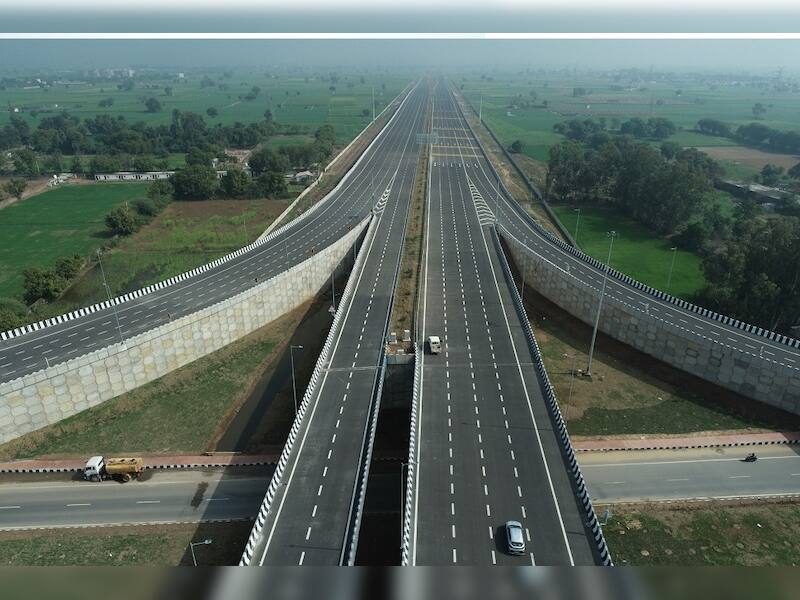
The Delhi-Mumbai Expressway is the flagship of India’s expressway programme: 1,386 kilometres of access-controlled, eight-lane highway linking the national capital with the financial capital, designed to cut the road journey from 24 hours to about 12. Built largely on a greenfield alignment through Haryana, Rajasthan, Madhya Pradesh, Gujarat and Maharashtra, it is the longest expressway in India and among the longest in the world. Sections have opened to traffic in phases since 2023, and the full corridor promises to reshape freight and passenger movement between the country’s two biggest economic centres. This is the story of the route, the engineering, and why the final stretches took longer than planned.
The route and the promise
The expressway runs from Sohna near Gurugram to Virar near Mumbai, passing through the hinterlands of five states rather than following the old NH-48 alignment. The greenfield route was a deliberate choice: it avoids congested cities, keeps the alignment straighter and faster, and opens up underdeveloped regions to investment. A spur connects the expressway to the upcoming Noida International Airport at Jewar. The design speed is 120 kmph, with a fully access-controlled carriageway, grade-separated interchanges, and service roads for local traffic. For trucks, the corridor offers a predictable 12-hour run between Delhi and Mumbai, potentially pulling significant freight off the older highway and even off rail on some routes.
Engineering on a continental scale
Building 1,386 kilometres of new highway required moving earth on a staggering scale, dozens of major bridges, hundreds of underpasses and overpasses, and wildlife crossings where the alignment passes near sensitive habitats. In Rajasthan’s tiger country, the expressway includes dedicated animal underpasses and overpasses, including India’s first such structures on an expressway, designed with wildlife experts. Rest areas with fuel, food and repair facilities are spaced along the corridor, and the expressway is being fitted with EV charging stations. Advanced traffic management systems, with CCTV surveillance and incident detection, monitor the corridor from control centres.
Why the last stretches lagged
While the Delhi-Dausa-Lalsot section opened in early 2023 to considerable fanfare, subsequent sections slipped. Land acquisition in Maharashtra and Gujarat proved slower and costlier than projected, contractor defaults hit some packages, and the final approaches into Mumbai, including a complex interchange network, required redesigns. The project was also executed in dozens of packages by different contractors, and the weakest links set the pace for the whole. Cost escalations drew scrutiny from the national auditor. The delays illustrate a pattern in Indian mega-projects: the engineering is rarely the binding constraint; land, contracts and coordination are.
What it changes for travellers and truckers
For car travellers, the expressway halves the Delhi-Mumbai drive and makes overnight road journeys routine, with wayside amenities that the old highway never offered. For logistics, the time saving translates directly into lower inventory and fuel costs: a truck that does the run in 12 hours instead of 20 can turn around faster, and fleet utilisation improves. The corridor is also expected to seed industrial townships and logistics parks along its length, particularly in Rajasthan and Madhya Pradesh, where the new connectivity suddenly makes land valuable. Tolls are distance-based and higher than on old highways, which has sparked the usual debate about whether the time saved justifies the price.
The expressway era it belongs to
The Delhi-Mumbai Expressway is the showpiece of a broader pivot from widening old highways to building new access-controlled corridors: the Mumbai-Nagpur Samruddhi Mahamarg, the Bengaluru-Chennai Expressway, the Ganga Expressway in Uttar Pradesh and others follow the same template. Together they represent a bet that India’s next logistics leap will come from greenfield speed rather than brownfield widening. The Delhi-Mumbai corridor’s ultimate verdict will be written in traffic data: if trucks and cars fill it at the projected volumes, it validates the entire programme; if they stick to the old free highway, it becomes a cautionary tale about induced demand and toll elasticity.
FAQs
How long is the Delhi-Mumbai Expressway? 1,386 km from Sohna (near Gurugram) to Virar (near Mumbai), making it India’s longest expressway.
How much time does it save? The full corridor is designed to cut the Delhi-Mumbai road journey from about 24 hours to roughly 12 hours.
Is the entire expressway open? Sections have opened in phases since 2023; the final stretches, particularly the Maharashtra approaches, faced delays.
The Delhi-Mumbai Expressway is infrastructure as statement: that India can build at continental scale, on new alignments, to global standards. Finishing it, and filling it, is the statement’s second half.
Source: The Times of India

Khabar 24h Editorial Desk — our explainers are prepared by the Khabar 24h editorial team using AI-assisted research tools, and every piece is reviewed by a human editor before publishing. We do not claim original reporting: our work is turning complex topics into simple, accurate summaries. Spotted an error? Write to contact@khabar24h.com — our corrections policy aims for same-day review.
More from this author →