Social Anxiety in Young Indians: Signs, Causes and Coping Strategies
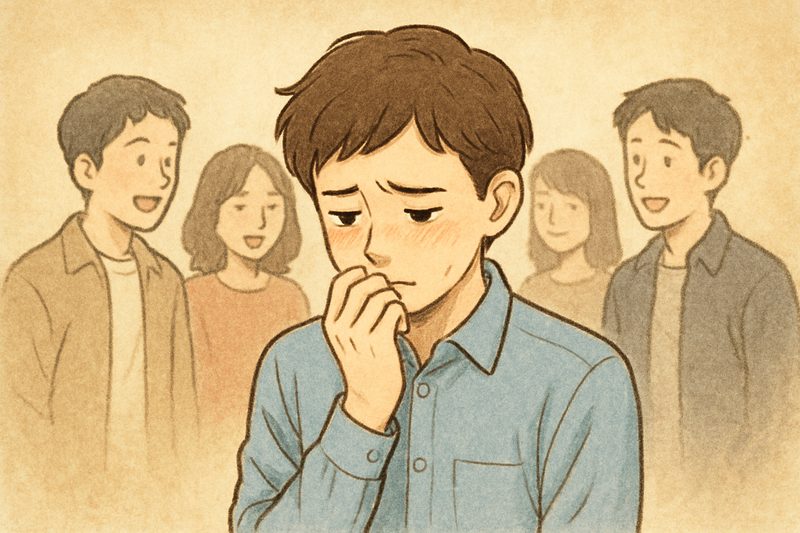
For millions of young Indians, ordinary social situations feel like examinations: the racing heart before speaking in a meeting, the dread of eating in front of colleagues, the rehearsed phone calls, the parties avoided and the opportunities quietly declined. Social anxiety disorder is one of the most common mental health conditions in the world, typically beginning in the teens or early twenties, and clinicians across India report seeing it more often than ever. It is also one of the most treatable, and one of the least treated, because sufferers mistake it for a personality flaw rather than a recognised, manageable condition.
Shyness versus social anxiety disorder
Everyone feels nervous sometimes; that is not a disorder. Social anxiety disorder involves an intense, persistent fear of social situations where one might be scrutinised, judged or embarrassed, leading to avoidance that damages education, careers and relationships. The physical symptoms are real and distressing: blushing, trembling, sweating, nausea, a pounding heart, a mind that goes blank. Crucially, the person usually knows the fear is excessive, which adds a layer of shame. The avoidance then shrinks life systematically: the promotion not applied for, the class not attended, the friendships not formed. When fear starts making your decisions for you, it has crossed from temperament into territory that deserves help.
Why it is rising among young Indians
No single cause explains the trend, but several forces converge. Academic and early-career pressure in India puts young people under near-constant evaluation, exactly the trigger social anxiety feeds on. Social media has created a parallel arena of judgement where comparison is continuous and public embarrassment can be screenshotted. Urban migration separates young people from family support networks just as social demands peak. The pandemic years removed critical social practice during adolescence for an entire cohort. Underneath these sits temperament: behavioural inhibition in childhood and a family history of anxiety raise vulnerability, but they do not determine destiny.
The avoidance trap
Avoidance feels like relief and functions like fuel. Each avoided presentation or declined invitation teaches the brain that the situation was indeed dangerous, strengthening the fear. Meanwhile the feared catastrophe almost never happens, but the avoider never learns that, because they were not there. This is the central mechanism that therapy targets. Safety behaviours, the subtle crutches like rehearsing sentences, avoiding eye contact, drinking to loosen up, or hiding behind a phone, keep the cycle going by preventing genuine disconfirmation of the fear.
What actually helps: the evidence
Cognitive behavioural therapy is the gold standard, with large effect sizes specifically for social anxiety. Its core is graded exposure: systematically facing feared situations in a planned hierarchy, from mildly uncomfortable to highly feared, while dropping safety behaviours. The brain learns through experience, not argument, that the feared outcomes do not occur or are survivable. CBT also tackles the characteristic distortions: mind-reading, assuming others notice your anxiety far more than they do, and post-event rumination, the hours-long replay of every perceived mistake. For moderate to severe cases, SSRIs and SNRIs are effective and often combined with therapy. Beta-blockers are sometimes used for performance-only anxiety, such as stage fright, under medical guidance.
Practical coping strategies to start now
- Shift attention outward: anxiety turns attention inward to monitor yourself; deliberately focus on the other person and the conversation instead.
- Drop one safety behaviour at a time, such as rehearsing, and observe that the feared disaster does not happen.
- Build exposure gradually: order food by phone before tackling the big presentation.
- Limit pre-event rumination; set a time limit on worry and then redirect to preparation.
- Exercise regularly and limit caffeine and alcohol, both of which amplify physical anxiety symptoms.
FAQs
Will I grow out of social anxiety? Some do, but without intervention it tends to persist and often worsens as avoidance accumulates. Early treatment has the best outcomes.
Is medication a sign of failure? No. Medication corrects a dysregulated threat system the way glasses correct vision; many people use it temporarily alongside therapy.
Can online therapy work for social anxiety? Yes. Trials show internet-delivered CBT is effective for social anxiety, which is convenient given that leaving home for appointments is itself hard for sufferers.
Social anxiety is not a character verdict; it is an overactive alarm system that can be recalibrated. The tragedy is not that it exists but that so many bright young Indians organise their entire lives around it in silence, declining the very experiences that would prove the fear wrong. The first exposure does not have to be heroic. It just has to be faced, one small, deliberate step at a time.
Source: NDTV

Khabar 24h Editorial Desk — our explainers are prepared by the Khabar 24h editorial team using AI-assisted research tools, and every piece is reviewed by a human editor before publishing. We do not claim original reporting: our work is turning complex topics into simple, accurate summaries. Spotted an error? Write to contact@khabar24h.com — our corrections policy aims for same-day review.
More from this author →