How Tatkal, Quotas, and Dynamic Pricing Work in Indian Railways Ticketing
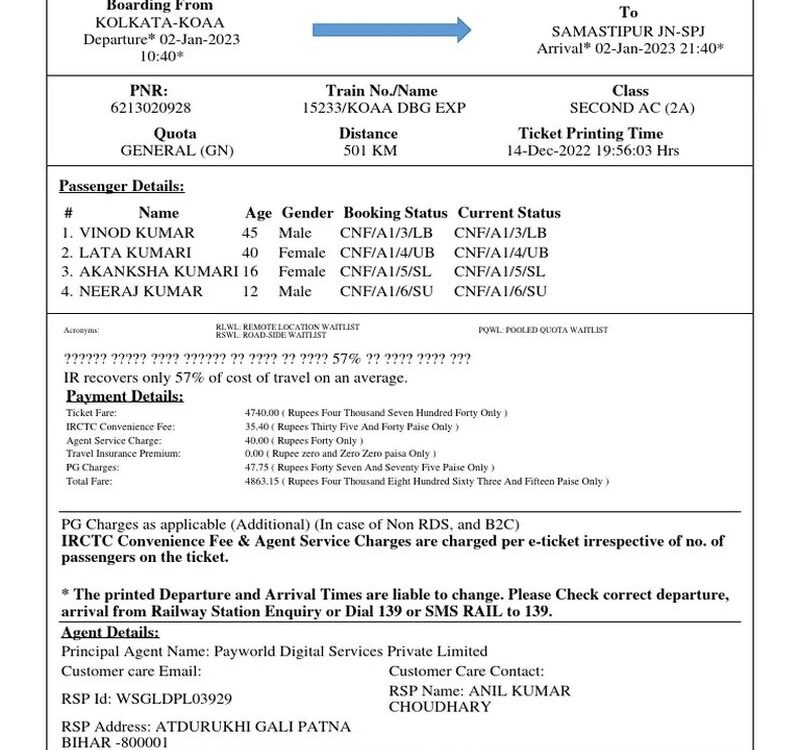
Few systems in India are as universally used, and as widely misunderstood, as railway ticketing. Over two crore passengers travel by train every day, and behind every confirmed berth lies a machinery of quotas, waiting lists, dynamic pricing and Tatkal scrambles that can baffle even frequent travellers. The Indian Railway Catering and Tourism Corporation’s booking portal handles millions of transactions daily, and the opening of Tatkal booking each morning is one of the country’s great digital stampedes. This explainer unpacks how the system actually works: what Tatkal is, who gets quota berths, how flexi-pricing raises fares, and how to read a waiting-list ticket.
Tatkal: the last-minute window
Tatkal is a quota of berths set aside for last-minute travel, opened one day before the journey date: at 10 am for AC classes and 11 am for non-AC classes. Tatkal tickets cost more than regular fares, with fixed extra charges per class, and the quota is limited, so popular trains sell out within minutes. The system is designed to serve genuine emergencies, but in practice it is a parallel booking channel used by anyone who missed the general window. To curb misuse by booking agents and bots, the railways restricts Tatkal booking timings, requires Aadhaar-linked IRCTC accounts for high volumes, and limits the number of tickets per user session. Refunds on confirmed Tatkal tickets are generally not allowed, which is the price of the last-minute privilege.
Quotas: the reserved berths you never see
Only a fraction of a train’s berths are available in the general pool. The rest are partitioned into quotas: Tatkal, premium Tatkal, ladies, senior citizens, persons with disabilities, defence personnel, foreign tourists, VIP and emergency quotas, and the general waiting list itself. The VIP and emergency quotas, controlled at the divisional level, are released only hours before departure and are meant for genuine emergencies, though they have long been rumoured to favour the well-connected. Parliament and railway officials get their own quota. Understanding quotas matters because a train that shows “waitlisted” in the general pool may have berths available under another quota, which is why savvy travellers check options like Vikalp, the alternative-train accommodation scheme, or break their journey into segments.
Dynamic and flexi pricing
On premium trains including Rajdhani, Shatabdi, Duronto and later the Vande Bharat, the railways applies flexi-fare: the base fare rises by 10 per cent for every 10 per cent of berths sold, up to a cap of 1.5 times the base fare for most classes. This airline-style surge pricing means early birds pay the base fare while last-minute bookers pay a premium. Separately, Premium Tatkal applies dynamic pricing to a small pool of berths, with fares that can climb steeply in the final hours. The railways defends flexi-fare as a demand-management tool that rewards early planning; critics call it a tax on the desperate. Either way, the lesson for travellers is consistent: book early, and fares behave.
Waiting lists, RAC and charting
When confirmed berths run out, bookings go to RAC (Reservation Against Cancellation), where two passengers share one berth, or to the waiting list, numbered by position. Final charts are prepared a few hours before departure, and the great Indian ritual is checking the PNR status to see if a waitlist number has moved. Confirmation chances depend on the train, season, class and quota, and the railways’ own data shows most short-distance waitlists clear while festival-season long-distance ones often do not. The charting process also releases unused quota berths, including the emergency quota, into the general pool. Third-party prediction tools estimate confirmation probability from historical patterns, and they are roughly as accurate as the data allows, which is to say, useful but not certain.
How to play the system honestly
A few strategies consistently work. Book the moment reservations open, 60 days before travel for most trains. Use the Vikalp option to accept alternative trains. Check availability from the train’s origin rather than your boarding station, since quotas are allocated by station pairs. Consider break journeys, splitting a long trip into two tickets. And for genuinely uncertain plans, the railways’ own cancellation and refund rules are more generous than Tatkal’s: a confirmed ticket cancelled in time returns most of the fare. The system rewards planners and punishes procrastinators, which, whatever its flaws, is at least a legible logic.
FAQs
When does Tatkal booking open? One day before the date of journey, at 10 am for AC classes and 11 am for non-AC classes, excluding the date of journey itself.
What is the difference between RAC and waiting list? RAC passengers are guaranteed at least a shared seat and usually get a full berth after charting; waiting-list passengers travel only if their ticket confirms.
Is Tatkal refundable? Confirmed Tatkal tickets are generally non-refundable; waitlisted Tatkal tickets get an automatic refund if they do not confirm.
Railway ticketing looks chaotic from the outside, but it runs on rules, and the rules reward those who learn them. In a country where the train is still the great leveller, that knowledge is a small but real form of power.
Source: NDTV

Khabar 24h Editorial Desk — our explainers are prepared by the Khabar 24h editorial team using AI-assisted research tools, and every piece is reviewed by a human editor before publishing. We do not claim original reporting: our work is turning complex topics into simple, accurate summaries. Spotted an error? Write to contact@khabar24h.com — our corrections policy aims for same-day review.
More from this author →