GST Council Explained: How the Centre and States Decide Taxes Together
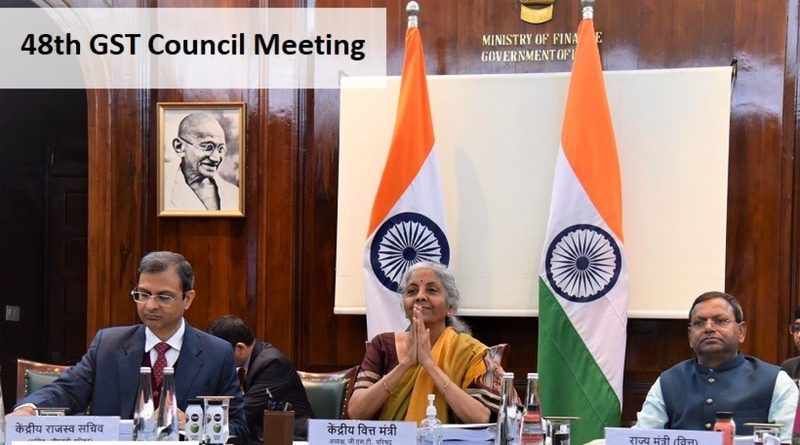
The Goods and Services Tax, launched in 2017, was India’s biggest tax reform since Independence, replacing a maze of central and state levies with a single national tax. Its most innovative feature is institutional: the GST Council, a constitutional body where the Union and the states decide tax policy together by vote. It is India’s boldest experiment in cooperative federalism, and its workings reveal both the promise and the friction of shared sovereignty.
What the GST Council is
Created by the 101st Constitutional Amendment, the GST Council is chaired by the Union Finance Minister and includes the finance ministers of every state and Union Territory with a legislature. It is the first constitutional body in which the Centre and states sit as voting members on a shared subject. The Council’s mandate covers the taxes to be subsumed, the rates and slabs, exemptions, thresholds, and the administrative machinery of the GST, making it effectively India’s indirect-tax parliament.
How voting works
Decisions require a three-fourths majority of the weighted votes cast. The Centre’s vote carries a weight of one-third of the total, while all states together carry two-thirds, distributed equally among them regardless of size. This arithmetic is carefully calibrated: neither the Centre alone nor the states alone can push a decision through without support from the other side. In practice, the Council has operated largely by consensus, with formal voting rare, but the weighted formula shapes every negotiation by defining each side’s blocking power.
The great bargain: compensation
States surrendered their biggest independent revenue source, the power to levy sales tax and VAT, in exchange for the GST. To make the bargain acceptable, the Centre guaranteed states a 14 per cent annual revenue growth for five years, compensating shortfalls through a dedicated compensation cess. When revenues collapsed during the pandemic, the compensation dispute became the Council’s gravest crisis, resolved through a complex borrowing arrangement. The expiry of the guarantee in 2022 reopened the underlying question: how much fiscal autonomy have states really retained?
Key decisions and rate rationalisation
The Council’s record includes setting the multi-slab rate structure, bringing real estate and petroleum products partially into the fold, creating the e-way bill and e-invoicing systems, and repeatedly rationalising rates on goods and services. Each decision balances revenue needs against inflation, industry demands and state interests. The Council’s consensus culture has kept the tax stable, but critics argue it has also slowed reform, leaving the long-promised simplification to fewer slabs perpetually on the agenda.
Federal tensions in the Council
The Council embodies cooperative federalism, but tensions persist. States complain that the Centre dominates the agenda and secretariat, that compensation dues have been delayed, and that the uniform tax constrains their ability to respond to local needs. The Supreme Court’s 2022 ruling that Council recommendations are not binding, but persuasive, added a new dimension, affirming that states retain legislative sovereignty over GST matters. The ruling reassured federalists while raising questions about the Council’s authority.
How the Council decides in practice
Council meetings follow an elaborate choreography. The Union finance ministry’s secretariat prepares the agenda in consultation with states, officials meet first to narrow differences, and ministers then negotiate what remains. Most decisions emerge by consensus after hard bargaining, with the weighted voting formula rarely invoked formally. States trade support across issues, linking rate cuts on one item to compensation assurances on another. This consensus culture has kept the GST stable through economic shocks, though it also means controversial reforms advance only when every major stakeholder is persuaded.
FAQs
Who chairs the GST Council? The Union Finance Minister chairs it, with the Union Minister of State for Finance and each state’s finance minister as members.
Can a state opt out of GST decisions? States legislate their own GST laws, but the Council’s framework and the constitutional design make unilateral divergence impractical.
What is the compensation cess? A levy on luxury and sin goods whose proceeds were used to compensate states for revenue shortfalls during the transition’s first five years.
The GST Council proves that the Centre and states can govern a shared tax together, but every meeting is also a negotiation over the terms of Indian federalism itself, conducted in full public view. Its success or failure will define the future of fiscal federalism in India.
Compiled by the Khabar 24h Editorial Desk from publicly available sources.

Khabar 24h Editorial Desk — our explainers are prepared by the Khabar 24h editorial team using AI-assisted research tools, and every piece is reviewed by a human editor before publishing. We do not claim original reporting: our work is turning complex topics into simple, accurate summaries. Spotted an error? Write to contact@khabar24h.com — our corrections policy aims for same-day review.
More from this author →