Chernobyl Explained: What Went Wrong at Reactor Four
At 1:23 am on 26 April 1986, during a routine safety test, Reactor Four of the Chernobyl nuclear power plant exploded, blowing the roof off the building and releasing a plume of radioactive material that drifted across Europe. It remains the worst nuclear accident in history, a catastrophe born of flawed design, human error and a secretive system. What exactly went wrong that night, and why does Chernobyl still haunt us?
The reactor’s fatal design
Chernobyl’s RBMK reactor had a terrifying flaw: a positive void coefficient, meaning that as cooling water turned to steam, the reaction sped up instead of slowing down. Western reactors are designed to shut themselves down when cooling fails; the RBMK could accelerate into disaster. It also lacked a proper containment building, the concrete dome standard elsewhere. Soviet engineers knew of the flaw but the information was classified. The reactor was, in the words of later investigators, an accident waiting for its operators to make a mistake.
The test that went wrong
The disaster unfolded during a test of whether the reactor’s turbines could power cooling pumps during a blackout. In preparation, operators reduced power, but the reactor became unstable, poisoned by xenon buildup. Against regulations, they withdrew nearly all the control rods to keep it running. When the test began and they finally hit the emergency shutdown button, the rods’ graphite tips briefly accelerated the reaction instead of stopping it, the design flaw striking at the worst moment. Power surged to a hundred times normal in seconds; the fuel shattered, steam exploded, and the reactor was destroyed.
The cover-up and the cleanup
The Soviet response compounded the disaster. Local officials delayed evacuation; Pripyat’s 49,000 residents were not moved for 36 hours, and May Day parades marched through Kiev’s fallout. Moscow did not admit the accident until Swedish monitors detected the plume. Then came the heroism: firefighters who died within weeks, helicopter pilots, miners, and the liquidators, some 600,000 workers who entombed the reactor in a concrete sarcophagus, many at grave cost to their health. The new confinement arch, completed in 2016, sealed the ruin for a century.
The human and environmental toll
The death toll remains bitterly contested. Dozens died acutely; thousands of cleanup workers and exposed children suffered cancers, especially thyroid cancer, which spiked dramatically. The UN’s conservative estimates put eventual cancer deaths in the thousands; Greenpeace claims tens of thousands. A 30-kilometre exclusion zone remains, though wildlife has reclaimed it in eerie abundance. The psychological toll, displacement, anxiety, stigma, affected hundreds of thousands. Chernobyl taught that a nuclear disaster’s longest fallout is fear.
What Chernobyl changed
The accident transformed the nuclear industry: RBMK reactors were retrofitted, safety culture became a global doctrine, and international reporting conventions were established. Politically, Gorbachev later said Chernobyl did more to destroy the Soviet Union than perestroika; the lies exposed the system’s rot. Culturally, it became the symbol of technological hubris and state secrecy, immortalised in books, the HBO series, and dark tourism. Public trust in nuclear power never fully recovered, shaping energy debates to this day.
Chernobyl now
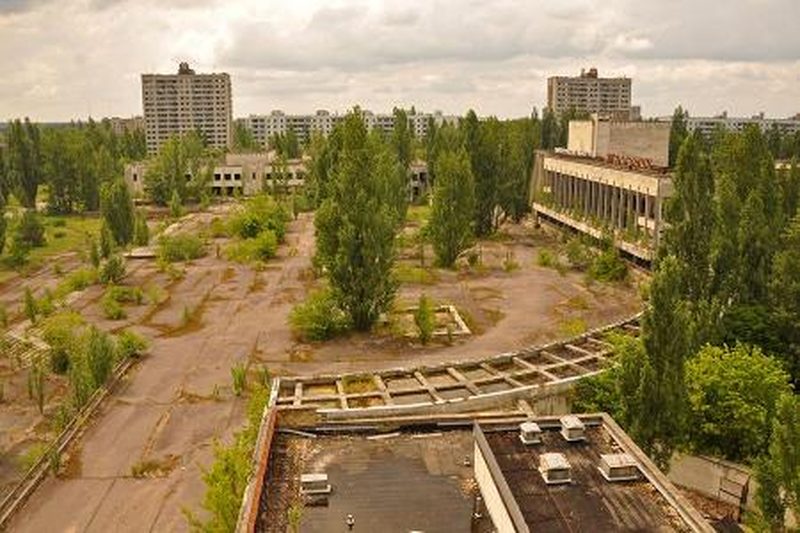
Today the exclusion zone is a strange monument: a crumbling Soviet city frozen in 1986, wolves and lynx roaming radioactive forests, and tourists with Geiger counters. Ukraine had begun developing the zone before the 2022 Russian invasion, during which Russian troops dug trenches in contaminated soil. The sarcophagus needs perpetual monitoring; the fuel inside remains dangerous for millennia. Chernobyl is not over; it is merely contained, a warning with a half-life of 24,000 years.
Lessons for the nuclear age
Chernobyl’s technical lessons were absorbed: reactor designs improved, safety culture globalised, and international reporting became mandatory. But its deeper warning, about secrecy, complacency and the gap between operators and designers, applies far beyond nuclear power. Every complex technology needs a culture where bad news travels up faster than radiation travels out. Where that culture is absent, the next Chernobyl waits in another industry.
FAQs
What caused the Chernobyl disaster? A flawed reactor design combined with operator errors during a safety test, causing a runaway reaction and steam explosion.
How many people died? Dozens died within months; estimates of eventual cancer deaths range from thousands to tens of thousands and remain disputed.
Is Chernobyl safe to visit? Short guided visits to the exclusion zone expose visitors to less radiation than a long-haul flight, though the reactor site itself remains highly restricted.
Chernobyl was the moment the atomic age’s promise curdled into its nightmare: a machine built without a conscience, run without candour, in a system built on lies. Its lesson, that safety is a culture before it is a technology, outlives the Soviet Union that ignored it.
Compiled by the Khabar 24h Editorial Desk from publicly available sources.

Khabar 24h Editorial Desk — our explainers are prepared by the Khabar 24h editorial team using AI-assisted research tools, and every piece is reviewed by a human editor before publishing. We do not claim original reporting: our work is turning complex topics into simple, accurate summaries. Spotted an error? Write to contact@khabar24h.com — our corrections policy aims for same-day review.
More from this author →