Islam Explained: Beliefs, Practices and the World’s Two Billion Muslims
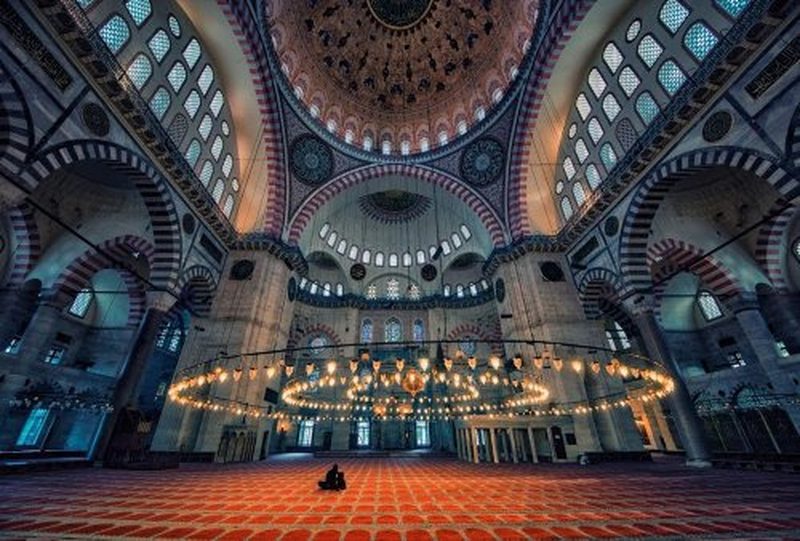
Islam is the world’s second-largest religion, with nearly two billion followers, almost one in four people on Earth. It shapes the politics of the Middle East, the cultures of South and Southeast Asia, and growing communities in Europe and the Americas. Yet public understanding often reduces it to headlines. This explainer sets out what Muslims believe, how they practise their faith, and how diverse the Muslim world truly is.
The core belief: one God, one message
Islam means submission, to the will of God, Allah in Arabic. Its central claim is strict monotheism: there is no god but God, and Muhammad is His final prophet, completing a line that Muslims say runs through Abraham, Moses and Jesus. The Quran, regarded as God’s literal word revealed to Muhammad in 7th-century Arabia, is the faith’s supreme authority, supplemented by the Hadith, records of the Prophet’s sayings and example. Muslims view Islam not as a new religion but as the original monotheism, restored.
The Five Pillars of practice
Muslim life is structured around five core practices. The Shahada, the declaration of faith, spoken to become a Muslim. Salat, prayer five times a day, facing Mecca, a rhythm that punctuates daily life from dawn to night. Zakat, almsgiving, typically 2.5 per cent of savings, making charity a duty rather than an option. Sawm, fasting from dawn to sunset during Ramadan, the holy month of self-discipline and community. And Hajj, the pilgrimage to Mecca that every able Muslim should make once, drawing millions each year in one of humanity’s largest gatherings.
Sunni and Shia: the great divide
Islam’s main split dates to the 7th century, over who should lead the community after Muhammad’s death. Sunnis, about 85 to 90 per cent of Muslims, followed the elected caliphs; Shias backed Ali, the Prophet’s cousin and son-in-law, and his descendants, the Imams. The divide is theological, legal and political, and it maps onto modern geopolitics, from Iran to Iraq to Yemen. Yet for most of history Sunnis and Shias lived intermingled, and the two traditions share the Quran, the pillars and the vast majority of practice.
A religion of enormous diversity
There is no Muslim pope and no single Muslim culture. Indonesia, not Saudi Arabia, is the world’s largest Muslim-majority nation. Sufi mystics whirl in Turkey while Salafi scholars preach austerity in the Gulf; Senegalese brotherhoods, Iranian theologians and American converts all practise recognisably the same faith differently. Islamic law, Sharia, is interpreted across a spectrum from progressive to strict, and debates over women’s roles, democracy and modernity rage within Muslim societies. The Muslim world contains monarchies, republics, democracies and everything between.
Islam in the modern world
Muslims are the world’s youngest major religious population, with a median age far below Christians, which means Islam’s share of humanity will keep growing. Muslim communities in the West navigate questions of identity, integration and Islamophobia, while Muslim-majority states wrestle with development, governance and the legacy of colonialism. Extremist groups claiming the faith’s mantle have caused immense suffering, most of it inflicted on other Muslims, and mainstream scholars and leaders overwhelmingly reject their theology. Understanding Islam today means seeing both its internal debates and its external pressures clearly.
Misconceptions worth clearing up
A few clarifications help. Jihad primarily means spiritual struggle; the armed meaning is a narrow subset governed by strict classical rules. The hijab and other coverings are interpreted very differently across the Muslim world, from personal choice to legal mandate. Muslims do not worship Muhammad, whom they regard as a man, albeit the final prophet. And Sharia is not a single legal code but a centuries-old scholarly tradition with multiple schools. Most misunderstandings about Islam come from treating a 1,400-year-old global civilisation as a monolith, which it has never been.
FAQs
What do Muslims believe about Jesus? Muslims revere Jesus as a major prophet born of the Virgin Mary, but not as divine; they believe he was not crucified and will return at the end of time.
What is Sharia? Islamic law derived from the Quran and the Prophet’s example, covering worship, family, finance and criminal matters, interpreted very differently across schools and countries.
Do Muslims and Christians worship the same God? Muslims say yes: Allah is simply the Arabic word for God, used by Arabic-speaking Christians too.
Islam is at once a 1,400-year-old civilisation and a young, fast-growing global faith. Its two billion followers share five pillars and one book, and differ on nearly everything else, which is precisely what makes the Muslim world so dynamic and so misunderstood.
Source: Pew Research Center

Khabar 24h Editorial Desk — our explainers are prepared by the Khabar 24h editorial team using AI-assisted research tools, and every piece is reviewed by a human editor before publishing. We do not claim original reporting: our work is turning complex topics into simple, accurate summaries. Spotted an error? Write to contact@khabar24h.com — our corrections policy aims for same-day review.
More from this author →