How Japan’s Constitutional Monarchy Works: The Emperor, the Diet and Post-War Democracy
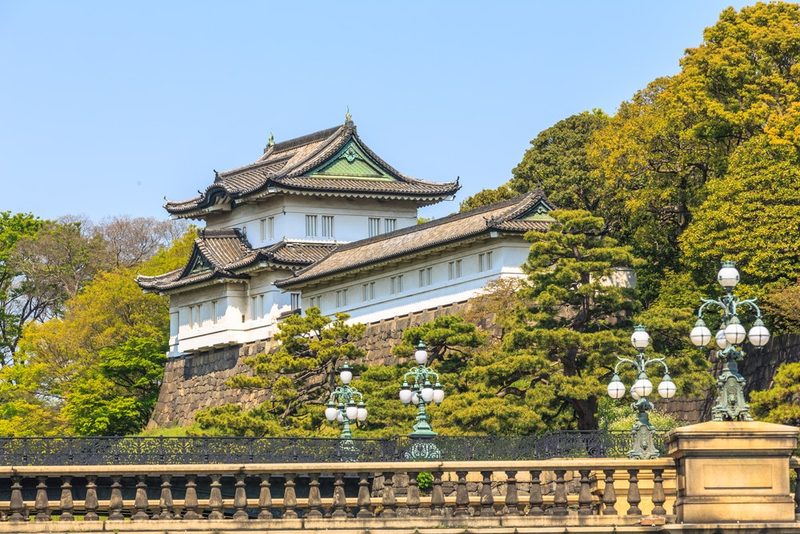
Japan is both one of the world’s oldest monarchies and one of its most stable democracies, a combination that puzzles many outsiders. The country has an emperor who traces his lineage, by tradition, back more than 2,600 years, yet he holds no political power at all. Real authority sits with an elected parliament, the Diet, and a prime minister. Japan’s constitutional monarchy was forged in the ruins of World War II, when the American occupation deliberately stripped the throne of power while preserving it as a symbol. This explainer shows how the emperor, the Diet and post-war democracy fit together.
What the emperor actually does
Under the 1947 constitution, the emperor is defined as the symbol of the state and of the unity of the people, with no powers related to government. He performs ceremonial duties: opening parliament, receiving foreign ambassadors, awarding honours and attending national rituals. Every official act requires the advice and approval of the cabinet, meaning the emperor cannot act politically even if he wanted to. The current emperor, Naruhito, who ascended in 2019, has continued the post-war pattern of his father Akihito: careful public service, disaster condolences and scientific interests, all scrupulously above politics.
How the Diet works
The National Diet is Japan’s parliament and the highest organ of state power. It has two houses: the House of Representatives, with 465 members elected for up to four years, and the House of Councillors, with 248 members serving six-year terms. The lower house is decisively more powerful: it chooses the prime minister, and its decisions prevail over the upper house on budgets, treaties and legislation. Elections use a mix of single-member districts and proportional representation. The prime minister, usually the leader of the majority party, appoints the cabinet, and most ministers are sitting Diet members.
The post-war bargain
Before 1945, the emperor was treated as a living god and the military ruled in his name, leading Japan into catastrophic war. The American occupation under General MacArthur faced a choice: abolish the throne or keep it. They kept it, judging that the emperor’s cooperation would make the occupation and democratisation smoother, but rewrote his role entirely. Sovereignty was transferred to the people, war was renounced in the famous Article 9, and universal suffrage, including women’s votes, was established. The Liberal Democratic Party, founded in 1955, then governed almost continuously for decades, presiding over the economic miracle that made Japan the world’s second-largest economy.
- Japan’s constitution has never been amended since it took effect in 1947.
- Article 9 renounces war and the maintenance of armed forces; Japan instead has the Self-Defense Forces.
- Voter turnout in lower-house elections has drifted downward, often below 60 per cent.
- The imperial family has only 17 members, and succession is limited to the male line, a growing concern as heirs dwindle.
One-party dominance and its critics
Japan’s democracy has a peculiar feature: the Liberal Democratic Party has held power for all but a few years since 1955. This is not rigged; the LDP wins because of rural overrepresentation, a fragmented opposition and its deep ties to business and bureaucracy. Critics call it a one-and-a-half-party system that breeds complacency and corruption scandals, which periodically erupt. Defenders note that Japanese voters consistently choose stability, and that power does change hands at the local level. The LDP’s long rule means policy changes slowly, but it also spared Japan the sharp partisan swings seen elsewhere.
Can the system adapt?
Japan faces pressures its post-war designers never imagined: a shrinking and ageing population, a succession crisis in the imperial family, and debates over whether Article 9 should be revised as regional threats grow. Proposals to allow female succession or restore abolished imperial branches stall against conservative resistance. Meanwhile, younger voters show less loyalty to the LDP, and recent elections have produced hung parliaments and fragile coalitions. The constitutional monarchy itself, though, enjoys broad public support: the emperor’s symbolic role is one of the few institutions almost all Japanese agree on.
FAQs
Does the emperor have any political power? No. The constitution gives him no governmental powers; he acts only on cabinet advice in ceremonial matters.
Why was the emperor kept after WWII? The US occupation decided his cooperation would ease Japan’s surrender and democratisation, so they preserved the throne while removing all its power.
What is Article 9? The constitutional clause in which Japan renounces war as a means of settling disputes and pledges not to maintain armed forces.
Japan’s constitutional monarchy is a study in reinvention: an ancient throne repurposed as a democratic symbol, a parliament that wields the real power, and a constitution written by occupiers that the Japanese made their own. It has delivered eight decades of stability, and its next test is whether it can adapt to a century its founders could not foresee.
Compiled by the Khabar 24h Editorial Desk from publicly available sources.

Khabar 24h Editorial Desk — our explainers are prepared by the Khabar 24h editorial team using AI-assisted research tools, and every piece is reviewed by a human editor before publishing. We do not claim original reporting: our work is turning complex topics into simple, accurate summaries. Spotted an error? Write to contact@khabar24h.com — our corrections policy aims for same-day review.
More from this author →