What Is a CDN? How Content Delivery Networks Speed Up Websites
Open a popular news site during a cricket final and it loads in a second. Stream a 4K movie at 9 pm when half the country is online and it never buffers. Behind both experiences sits a technology most people have never heard of: the content delivery network, or CDN. CDNs are the reason the modern internet feels fast despite its enormous scale, quietly copying the world’s most popular content to servers in hundreds of cities so it never has to travel far to reach you. Here is how they work and why almost every major website depends on one.
What is a CDN?
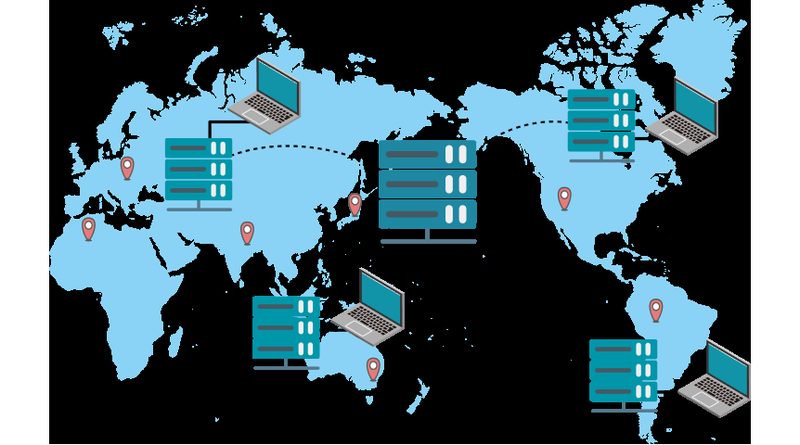
A content delivery network is a globally distributed system of servers that stores copies of website content close to users. Without a CDN, every visitor to a website fetches everything from the site’s origin server, which might sit in Mumbai, Virginia or Frankfurt. A visitor in Kochi would wait while data crossed oceans and continents. With a CDN, the site’s images, videos, stylesheets and scripts are cached on “edge” servers in dozens or hundreds of locations, and each visitor is served from the nearest one. The origin server still holds the master copy and handles dynamic, personalised content, but the heavy, repeatable files, which make up the bulk of most pages, come from next door. The result is dramatically faster load times and an origin server that no longer melts under traffic spikes.
How does a CDN actually work?
The magic happens in three steps. First, when you type a website address, smart DNS routing directs you not to the origin server but to the CDN’s nearest edge location, chosen by geography and network conditions. Second, the edge server checks its cache: if it has a fresh copy of the requested file, it serves it immediately, often in milliseconds. Third, if the file is missing or expired, the edge server fetches it once from the origin, stores a copy, and serves it, so the next thousand visitors in the region get the cached version. CDNs also optimise on the fly: compressing images, converting them to efficient formats like WebP or AVIF, and shrinking code. For video, they work with streaming protocols that chop content into small segments cached at the edge, which is why your stream can switch quality smoothly instead of freezing.
Why do websites need CDNs?
Speed is the obvious reason: studies consistently show that each extra second of load time costs visitors and sales, and CDNs routinely cut load times by half or more for distant users. But resilience matters just as much. When a product launch, a viral post or a cricket match sends traffic surging, the CDN absorbs the flood across its distributed servers instead of letting it crush a single origin machine. CDNs also provide a security shield: by sitting in front of the origin, they absorb distributed denial-of-service attacks, filter malicious traffic through web application firewalls, and enforce HTTPS encryption. For Indian users, the local angle is concrete: global CDN providers operate edge locations in Mumbai, Delhi, Chennai, Hyderabad and other cities, so content hosted abroad still loads quickly here.
Who are the big CDN providers?
The CDN market has a few giants and many specialists.
- Cloudflare operates one of the world’s largest edge networks and is famous for its generous free tier, which puts CDN, security and DNS within reach of small blogs.
- Akamai is the pioneer that invented the commercial CDN in the late 1990s and still serves many of the world’s largest enterprises and media companies.
- Amazon CloudFront and Google Cloud CDN bundle content delivery with their cloud platforms, convenient for sites already hosted there.
- Fastly built its reputation on instant cache purging and programmability, popular with developers and media sites.
- Indian providers and telecom-integrated CDNs serve domestic streaming and e-commerce with deep local points of presence.
Can a small website use a CDN?
Absolutely, and it should. Cloudflare’s free plan takes minutes to set up: point your domain’s DNS at Cloudflare and your static content is cached worldwide automatically. Most website platforms and hosts also include CDN integration: WordPress caching plugins, Shopify, and static hosts all ship with content delivery built in. The benefits for a small site are the same as for a large one, faster loads for visitors, protection against traffic spikes and basic attacks, often at zero cost. The main thing to understand is caching behaviour: if you update your site and visitors see the old version, you need to purge the CDN cache, a one-click operation in every provider’s dashboard.
FAQs
Does a CDN help with SEO? Indirectly but genuinely. Google considers page speed in rankings, and faster sites also keep visitors around longer, which search engines notice.
Is a CDN the same as web hosting? No. Hosting is where your website lives; a CDN is a delivery layer in front of it that copies and serves content from nearby locations.
Do CDNs work for dynamic content like shopping carts? Mostly they accelerate the static parts, images, scripts, styles, while personalised content still comes from the origin. Modern CDNs increasingly optimise dynamic routes too.
The next time a page snaps open instantly or a live stream holds steady through a dramatic final over, spare a thought for the CDN: thousands of unglamorous servers in rented rooms around the world, each holding a copy of what you wanted, exactly where you wanted it. The internet feels instant because, in large part, it cheats the distance.
Source: Cloudflare Blog

Khabar 24h Editorial Desk — our explainers are prepared by the Khabar 24h editorial team using AI-assisted research tools, and every piece is reviewed by a human editor before publishing. We do not claim original reporting: our work is turning complex topics into simple, accurate summaries. Spotted an error? Write to contact@khabar24h.com — our corrections policy aims for same-day review.
More from this author →