How the WHO Works: Powers, Funding and Limits of the World’s Health Body
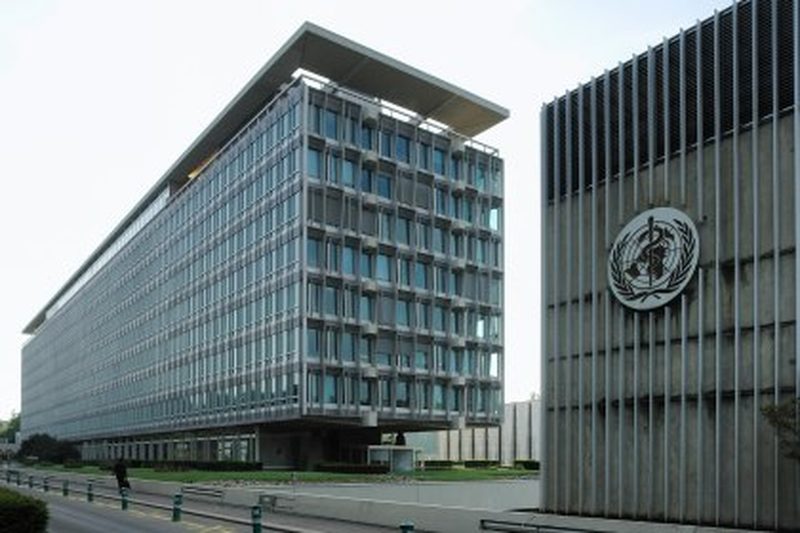
When a pandemic strikes, the world looks to Geneva: the World Health Organization is supposed to coordinate the global response, set the science, and keep countries honest. Yet the WHO cannot enter a country uninvited, cannot compel data-sharing, and depends on member states for every franc of its budget. Praised for eradicating smallpox and criticised over its COVID-19 performance, the WHO embodies both the promise and the limits of global governance. This explainer shows how it works, who pays for it, and where its powers end.
What the WHO actually does
Founded in 1948, the WHO is the UN’s specialised health agency, with 194 member states and a mandate spanning disease surveillance, emergency response, vaccine standards, and guidelines on everything from tobacco to tuberculosis. Its greatest triumph remains the eradication of smallpox in 1980, achieved through a coordinated global vaccination campaign. It also led the near-eradication of polio, manages the world’s influenza surveillance network, and prequalifies medicines and vaccines for use in poor countries. Much of its work is invisible but foundational: the disease classifications, drug standards and treatment protocols the world’s health systems run on.
How it is funded
Money is the WHO’s chronic vulnerability. Its budget, roughly 6-7 billion dollars for a two-year cycle, comes in two streams: assessed contributions, mandatory dues that are small and have barely grown in decades, and voluntary contributions from donors, which dominate and are often earmarked for pet projects. This leaves the agency begging for funds and beholden to big donors’ priorities, with emergency programmes chronically underfunded. The United States was historically the largest donor; its announced withdrawal under President Trump, later reversed and then re-announced, exposed how fragile the funding base is. Reforms to raise mandatory dues aim to give the WHO steadier, more independent income.
The limits of its power
The WHO’s authority is far narrower than most people assume. Under the International Health Regulations, countries must report outbreaks, but the WHO cannot verify claims without permission, cannot impose sanctions for non-compliance, and cannot even declare a pandemic under a binding legal definition, the 2020 declaration was a judgment call. Its emergency declarations carry moral weight but no enforcement. During COVID-19, the WHO was criticised both for trusting China’s early data too readily and for lacking the power to do anything else. The lesson many drew: you cannot have global health security on voluntary cooperation alone.
- 194 member states; the World Health Assembly, its governing body, meets annually in Geneva.
- The smallpox eradication campaign (1967-1980) remains public health’s greatest victory.
- The director-general, currently Tedros Adhanom Ghebreyesus, serves five-year terms.
- A new pandemic accord was negotiated to strengthen prevention and response after COVID-19.
The COVID reckoning
COVID-19 was the WHO’s defining test, and the verdict is mixed. It declared an emergency in January 2020, shipped tests and guidance worldwide, and ran the ACT-A accelerator for vaccines and treatments. But it moved slowly on airborne transmission, struggled against vaccine hoarding by rich countries, and became a political football between Washington and Beijing. The pandemic accord negotiations that followed aim to fix the gaps: faster data-sharing, equitable access to medical countermeasures, and stronger obligations on states. Whether governments will actually cede sovereignty to make it work remains the open question.
Can the WHO be fixed?
Reformers want three things: reliable funding through higher mandatory dues, stronger legal powers to investigate outbreaks, and insulation from great-power politics. Each faces resistance: donors like earmarking, states guard sovereignty jealously, and the US-China rivalry turns every health question geopolitical. Yet the alternative, no coordinating body at all, is worse: the next pandemic will not wait for perfect institutions. The WHO’s paradox is that it is simultaneously indispensable and inadequate, and the world has not yet decided how much sovereignty it will trade for safety.
FAQs
Can the WHO force countries to act? No. It can recommend, declare emergencies and coordinate, but it has no enforcement powers over sovereign states.
Who funds the WHO? Member states through small mandatory dues plus large voluntary donations; the US, the Gates Foundation and the EU are among the biggest contributors.
What was its biggest success? The global eradication of smallpox in 1980, the only human disease ever wiped out.
The WHO is the world’s health fire brigade with no authority to break down doors and a budget passed around a hat. It has saved countless lives anyway. Whether it can be given the tools its mission requires is one of the most important institutional questions of the decade.
Compiled by the Khabar 24h Editorial Desk from publicly available sources.

Khabar 24h Editorial Desk — our explainers are prepared by the Khabar 24h editorial team using AI-assisted research tools, and every piece is reviewed by a human editor before publishing. We do not claim original reporting: our work is turning complex topics into simple, accurate summaries. Spotted an error? Write to contact@khabar24h.com — our corrections policy aims for same-day review.
More from this author →