How Data Centres Work: Inside the Buildings Running the Internet
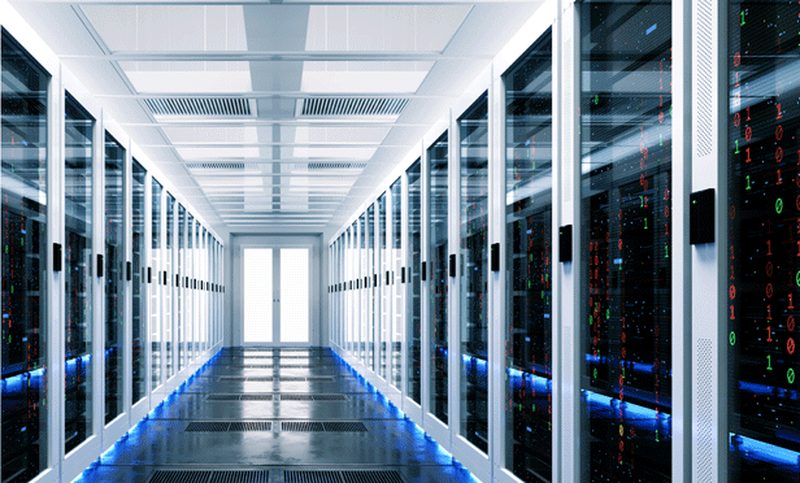
Every UPI payment you make, every video you stream, every photo you back up ends up in the same kind of place: a vast, windowless building humming with tens of thousands of computers. Data centres are the physical internet, the factories where cloud computing is manufactured, and they have become some of the most strategically important buildings on earth. India is in the middle of a data centre construction boom, with new campuses rising around Mumbai, Hyderabad, Chennai and Noida. Step inside one, and you find an operation where power, cooling and security are engineered with an obsession that borders on the religious.
What is actually inside a data centre?
The basic unit is the server rack: a tall metal cabinet holding dozens of flat servers, each a computer stripped of everything unnecessary, no screen, no fancy case, just processors, memory and storage optimised for density. Racks stand in long rows inside cavernous halls, connected by kilometres of fibre-optic cable running overhead or under raised floors. Around them sits the unglamorous machinery that makes it all possible: transformers and backup generators for power, industrial cooling plants, and batteries that bridge the seconds between a grid failure and the generators roaring to life. A large data centre can house over a hundred thousand servers and consume as much electricity as a small city.
Power: the obsession with never going dark
A data centre’s first commandment is uptime. Even a few minutes of outage can cost customers crores and shatter trust, so power systems are built in layers of redundancy. Electricity typically arrives from two separate grid substations; if both fail, room-sized UPS batteries carry the load instantly, and within seconds diesel generators, tested monthly, take over and can run for days on stored fuel. Critical systems are duplicated so that any single component can fail without effect, a design philosophy the industry grades in “tiers”, with Tier IV promising 99.995 per cent uptime. In India, where grid reliability varies, this redundancy is a major selling point, and operators increasingly sign deals for round-the-clock renewable power to tame both costs and emissions.
Cooling: fighting the heat of ten thousand ovens
Servers convert nearly all their electricity into heat, and removing that heat is a data centre’s second great engineering challenge. Traditional halls blast cold air through perforated floor tiles while hot air is extracted from the ceiling, a method refined over decades. Newer facilities use hot-aisle containment, liquid cooling that pipes coolant directly to the chips, and even immersion cooling where servers bathe in special non-conductive fluid. Cooling can consume nearly as much energy as the servers themselves, which is why operators chase efficiency with free cooling, using cool outside air, and why many new Indian campuses are designed for the country’s hot climate from day one. The rise of AI has made cooling dramatically harder: AI servers generate several times the heat of standard ones.
Security: fortress levels of protection
Data centres protect other people’s most valuable asset, so their security is layered like an onion. The perimeter has fencing, bollards and 24-hour guards; entry requires biometric scans, mantraps that admit one person at a time, and escorts for visitors. Inside, cameras watch every aisle, and access is compartmentalised so technicians can only enter the halls they need. Digitally, networks are segmented and monitored constantly for intrusions. Customers’ data is further protected by encryption and by the simple fact that a thief would need to know exactly which of a hundred thousand identical machines holds the target. Audits and certifications, ISO standards and SOC reports, let customers verify all of this without ever visiting.
Why India is building data centres fast
Several forces are converging. Data localisation rules require payments and other sensitive data to be stored in India. Cloud demand from startups, enterprises and the government keeps growing. International undersea cables land at Mumbai and Chennai, making them natural hubs. State governments compete with subsidies, cheap power and single-window clearances. The result is billions of dollars in announced investment and a pipeline of hyperscale campuses. For nearby communities this means jobs and tax revenue, alongside debates about water and power consumption that every data centre market in the world is now having.
FAQs
Can I visit a data centre? Generally no. Operators run occasional tours for customers and students, but walk-in visits are not possible for security reasons. Many publish virtual tours and detailed videos instead.
How much water and power does a data centre use? A hyperscale facility can use tens of megawatts of power and significant water for cooling, though newer designs recycle water and chase renewable energy. Efficiency is measured with the PUE metric, lower is better.
Will AI make data centres bigger? Yes. AI training and inference demand far more power and cooling per rack than traditional computing, and the industry is racing to build AI-ready capacity.
Data centres are easy to ignore precisely because they work so well: the internet feels weightless, but it has enormous physical weight, measured in megawatts, litres and acres. The next time a payment goes through in two seconds flat, picture the windowless halls, the roaring generators on standby, and the rivers of cold air that made it possible.
Source: Bloomberg

Khabar 24h Editorial Desk — our explainers are prepared by the Khabar 24h editorial team using AI-assisted research tools, and every piece is reviewed by a human editor before publishing. We do not claim original reporting: our work is turning complex topics into simple, accurate summaries. Spotted an error? Write to contact@khabar24h.com — our corrections policy aims for same-day review.
More from this author →