Singapore’s Public Housing Explained: How 80 Percent of Citizens Got a Home
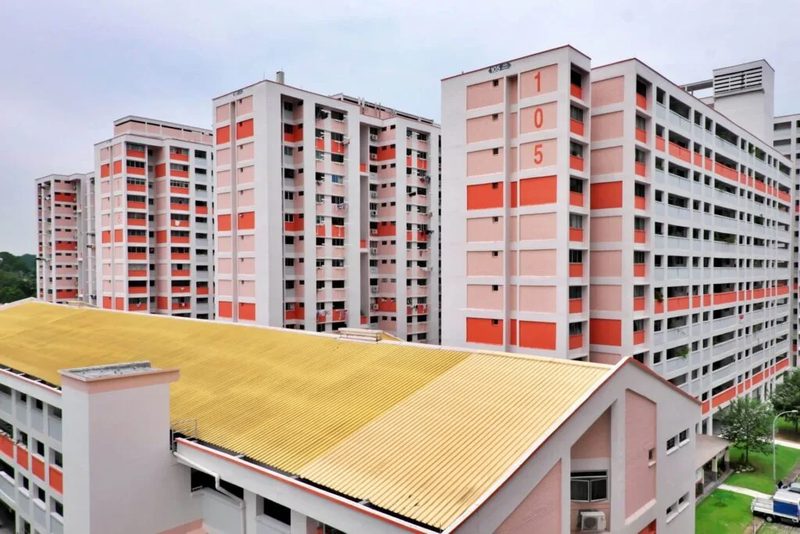
In most global cities, public housing means poverty and stigma. In Singapore, it means homeownership for the masses: over 80 per cent of residents live in flats built by the state Housing and Development Board, and nine in ten of those are owners, not renters. The HDB system housed a nation in a generation, built its middle class, and became the envy of urban planners worldwide. How did a tiny city-state pull off the world’s most successful public housing programme?
From slums to skylines
In 1960, Singapore was a crowded colonial port full of slums and squatter settlements. The newly self-governing state created the HDB in 1960 and gave it sweeping powers to acquire land and build at scale. The first decade was emergency housing; within a generation, the board was building whole new towns, each with schools, markets, clinics and transport. By the 1980s the housing crisis was essentially solved. The speed remains astonishing: a nation housed in roughly 30 years, a feat no other country has matched.
How the system works
The mechanics are distinctive. The state owns most land, acquired cheaply under the Land Acquisition Act, and the HDB builds flats and sells them on 99-year leases at subsidised prices. Buyers finance purchases through the Central Provident Fund, mandatory savings deducted from wages, so housing wealth and retirement savings intertwine. Grants favour first-time buyers, married couples and those living near parents. Resale is allowed after a minimum occupation period, creating a market where flats appreciate, turning public housing into a wealth-building machine.
Housing as nation-building
The HDB was never just about shelter; it was social engineering. Ethnic quotas in every block and neighbourhood enforce the Chinese-Malay-Indian mix, preventing the ghettos that divide other cities. New towns were designed for community, with void decks, hawker centres and shared spaces. Homeownership gave citizens a tangible stake in the nation’s success, the PAP government’s famous formula: make everyone a stakeholder and stability follows. Housing policy and political legitimacy became inseparable.
What it achieved
The results are extraordinary: near-universal decent housing, one of the world’s highest homeownership rates, and neighbourhoods that are safe, clean and genuinely mixed by income and ethnicity. Singapore avoided the Western pattern of public-housing decline because its estates house the middle class, not just the poor. The system underpinned social mobility: a flat is the foundation of family wealth for most Singaporeans, and upgrading from a three-room to a five-room flat marks life’s progress.
The criticisms and cracks
Success has bred problems. Prices in the resale market have soared beyond young couples’ reach, sparking generational anxiety and political heat. The 99-year lease means flats are depreciating assets in the long run, a time bomb for retirement financing. Singles were long excluded from buying new flats, a sore point in an ageing society. Ethnic quotas, while integrative, constrain minority sellers. And the system’s paternalism, the state deciding who may buy, where, and with whom as neighbours, sits uneasily with liberal sensibilities.
Can others copy Singapore?
Planners from London to Nairobi study the HDB, but replication is hard. Singapore’s formula needed strong state capacity, public land ownership, mandatory savings, and a government willing to plan decades ahead, plus a small, governable territory. Elements travel: Vienna’s social housing, public land banking, and CPF-style savings all echo parts of the model. The deeper lesson is that housing crises are political choices: Singapore decided decent homes were a right to be engineered, not a market outcome to be hoped for.
New towns: cities within the city
The HDB did not just build flats but entire new towns, each planned for 200,000-plus residents with its own centre, schools, parks and MRT links. Tampines, Jurong East and Punggol function as self-contained communities where most daily needs are walkable. The town centre model, with hawker centres and neighbourhood shops at its heart, preserved street life at high density. It is urban planning as social contract: the state provides the complete habitat, and citizens make it home.
FAQs
Do Singaporeans own their HDB flats? They own 99-year leases, effectively ownership for most purposes, including resale and inheritance within the lease term.
What are ethnic quotas? Limits ensuring each block and neighbourhood reflects Singapore’s ethnic mix, designed to prevent segregation.
Why are HDB flats so expensive now? Limited supply, strong demand, and flats’ dual role as homes and investments have driven resale prices sharply higher.
Singapore’s housing miracle turned a slum-ridden port into a nation of homeowners, and proved that public housing, done with ambition and competence, can build not just shelter but a society.
Source: The Straits Times

Khabar 24h Editorial Desk — our explainers are prepared by the Khabar 24h editorial team using AI-assisted research tools, and every piece is reviewed by a human editor before publishing. We do not claim original reporting: our work is turning complex topics into simple, accurate summaries. Spotted an error? Write to contact@khabar24h.com — our corrections policy aims for same-day review.
More from this author →