Chess Rules Explained: How Pieces Move, Castling and En Passant
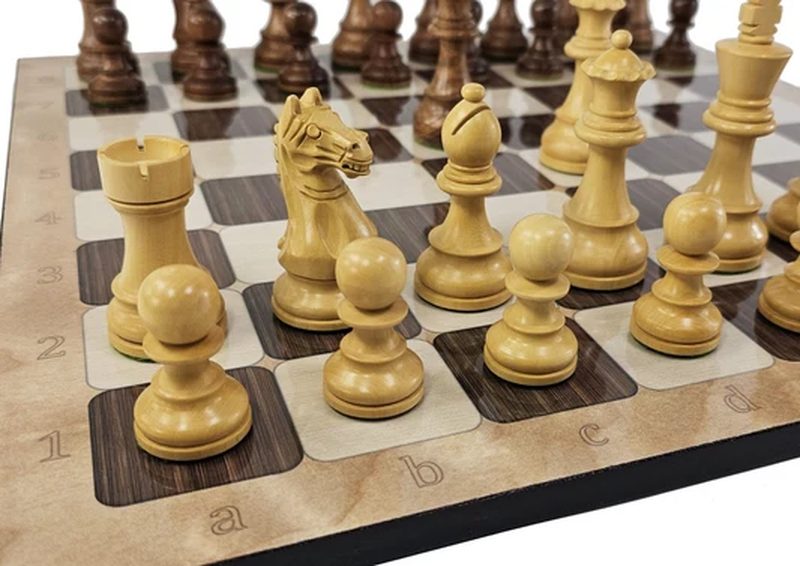
Chess is played by hundreds of millions of people, yet its rules contain delightful oddities that confuse every beginner: a pawn that captures differently from how it moves, a king that can leap two squares once a game, and a capture that happens as if a pawn had moved only one square. This guide explains how each piece moves, the special rules of castling, en passant and promotion, and how games are actually won and drawn.
How does each chess piece move?
Each of the six piece types moves differently, and mastering their movement is the first step. The king moves one square in any direction and is the piece the whole game revolves around. The queen, the most powerful piece, moves any number of squares horizontally, vertically or diagonally. Rooks move any number of squares horizontally or vertically, sweeping along ranks and files. Bishops glide any number of squares diagonally, each confined to its starting square colour. Knights jump in an L-shape, two squares in one direction and one perpendicular, and are the only pieces that leap over others. Pawns march forward one square, or two from their starting position, but capture one square diagonally. Understanding these movements is essential because every tactic in chess flows from how the pieces travel.
What is castling and when can you do it?
Castling is the only move in chess where two pieces move at once, and it is a cornerstone of opening strategy. The king moves two squares toward a rook, and the rook hops over to the square beside the king. Castling kingside tucks the king safely behind a pawn shield; castling queenside is more aggressive, placing the rook centrally. But castling has strict conditions: neither the king nor the rook may have moved before, no pieces may stand between them, the king may not be in check, and the king may not pass through or land on a square attacked by the enemy. Beginners often castle too late or forget it entirely; masters treat it as a near-obligatory step toward king safety.
What is en passant?
En passant, French for in passing, is chess’s strangest rule and the one beginners encounter last. When an opponent’s pawn advances two squares from its starting position and lands beside your pawn, you may capture it as if it had moved only one square, removing it from the board. The catch: you must make the capture immediately, on the very next move, or the right expires forever. The rule dates to the era when the pawn’s double-step was introduced; without it, pawns could sneak past enemy pawns that would otherwise have captured them. It arises rarely in games, but when it does, it often decides them, and tournament players must know it cold.
How does pawn promotion work?
A pawn that reaches the far end of the board is promoted, exchanged for a queen, rook, bishop or knight of the same colour, at the player’s choice. Promotion to a queen is standard, since the queen is the strongest piece, but underpromotion to a knight occasionally wins games where a queen would stalemate the opponent. A player may promote even if the original queen is still on the board, leading to positions with two or three queens that beginners find startling. Pawn promotion is why passed pawns, pawns with no enemy pawn blocking their path, are so valuable in endgames: each one is a potential queen.
How do you win a game of chess?
The goal is checkmate: attacking the enemy king so that it is in check and has no legal escape. Check means the king is under attack; the player must get out of check by moving the king, capturing the attacker or blocking the attack. Checkmate ends the game immediately. Games can also be won when the opponent resigns, which is how most games between strong players end, or when the opponent’s time runs out in timed games. It is important to note that you do not capture the king; the game stops one move short, at checkmate.
How can games end in a draw?
Draws are a fundamental part of chess, and they arise in several ways:
- Stalemate: the player to move has no legal move but is not in check; the game is drawn immediately.
- Agreement: the players may agree to a draw at any point.
- Insufficient material: neither side has enough pieces to checkmate, such as king versus king.
- Fifty-move rule: fifty moves pass with no pawn move and no capture.
- Threefold repetition: the same position occurs three times with the same player to move.
At the elite level, where defensive technique is superb, a large proportion of games end drawn, which is why tournament formats and tiebreaks matter so much.
FAQs
Can the king move into check? No. A move that leaves your own king in check is illegal, and if discovered later, the position is corrected.
Can you castle out of check? No. You cannot castle while in check, through check, or into check; all three are illegal.
What happens if you touch a piece in a tournament? The touch-move rule applies: if you deliberately touch a piece, you must move it if it has a legal move.
Pieces, castling, en passant, promotion, checkmate: the complete rules of chess fit on a few pages, yet they generate a game of inexhaustible depth. Learn them once, and a lifetime of play awaits.
Source: FIDE Laws of Chess

Khabar 24h Editorial Desk — our explainers are prepared by the Khabar 24h editorial team using AI-assisted research tools, and every piece is reviewed by a human editor before publishing. We do not claim original reporting: our work is turning complex topics into simple, accurate summaries. Spotted an error? Write to contact@khabar24h.com — our corrections policy aims for same-day review.
More from this author →