Germany’s Mixed-Member System: How It Blends Direct and Proportional Voting
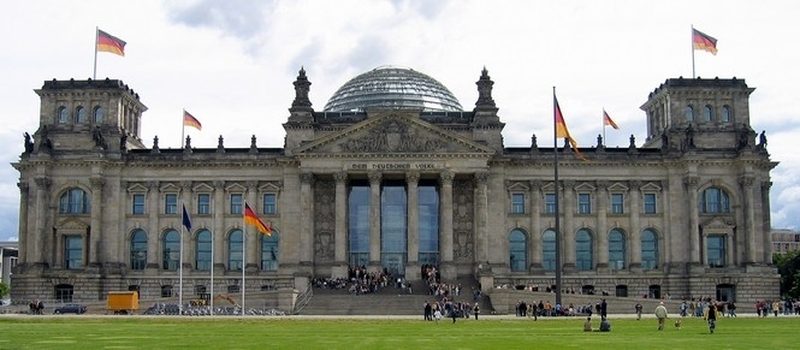
Germany’s mixed-member electoral system is often described as the gold standard of proportional democracy. Voters in federal elections cast two votes: one for a local candidate and one for a political party. The first vote works exactly like Britain’s or India’s first-past-the-post contests, while the second vote determines each party’s overall share of seats in the Bundestag. The result is a parliament that reflects the popular vote closely, yet still gives every region a directly elected representative. Understanding this blend explains much of Germany’s stable, coalition-driven politics.
How the two votes work
On election day, each German voter receives a ballot with two columns. The first vote (Erststimme) goes to a candidate in one of 299 single-member constituencies; whoever gets the most votes wins the seat outright. The second vote (Zweitstimme) goes to a party list, and it is the second vote that decides how many of the Bundestag’s seats each party receives in total. A party winning 30 per cent of second votes is entitled to roughly 30 per cent of the seats, no matter how many constituencies it won directly. Most voters consider the second vote the more important one, since it sets the balance of power.
What is the overhang and balancing mechanism?
A party can win more constituency seats than its second-vote share entitles it to, producing so-called overhang seats. To keep the chamber proportional, other parties are then awarded balancing seats, which is why the Bundestag has often been larger than its nominal size of 598. A 2023 reform capped the chamber at 630 seats and changed the rules so that overhang seats no longer inflate the total in the same way: a candidate who wins a constituency only takes the seat if the party’s second-vote result covers it. The reform was contentious, with smaller parties warning it could leave some directly elected candidates out in the cold.
The five per cent threshold
Parties must clear a five per cent national hurdle, or win at least three constituency seats directly, to enter parliament through the party lists. The threshold exists to keep tiny splinter parties out of the Bundestag, a lesson drawn from the fragmentation of the Weimar Republic in the 1920s and early 1930s. Its effect is real: parties polling at four per cent win nothing, while a party at six per cent wins a full delegation. Supporters call it a guardian of governability; critics say it wastes the votes of millions.
Why does Germany almost always have coalition governments?
Because seats track vote shares so closely, only one party has ever won an outright majority in the post-war era — the CDU/CSU, which secured an absolute majority of Bundestag seats in 1957. After every election, parties negotiate coalition agreements that set out a joint programme for the next four years, and the chancellor is elected by the Bundestag, not directly by voters. These negotiations can take months, as in 2017 and 2021, but they produce governments whose policies reflect a genuine majority of the electorate. For admirers of the system, this is proportionality’s great virtue: power must be shared.
Lessons for other democracies
Reformers in several countries point to Germany when arguing that a voting system can deliver both local representation and fair outcomes.
- Fairness: a party’s seat share closely matches its vote share, reducing the wasted votes common under pure first-past-the-post.
- Local links: every constituency still elects its own MP, preserving the direct bond between voters and representatives.
- Stability with choice: voters can split their two votes, supporting a local candidate from one party and the list of another.
- Trade-offs: ballots are slightly more complex, coalitions take time to form, and thresholds shut out very small parties.
The mixed-member model shows that electoral systems are not binary choices between fairness and simplicity. By layering a proportional list over direct constituency contests, Germany built a parliament that looks like its electorate, and a political culture in which compromise is not a failure of politics but its normal working method.
FAQs
Do German voters directly elect the chancellor?
No. Voters elect the Bundestag, and the Bundestag elects the chancellor, who is usually the leader of the largest party in the governing coalition.
Can a voter split their two votes between different parties?
Yes. Split-ticket voting is common: a voter may back a local candidate from one party with the first vote and a different party’s list with the second.
Why is there a five per cent threshold?
It prevents extreme fragmentation of parliament, a deliberate response to the instability of the Weimar Republic, when dozens of tiny parties made governing nearly impossible.
Compiled by the Khabar 24h Editorial Desk from publicly available sources.

Khabar 24h Editorial Desk — our explainers are prepared by the Khabar 24h editorial team using AI-assisted research tools, and every piece is reviewed by a human editor before publishing. We do not claim original reporting: our work is turning complex topics into simple, accurate summaries. Spotted an error? Write to contact@khabar24h.com — our corrections policy aims for same-day review.
More from this author →