VAR in Football Explained: How Video Review Decisions Are Made
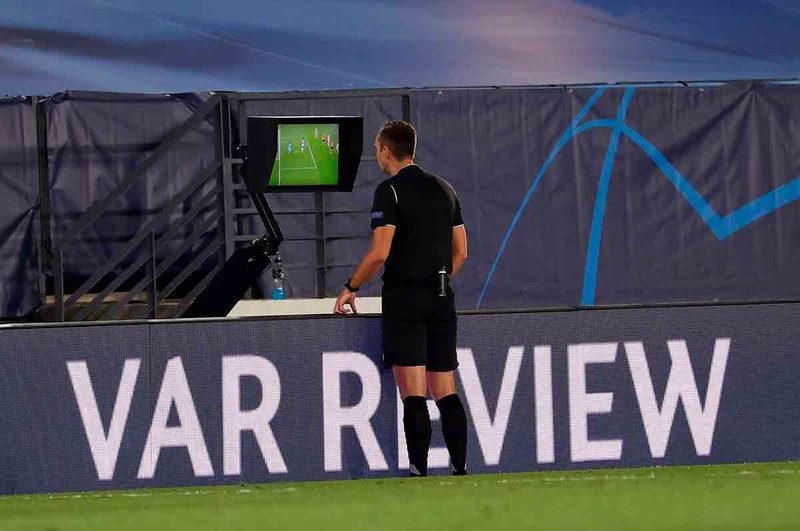
Few innovations have divided football like the Video Assistant Referee. Introduced to correct the clear and obvious errors that once decided titles and tournaments, VAR has instead become the game’s most argued-about institution, a source of forensic offsides, lengthy delays and endless debate about the spirit of the laws. Yet it has also demonstrably reduced howlers and increased decision accuracy. This guide explains how VAR actually works, what it can and cannot review, and why it remains so controversial.
How VAR works: the process
VAR is a team of video officials, led by the video assistant referee, watching the match from a centralised operations room with access to every broadcast camera angle. They monitor the game continuously, but they intervene only for four categories of incident: goals and the offences leading up to them, penalty decisions, direct red-card incidents, and mistaken identity. When a potential clear and obvious error occurs, or a serious missed incident, the VAR recommends a review. The on-field referee then either accepts the VAR’s advice or conducts an on-field review, watching the incident on the pitchside monitor before making the final decision. The referee’s on-field call carries weight: VAR is meant to correct clear mistakes, not re-referee marginal judgement calls, which is why the threshold for intervention is deliberately high.
What VAR checks: the four reviewable categories
The scope of VAR is deliberately narrow. Goals are checked for offside, fouls and handball in the build-up. Penalty decisions, whether awarded or not, are reviewed for clear errors. Direct red cards, violent conduct, serious foul play, denying goalscoring opportunities, are examined, though second yellow cards are excluded. Mistaken identity, booking or sending off the wrong player, is corrected. Everything else, throw-ins, most free kicks, the vast majority of judgement calls, remains solely with the on-field officials. This limited scope is by design: football’s authorities feared that unlimited review would destroy the game’s flow. But the boundary creates its own controversies, as fans struggle to understand why one incident is reviewed and a seemingly similar one is not.
Offsides, handballs and the flashpoints
Two areas generate most VAR controversies. Offside decisions, measured with calibrated lines to millimetre precision, have disallowed goals for margins invisible to the naked eye, the infamous armpit and toenail offsides. Handball rulings have lurched between interpretations as lawmakers tweak the definition of what constitutes an offence, leaving players, coaches and fans confused about what their arms are allowed to do. Penalty reviews produce endless debate about the threshold for intervention: was the contact sufficient, did the attacker initiate it, would the referee have given it live? Each controversy follows the same pattern: the technology works as designed, but the design itself, the laws it enforces and the precision it applies, is what people object to. VAR has not settled football’s arguments; it has given them higher resolution.
The debate: has VAR been worth it?
The statistics favour VAR: decision accuracy in major leagues has risen significantly, and the howlers that once defined seasons, the hand-of-God goals, the goals that never crossed the line, the offside winners in finals, have largely disappeared. Goal-line technology, VAR’s uncontroversial sibling, settled its question definitively. But the costs are real: lengthy delays that kill momentum, celebrations muted by the fear of review, and a sense that the game’s spontaneity has been taxed. Reforms continue: semi-automated offside technology speeds up decisions, thicker tolerance lines reduce marginal calls, and broadcasters experiment with explaining decisions to fans in-stadium. The trajectory is toward a system that intervenes faster and more transparently. Whether fans ever love it is another question; VAR may be destined to be appreciated the way one appreciates insurance, grudgingly, and only when disaster strikes elsewhere.
- VAR reviews only goals, penalties, direct red cards and mistaken identity.
- The standard is clear and obvious error; marginal calls stay with the on-field referee.
- Semi-automated offside technology is speeding up the tightest decisions.
- Decision accuracy has risen markedly in every league that uses VAR.
FAQs
Can VAR review every decision? No. Only the four categories are reviewable; most on-field judgement calls cannot be overturned.
Why do VAR checks take so long? Officials examine multiple angles and, for offsides, calibrate lines precisely; semi-automation is reducing these delays.
Does the referee have to follow VAR’s advice? No. The referee makes the final decision and may stick with the on-field call after a pitchside review.
VAR is football’s imperfect answer to human error: statistically successful, emotionally unsatisfying, and here to stay. The debate it generates may be its most permanent contribution to the game.
Compiled by the Khabar 24h Editorial Desk from publicly available sources.

Khabar 24h Editorial Desk — our explainers are prepared by the Khabar 24h editorial team using AI-assisted research tools, and every piece is reviewed by a human editor before publishing. We do not claim original reporting: our work is turning complex topics into simple, accurate summaries. Spotted an error? Write to contact@khabar24h.com — our corrections policy aims for same-day review.
More from this author →