What Is Augmented Reality? How AR Glasses and Filters Work
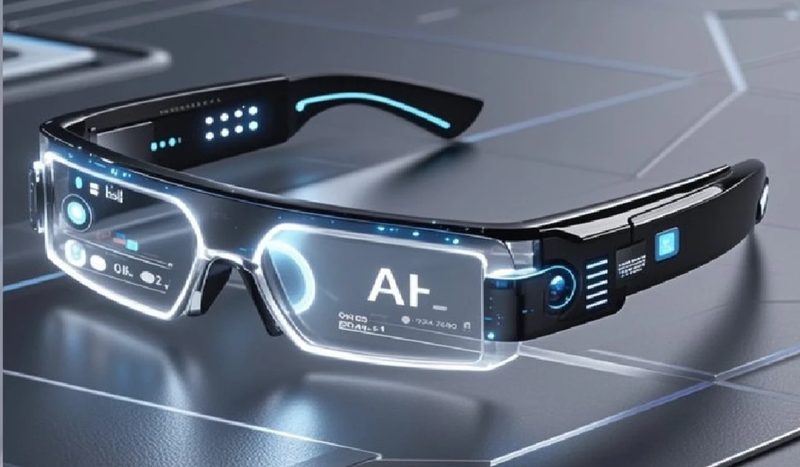
Point your phone at an empty room and see how a sofa would look in it. Wear glasses that float directions over the street ahead. Try on spectacles virtually before buying. All of this is augmented reality: digital content overlaid on the real world, enhancing rather than replacing it. Distinct from virtual reality, which immerses you in a synthetic world, AR keeps you present while adding a digital layer. This guide explains how AR works, from phone filters to AR glasses, and where the technology is heading.
What augmented reality is
AR systems do three things continuously: understand the real world through cameras and sensors, decide where digital content belongs within it, and render that content aligned with reality in real time. The result ranges from simple, a Pokémon standing on your lawn, to profound, a surgeon seeing a patient’s scan overlaid on the body. The field splits by hardware. Phone and tablet AR, the kind most people have used, holds the digital layer on a screen you look through. Headset AR, from Meta’s smart glasses to Apple’s Vision Pro and emerging dedicated AR glasses, puts the overlay directly in your field of view. Phone AR democratised the technology; glasses aim to make it disappear into everyday life.
How AR understands the world
Convincing AR needs to know where it is and what is around it. Visual-inertial odometry fuses camera images with accelerometer and gyroscope data to track the device’s position in space six times over, enabling digital objects to stay fixed in place as you move. Plane detection finds floors, tables and walls where objects can rest. Depth sensing, via LiDAR on premium phones or stereo cameras, measures distances so virtual objects hide correctly behind real ones, the occlusion that sells realism. Light estimation matches virtual lighting to the room. Modern AR frameworks, Apple’s ARKit and Google’s ARCore, package all of this so developers get world-tracking almost for free. It is a remarkable stack of computer vision running in real time on a phone.
Filters, furniture and the AR you already use
Most people’s AR experience is playful or practical rather than futuristic. Social media filters track faces in real time, mapping dozens of facial landmarks to attach ears, makeup or effects that follow every expression; this is AR at massive scale, used billions of times daily. Furniture and home-improvement apps let you place true-to-scale sofas, check how paint colours look on your walls, or see whether the fridge fits the alcove. Navigation apps overlay walking directions onto the street view. Translation apps replace foreign text on signs with your language in place. Games layer creatures and battles onto parks and streets. Each works because the underlying tracking became good enough to be boring, the sign of a maturing technology.
AR glasses: the long road ahead
Glasses are AR’s promised land and its hardest problem. The dream is normal-looking spectacles that overlay useful information all day: navigation, translations, notifications, instructions. The obstacles are brutal: displays bright enough for sunlight yet tiny enough for glasses frames, batteries that last a day in grams of weight, chips that run computer vision without heating your face, and the social question of cameras on everyone’s face. Current products split the difference: AI smart glasses with cameras and audio but no display, useful today, and bulky headsets with stunning displays but limited wearability. The industry consensus is that true all-day AR glasses are years of miniaturisation away, but each generation visibly closes the gap.
Enterprise: where AR already pays
While consumers wait for perfect glasses, industry profits from imperfect ones.
- Manufacturing: technicians see repair instructions overlaid on equipment, cutting training time.
- Logistics: warehouse workers get pick directions in their field of view, speeding fulfilment.
- Healthcare: surgeons and medical students visualise anatomy overlaid on patients and models.
- Design: architects walk clients through buildings before foundations are poured.
- Remote assistance: experts annotate a field worker’s live view from continents away.
These applications tolerate bulky headsets because the economic return is immediate and measurable.
FAQs
What is the difference between AR and VR? AR overlays digital content on the real world; VR replaces the real world entirely with a virtual one. Mixed reality blends both.
Do I need special hardware for AR? No. Any modern smartphone runs AR apps and filters. Glasses and headsets are for more immersive or hands-free experiences.
Are AR glasses available in India? Smart glasses with cameras and AI features are increasingly available; full display glasses remain limited and expensive globally.
Augmented reality is the quietest revolution in computing: not a new world to escape into, but a digital layer woven into the one we have. From filters to factories, it is already here; the glasses will just make it invisible.
Compiled by the Khabar 24h Editorial Desk from publicly available sources.

Khabar 24h Editorial Desk — our explainers are prepared by the Khabar 24h editorial team using AI-assisted research tools, and every piece is reviewed by a human editor before publishing. We do not claim original reporting: our work is turning complex topics into simple, accurate summaries. Spotted an error? Write to contact@khabar24h.com — our corrections policy aims for same-day review.
More from this author →