Superalloys: The Metals That Survive Inside Jet Engines
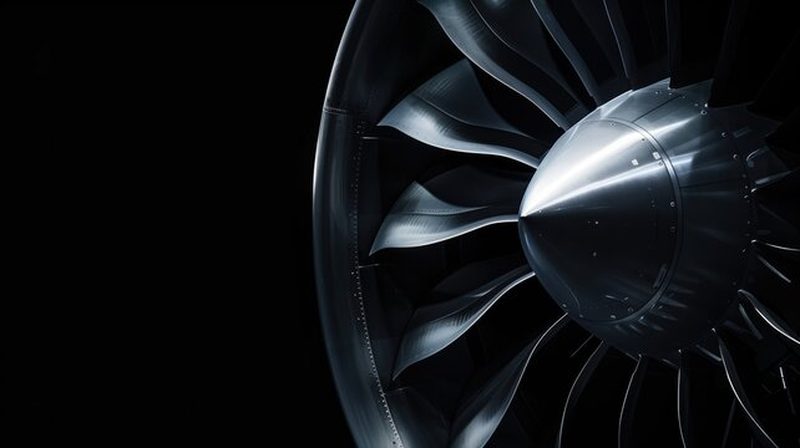
Inside a modern jet engine, turbine blades spin at 10,000 revolutions per minute in a stream of gas hotter than 1,500 degrees Celsius, hotter than the melting point of the blades themselves. They survive through a combination of engineering that borders on the miraculous: internal air cooling, ceramic thermal-barrier coatings, and blades cast from superalloys, metals so sophisticated that a single blade is a single crystal of nickel-based alloy, grown atom by atom. Superalloys are among the most advanced structural materials humanity has ever created, the product of seventy years of metallurgy driven by the demands of flight. Without them, there are no efficient jet engines, no gas turbines for power generation, and no crewed spaceflight as we know it. India’s own Kaveri engine programme and its space programme depend on mastering these metals. Here is the science inside the hottest metal on Earth.
What makes a superalloy super
Superalloys are typically nickel-based, iron-nickel-based or cobalt-based alloys engineered to retain strength at temperatures where ordinary metals soften like wax. Their secret is microstructure: a nickel matrix, the gamma phase, studded with nanometre-scale cubes of an ordered intermetallic compound, the gamma-prime phase, which block the motion of dislocations, the atomic-scale defects whose movement is what we call deformation. Alloying additions read like a chemist’s shopping list: chromium for oxidation resistance, aluminium and titanium to form the strengthening precipitates, rhenium and ruthenium in the latest generations to slow diffusion at extreme temperatures, plus tiny doses of boron and hafnium to strengthen grain boundaries. The result is a metal that can bear enormous centrifugal loads at 1,100 degrees Celsius for thousands of hours, resisting creep, the slow stretching under stress that destroys lesser metals. Each generation, from the first Nimonic alloys of the 1940s to today’s rhenium-bearing single crystals, has bought roughly 25 degrees of additional temperature capability, and each degree translates directly into engine efficiency.
Growing a single crystal blade
The most astonishing superalloy components are single-crystal turbine blades: an entire blade, with its intricate internal cooling passages, is one continuous crystal with no grain boundaries at all. Grain boundaries are weak points where creep and cracking begin, so eliminating them dramatically extends blade life. Manufacturing them is blacksmithing elevated to art: molten superalloy is poured into a ceramic mould and withdrawn slowly from a furnace through a thermal gradient, so solidification begins at a single seed crystal and grows upward, a process called directional solidification; a helical grain selector ensures only one crystal orientation survives. The blades are then coated with ceramic thermal-barrier coatings, typically yttria-stabilised zirconia, which insulate the metal so effectively that the gas outside can exceed the alloy’s melting point while the metal beneath stays intact, cooled additionally by air bled through internal channels and film-cooling holes. A finished blade is a triumph of materials science, fluid dynamics and manufacturing, and its production is a closely guarded capability held by only a handful of nations.
Why superalloys matter to India
Jet engine technology is among the most strategically sensitive in the world, and superalloys are its material foundation. India’s Gas Turbine Research Establishment has pursued the Kaveri engine for the Tejas fighter for decades, with materials science as a central challenge; the Defence Metallurgical Research Laboratory in Hyderabad develops nickel-based superalloys including the DMR-1700 series, and Indian foundries are building single-crystal casting capability. ISRO’s rockets and the nuclear programme need their own high-temperature alloys. Beyond aerospace, superalloys serve in gas turbines for power generation, turbochargers, and chemical processing equipment, anywhere heat and stress combine. The frontier now includes additive manufacturing, 3D-printing superalloy parts with complex cooling geometries impossible to cast; oxide-dispersion-strengthened alloys for even higher temperatures; and high-entropy alloys, a radical new class mixing five or more elements equally, which may succeed superalloys in the hottest applications. The nation that masters extreme-temperature materials masters efficient flight, and the competition, from American engine giants to China’s massive materials programmes, is intensifying.
- Turbine inlet temperatures exceed 1,500 degrees Celsius, above the melting point of the blade alloy.
- Single-crystal blades eliminate grain boundaries, the weak points where creep begins.
- Gamma-prime precipitates, nanometre cubes in the nickel matrix, provide superalloys’ strength.
- Ceramic thermal-barrier coatings insulate blades so effectively the metal survives beyond its melting point.
- India’s DMRL develops indigenous nickel-based superalloys for defence and space.
FAQs
What is creep? The slow, permanent deformation of a metal under sustained stress at high temperature; resisting creep is a superalloy’s defining job.
Why nickel? Nickel’s face-centred cubic structure stays stable to high temperatures and dissolves many alloying elements, making it the ideal base for hot strength.
Can superalloys be 3D printed? Yes. Additive manufacturing of superalloys is advancing rapidly, enabling cooling designs impossible with casting, though quality control remains challenging.
From a single crystal grown in a furnace to a blade spinning in fire, superalloys are metallurgy’s highest art. They are the reason the jet age flies, and the reason the next one will fly further.
Compiled by the Khabar 24h Editorial Desk from publicly available sources.

Khabar 24h Editorial Desk — our explainers are prepared by the Khabar 24h editorial team using AI-assisted research tools, and every piece is reviewed by a human editor before publishing. We do not claim original reporting: our work is turning complex topics into simple, accurate summaries. Spotted an error? Write to contact@khabar24h.com — our corrections policy aims for same-day review.
More from this author →