The Deccan Traps: When Lava Buried India and the Dinosaurs Died
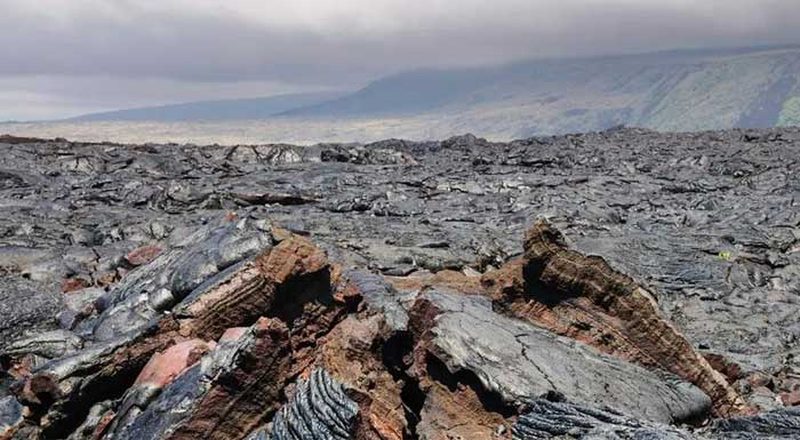
Drive through the Western Ghats near Mumbai or Pune and you are travelling across one of the largest volcanic features on Earth: the Deccan Traps, layer upon layer of solidified lava stacked up to two kilometres thick and covering 500,000 square kilometres of western and central India. These basalts erupted 66 million years ago in one of the most violent volcanic episodes in Earth’s history, at precisely the time the dinosaurs and three-quarters of all species vanished. For decades, scientists argued over the killer: was it the Deccan eruptions, or the asteroid that slammed into Mexico’s Yucatan Peninsula at the same geological moment? New high-precision dating has transformed the debate from either-or to both-and, revealing a story in which the asteroid struck a planet already reeling from volcanic catastrophe. The Deccan Traps are India’s front-row seat to the worst day in the history of complex life.
What the Deccan Traps actually are
The Deccan Traps are a large igneous province, the solidified remnant of flood basalt eruptions that poured from fissures in the Earth’s crust as the Indian tectonic plate drifted over the Reunion hotspot, the same volcanic plume that now feeds the island of Reunion near Mauritius. Eruption by eruption, lava flows tens of metres thick spread across the landscape, burying everything beneath layer after layer; the distinctive step-like terraces, traps comes from the Swedish word for stairs, are visible in the hills around Mumbai today. The original volume may have exceeded a million cubic kilometres, though erosion has reduced what remains. The eruptions did not happen all at once: recent uranium-lead dating shows the main phase spanned roughly 800,000 years, with the most intense pulses, accounting for the bulk of the lava, erupting in the tens of thousands of years around the extinction boundary. Each major pulse would have darkened skies, poisoned air and disrupted climate for years at a time.
How volcanoes can kill a planet
Flood basalts kill through gases, not lava. The Deccan eruptions released colossal quantities of carbon dioxide, driving long-term global warming, and sulphur dioxide, which forms sunlight-blocking sulfate aerosols that cause short, brutal volcanic winters. They also emitted halogens that destroy ozone and toxic metals like mercury, which spikes in sediments worldwide at the extinction boundary. The climatic whiplash was devastating: rapid warming punctuated by freezing volcanic winters, acid rain, collapsing food chains in darkened oceans and on land. This was not hypothetical; the end-Permian extinction 252 million years ago, which wiped out 90 per cent of species, was driven by the Siberian Traps eruptions with no asteroid involved, proving volcanoes alone can cause mass extinction. At the end of the Cretaceous, the Deccan eruptions were already stressing ecosystems for hundreds of thousands of years before the asteroid hit, with fossil records showing declining dinosaur diversity and stressed marine life in the run-up to the boundary.
The asteroid, and the new synthesis
The Chicxulub asteroid, a 10-kilometre rock that struck 66 million years ago, left a global layer of iridium, shocked quartz and soot, and a 180-kilometre crater. Its effects were instantaneous on geological timescales: mega-tsunamis, global wildfires, and an impact winter as dust and sulphur blocked sunlight for years, collapsing photosynthesis. For years the debate was framed as volcanoes versus asteroid, but precise dating changed everything. Studies in the 2010s showed the Deccan’s most voluminous eruptions occurred within 50,000 years of the impact, and some evidence suggests the impact’s seismic shock may have intensified the eruptions on the opposite side of the planet. The emerging consensus is a one-two punch: Deccan volcanism had already destabilised the climate and weakened ecosystems over hundreds of millennia, and the asteroid delivered the final, unsurvivable blow to a biosphere with no resilience left. Neither alone might have caused the fifth mass extinction; together, they ended the age of dinosaurs and opened the world to mammals, and eventually to us.
- The Deccan Traps cover about 500,000 square kilometres with lava up to 2 km thick.
- The main eruptions spanned roughly 800,000 years, peaking around 66 million years ago.
- The Siberian Traps caused the end-Permian extinction 252 million years ago with no asteroid.
- The Chicxulub asteroid was about 10 km wide and left a 180 km crater in Mexico.
- Mercury spikes in sediments worldwide mark the Deccan eruptions’ toxic fallout.
What the Traps teach us today
The Deccan story is more than ancient history; it is a case study in how the Earth system responds to massive carbon and sulphur injections, uncomfortably relevant to an era of human-driven climate change. The rate of modern carbon emissions dwarfs even the Deccan’s, compressed into centuries rather than millennia, though the total volumes differ. Indian geologists continue to refine the Traps’ timeline using cutting-edge dating at institutions like the Indian Institute of Science, and the basalts themselves are economically vital: they form the aquifers of Maharashtra’s farmland, the foundation of Mumbai’s skyline, and the dramatic landscapes of the Western Ghats. There is a final irony worth savouring. The catastrophe that buried India in lava also cleared the ecological stage for the rise of mammals. Without the Deccan Traps and the asteroid, there would be no primates, no humans, and no one to puzzle over the rocks. Extinction, as the Traps remind us, is also creation.
FAQs
Can you visit the Deccan Traps? Yes. The basalt terraces are visible across Maharashtra, notably in the Western Ghats, around Mahabaleshwar, and in road cuttings between Mumbai and Pune.
Are the Deccan volcanoes still active? No. The Indian plate has drifted far from the Reunion hotspot; the eruptions ended about 60 million years ago.
Did the lava itself kill the dinosaurs? Unlikely directly; few dinosaurs lived near the eruptions. The killing was done by gases, climate disruption and ecological collapse, compounded by the asteroid.
Sixty-six million years ago, India burned while the world ended. The basalts beneath Mumbai are the ashes of that apocalypse, and the reason mammals, and we, inherited the Earth.
Source: Science Magazine

Khabar 24h Editorial Desk — our explainers are prepared by the Khabar 24h editorial team using AI-assisted research tools, and every piece is reviewed by a human editor before publishing. We do not claim original reporting: our work is turning complex topics into simple, accurate summaries. Spotted an error? Write to contact@khabar24h.com — our corrections policy aims for same-day review.
More from this author →