How Fossils Are Dated: Radiometric Dating Explained
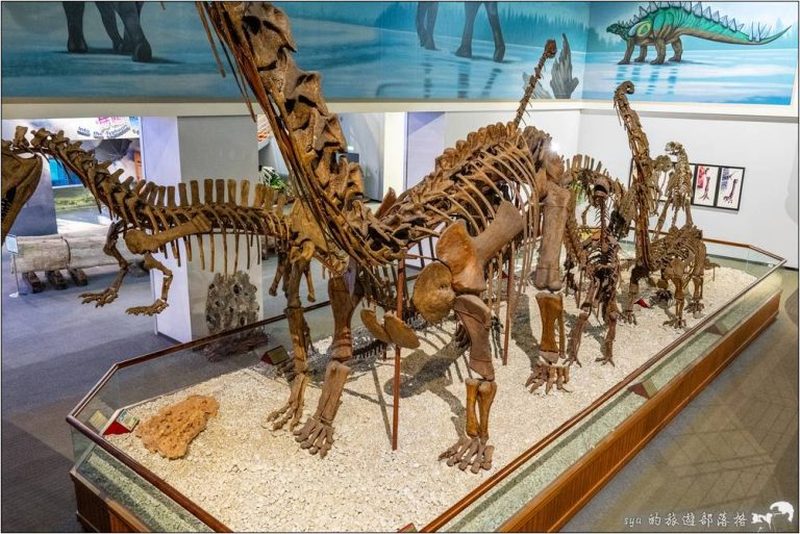
When palaeontologists announce that a dinosaur fossil is 66 million years old or that early humans walked India 100,000 years ago, a reasonable question follows: how could anyone possibly know? The answer is radiometric dating, a family of techniques that read time from the steady decay of radioactive atoms trapped in rocks and fossils. These atomic clocks tick with metronomic regularity, governed by the laws of quantum physics, immune to heat, pressure or chemistry. By measuring the ratio of parent atoms to their decay products, scientists can calculate how long the clock has been running. Far from guesswork, radiometric dating is among the most cross-checked methods in science, confirmed by independent clocks, historical records and even the ages of Moon rocks. Here is how it works.
The clock inside every radioactive atom
Certain atoms are unstable: their nuclei spontaneously decay into different elements at a fixed statistical rate. The half-life is the time for half the atoms in a sample to decay, three days for some isotopes, 1.25 billion years for potassium-40, 4.5 billion years for uranium-238. Crucially, this rate never changes; no chemical reaction, temperature or pressure can speed it up or slow it down, because decay is governed by the nucleus, isolated from the atom’s chemical surroundings. Imagine an hourglass: if you know you started with all sand in the top bulb and you measure how much has fallen, you know how long it has been running. Radiometric dating works the same way. A volcanic mineral crystallises with a known amount of parent isotope and none of the daughter product; from then on, parent decays to daughter at the known rate, and the ratio reveals the time elapsed. Different isotope pairs serve as hourglasses for different timescales, from carbon-14’s thousands of years to uranium-lead’s billions.
Carbon dating and its limits
The most famous method, radiocarbon dating, works on once-living things. Cosmic rays continuously create carbon-14 in the upper atmosphere; living organisms absorb it along with ordinary carbon, maintaining a steady ratio. At death, absorption stops and the carbon-14 decays with a half-life of 5,730 years. Measure the remaining carbon-14, and you know the time since death, good back to about 50,000 years, after which too little remains. Carbon dating revolutionised archaeology: it dated the Indus Valley Civilisation’s mature phase, the Dead Sea Scrolls and Otzi the Iceman. But it has limits and subtleties. Contamination with modern carbon skews results, so samples are rigorously cleaned. Atmospheric carbon-14 has varied over time, so raw dates are calibrated against tree rings, which provide an independent year-by-year record stretching back 14,000 years. And carbon dating cannot date rocks or dinosaur fossils directly; anything older than 50,000 years needs other clocks.
Dating deep time: potassium, uranium and their kin
For fossils millions or billions of years old, geologists turn to clocks with longer half-lives. Potassium-argon dating, with a half-life of 1.25 billion years, dates volcanic rocks: when lava cools, argon gas escapes, resetting the clock to zero, and the slow accumulation of argon-40 from potassium-40 decay then measures the time since eruption. This method dated the volcanic ash layers bracketing early human fossils in East Africa and the Deccan Traps eruptions in India. Uranium-lead dating is the gold standard for the oldest rocks: uranium-238 decays through a chain to lead-206 with a half-life of 4.5 billion years, and because the chain includes intermediate steps with their own clocks, geologists get two independent dates from one sample, a built-in cross-check. Zircon crystals, which trap uranium but exclude lead when they form, have dated Earth’s oldest rocks to 4.4 billion years and Moon rocks to similar ages. When multiple methods on multiple minerals agree, as they routinely do, the date is as solid as anything in science.
- Carbon-14 dating works back to about 50,000 years with a half-life of 5,730 years.
- Potassium-argon dating, half-life 1.25 billion years, dates volcanic rocks and ash layers.
- Uranium-lead dating provides two independent clocks in a single sample as a cross-check.
- Zircon crystals have dated Earth’s oldest rocks to 4.4 billion years.
- Tree-ring calibration corrects radiocarbon dates for past atmospheric variation.
Why scientists trust the dates
Sceptics sometimes ask whether decay rates could have been different in the past. The answer from physics is a firm no: decay constants depend on fundamental forces, and any change would have left traces in stellar spectra, natural nuclear reactors like the one at Oklo in Gabon, and the fine structure of ancient minerals, none of which show any variation. The empirical cross-checks are even more convincing. Different isotope systems applied to the same rock give the same age; radiometric dates agree with the fossil sequence in sedimentary layers worldwide; historically dated events, like the eruption of Vesuvius in 79 AD, return correct radiocarbon ages; and the ages of meteorites cluster at 4.56 billion years, the age of the solar system. Creationist claims of discordant dates invariably trace to misapplied methods, like dating volcanic rock with carbon dating, which is meaningless since rocks contain no atmospheric carbon. Used correctly, with the right clock for the right material, radiometric dating is not an assumption but a measurement.
FAQs
Can carbon dating date dinosaur fossils? No. Dinosaurs died out 66 million years ago, far beyond carbon dating’s 50,000-year range; their fossils are dated via the volcanic rocks around them using potassium-argon or uranium-lead methods.
How accurate is radiometric dating? Typically within 1 to 2 per cent for good samples, and the agreement of independent methods on the same sample provides confidence no single technique could.
Does contamination ruin dates? It can, which is why laboratories use rigorous chemical cleaning and pretreatment, and why suspect samples are dated with multiple methods.
Every radiometric date is a conversation with an atomic clock that has ticked undisturbed for millennia or eons. Learning to read those clocks gave humanity its first true history of Earth, written not in books but in atoms.
Compiled by the Khabar 24h Editorial Desk from publicly available sources.

Khabar 24h Editorial Desk — our explainers are prepared by the Khabar 24h editorial team using AI-assisted research tools, and every piece is reviewed by a human editor before publishing. We do not claim original reporting: our work is turning complex topics into simple, accurate summaries. Spotted an error? Write to contact@khabar24h.com — our corrections policy aims for same-day review.
More from this author →