What Happens to the Human Body in Space
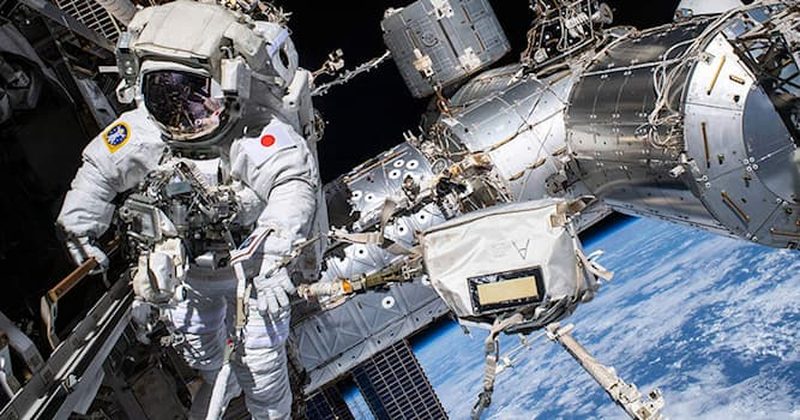
Spend a few months in orbit and your body starts to come apart in subtle, measurable ways. Without gravity pulling blood downward, fluids shift toward the head, bones shed calcium, muscles waste away, and the immune system misbehaves. Astronauts return to Earth taller, weaker and temporarily wobbly, needing weeks of rehabilitation. Yet the human body is remarkably adaptable: with rigorous exercise and clever countermeasures, crews now routinely spend six months aboard the International Space Station and come home healthy. Understanding what space does to the body is essential for the next leap, missions to the Moon and Mars that will last far longer.
The great fluid shift
Within hours of reaching orbit, the two litres of blood and fluid that gravity normally pools in the legs redistributes upward. Astronauts’ faces puff up, their noses stuff up, and their legs thin out, a phenomenon crews call bird legs. The body, sensing excess fluid in the upper body, responds by shedding plasma volume, so astronauts effectively become mildly dehydrated. Eyes are affected too: the fluid shift raises pressure inside the skull, flattening the back of the eyeball and blurring vision in some long-duration crew members, a condition called spaceflight-associated neuro-ocular syndrome. For most astronauts the vision changes are mild and partly reversible, but they remain one of the most closely watched risks for a Mars mission.
Bones and muscles waste away
On Earth, every step loads the skeleton, signalling bones to stay dense. In weightlessness that signal vanishes, and astronauts lose bone mineral at roughly 1 to 2 percent per month in load-bearing bones like the spine and hips, ten times faster than an elderly person with osteoporosis. Muscles atrophy just as quickly, especially the postural muscles of the back, legs and the heart itself, which no longer works against gravity. The countermeasure is brutal exercise: astronauts work out about two and a half hours a day, strapped to treadmills with bungee harnesses, pedalling cycle ergometers and lifting weights on a resistive device that simulates gravity with vacuum cylinders. It works, but only partially.
Radiation: the invisible hazard
Outside Earth’s protective magnetic cocoon, astronauts are exposed to cosmic rays and solar particle events that can damage DNA and raise lifetime cancer risk. Aboard the space station, still partly shielded by Earth’s magnetosphere, crews accumulate roughly the radiation dose of several hundred chest X-rays over six months. A Mars transit, with no magnetosphere and months of exposure, would be far harsher. Shielding helps, water and polyethylene are effective, and storm shelters can protect against solar outbursts, but cosmic rays are so energetic that no practical shielding stops them entirely. Solving radiation is arguably the single biggest biomedical challenge for deep-space travel.
What changes inside the body
The effects reach deep into physiology. The immune system becomes dysregulated in space: latent viruses like herpes reactivate, wound healing slows, and some immune cells respond sluggishly. The gut microbiome shifts, sleep is fragmented by 90-minute day-night cycles and constant noise, and the vestibular system, the inner ear’s balance organ, is thoroughly confused, causing the space motion sickness that afflicts most first-time flyers for a day or two. Even gene expression changes: NASA’s famous twin study, comparing astronaut Scott Kelly with his Earthbound identical twin Mark, found shifts in gene activity, telomere length and DNA methylation, most of which reverted after landing.
Countermeasures that keep crews healthy
Space agencies fight back on every front. Exercise protocols have steadily improved, and today’s crews return with far less muscle and bone loss than the earliest long-duration flyers. Nutrition is carefully managed, with extra vitamin D and calcium to protect bones. Sleep is guarded with scheduled rest, eye masks and sometimes medication. Psychological health gets equal attention: crews are selected for resilience, stay in daily contact with families, and follow structured work-rest cycles to fight isolation and monotony. Artificial gravity, spinning sections of spacecraft, remains the dream solution, elegant in theory but enormously difficult to engineer.
FAQs
Do astronauts grow taller in space? Yes, by a few centimetres, because the spine stretches without gravity compressing it. They return to normal height within days of landing.
How long can humans safely stay in space? The record is 437 days, set by Valeri Polyakov. Six-month station missions are now routine, but a three-year Mars mission would push well beyond current medical experience.
Is spaceflight bad for the heart? The heart weakens and shrinks slightly in weightlessness, but exercise largely protects it, and long-term follow-ups show no dramatic excess of heart disease in astronauts.
The human body evolved under exactly one gravity, and space reveals how deeply that assumption is wired into our physiology. Every countermeasure, from bungee treadmills to radiation shelters, is a workaround for leaving the only environment we were built for. As missions stretch farther from home, keeping the crew healthy may prove harder than building the rockets.
Source: NASA

Khabar 24h Editorial Desk — our explainers are prepared by the Khabar 24h editorial team using AI-assisted research tools, and every piece is reviewed by a human editor before publishing. We do not claim original reporting: our work is turning complex topics into simple, accurate summaries. Spotted an error? Write to contact@khabar24h.com — our corrections policy aims for same-day review.
More from this author →