Pollinators in Peril: Why Bees Matter to Indian Agriculture
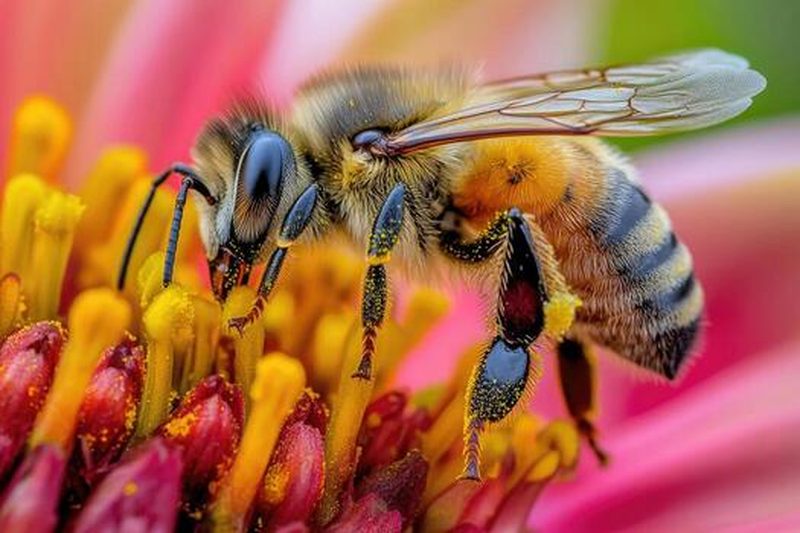
Every third bite of food you eat exists because a pollinator did its job. Apples, almonds, mustard, cucumbers, cardamom, coffee, mangoes and sunflowers all depend, wholly or partly, on bees, butterflies, moths and other insects carrying pollen from flower to flower. In India, where smallholder farms dominate and crops like mustard, pulses, oilseeds, fruits and vegetables form the backbone of rural incomes, pollinators are worth an estimated tens of thousands of crores of rupees in agricultural output each year. Yet across the country, beekeepers and scientists report the same worrying trend: fewer bees, weaker colonies and declining wild pollinators, pressured by pesticides, habitat loss, monocultures and a changing climate. The pollinator crisis is often framed as a Western honeybee story, but in India the stakes are arguably higher, because millions of marginal farmers cannot afford to replace free pollination with managed hives or hand pollination.
How pollination actually works, and why crops need it
Pollination is the transfer of pollen from a flower’s male parts to its female parts, the step that must happen before fruit or seed can form. Some crops, like rice and wheat, are wind-pollinated and manage without insects. But roughly 75 per cent of the world’s food crops benefit from animal pollinators, and for many the benefit is enormous: well-pollinated mustard sets far more seed, apples grow larger and more symmetrical, and cardamom yields can double with adequate bee visitation. India is home to remarkable pollinator diversity, including the native Asian honeybee Apis cerana, the giant rock bee Apis dorsata that builds massive open combs on cliffs and trees, the tiny stingless bees, and thousands of species of solitary bees, butterflies and moths. Different crops need different pollinators: the deep flowers of cardamom are best served by large bees, while small solitary bees excel at pollinating vegetables. This diversity is itself the insurance policy, because when one pollinator falters, others can compensate, but only if the habitat supports them.
What is killing India’s bees?
The pressures are multiple and interacting. Pesticides, especially neonicotinoids and other systemic insecticides, are the most studied culprit: they do not just kill bees outright but impair navigation, learning and reproduction at doses bees routinely encounter in fields. India is among the world’s largest pesticide users, and regulation of the most bee-toxic compounds lags behind the European Union’s restrictions. Habitat loss is the second blow: as field margins, hedgerows, village commons and diverse flowering weeds are cleared for intensive monoculture, bees lose the year-round forage and nesting sites they need, since no single crop blooms all year. Climate change adds a third stress, shifting flowering times out of sync with bee activity and pushing heat-sensitive species upslope. Diseases and parasites, including the Varroa mite that devastates honeybee colonies worldwide, complete the picture. Indian beekeepers have reported colony collapses and dwindling wild Apis dorsata aggregations, and researchers warn that the decline of wild pollinators, which are harder to count than managed hives, may be steeper than the numbers suggest.
What can be done, from farms to policy
The encouraging news is that pollinator-friendly farming often pays for itself. Field trials in India have shown that keeping strips of flowering plants along field borders, reducing pesticide sprays during bloom, and placing managed bee hives in orchards and mustard fields can raise yields enough to more than cover the costs. Integrated pest management, which uses pesticides as a last resort rather than a calendar routine, protects both bees and farmers’ wallets. At the policy level, scientists have called for India to reassess its most bee-toxic pesticides, expand the National Beekeeping and Honey Mission beyond honey production to wild pollinator habitat, and include pollinator strips in agricultural support schemes. Urban citizens have a role too: pesticide-free gardens, balcony flowers and native trees provide crucial forage in cities. The deeper shift is conceptual, treating pollinators not as background scenery but as livestock, as essential agricultural infrastructure that must be fed, housed and protected.
- About 75 per cent of global food crops depend at least partly on animal pollinators.
- India’s native pollinators include Apis cerana, the giant rock bee Apis dorsata and thousands of solitary bee species.
- Well-pollinated crops can yield dramatically more: cardamom yields can double with adequate bee visitation.
- Neonicotinoid pesticides impair bee navigation and reproduction even at non-lethal doses.
- Flower strips along field margins provide year-round forage that single crops cannot.
FAQs
Will we run out of food if bees disappear? Staple cereals like rice and wheat are wind-pollinated, so calories would survive, but fruits, vegetables, oilseeds, nuts and spices would become scarce and expensive, and diets far less nutritious.
Are honeybees the only important pollinators? No. Wild bees, butterflies, moths, beetles and even birds pollinate crops, and diverse wild pollinators often do the job more reliably than a single managed species.
What is the National Beekeeping and Honey Mission? A central government scheme promoting scientific beekeeping, honey production and pollination support, though experts say it should do more for wild pollinator habitat.
India’s farms run on wings. Protecting the bees, butterflies and moths that pollinate the country’s crops is not an environmental luxury; it is agricultural policy, food security and rural livelihoods rolled into one.
Compiled by the Khabar 24h Editorial Desk from publicly available sources.

Khabar 24h Editorial Desk — our explainers are prepared by the Khabar 24h editorial team using AI-assisted research tools, and every piece is reviewed by a human editor before publishing. We do not claim original reporting: our work is turning complex topics into simple, accurate summaries. Spotted an error? Write to contact@khabar24h.com — our corrections policy aims for same-day review.
More from this author →